No trip to Germany’s wine region is complete without visiting the place where it all started! This is an honest review of Eberbach Abbey, including tips for your visit and what to expect when you go. (Spoiler: it’s one of the most beautiful locations in the Rheingau and is absolutely worth visiting!)
This post contains affiliate links, from which we may receive a commission. You can read our full affiliate disclosure here.
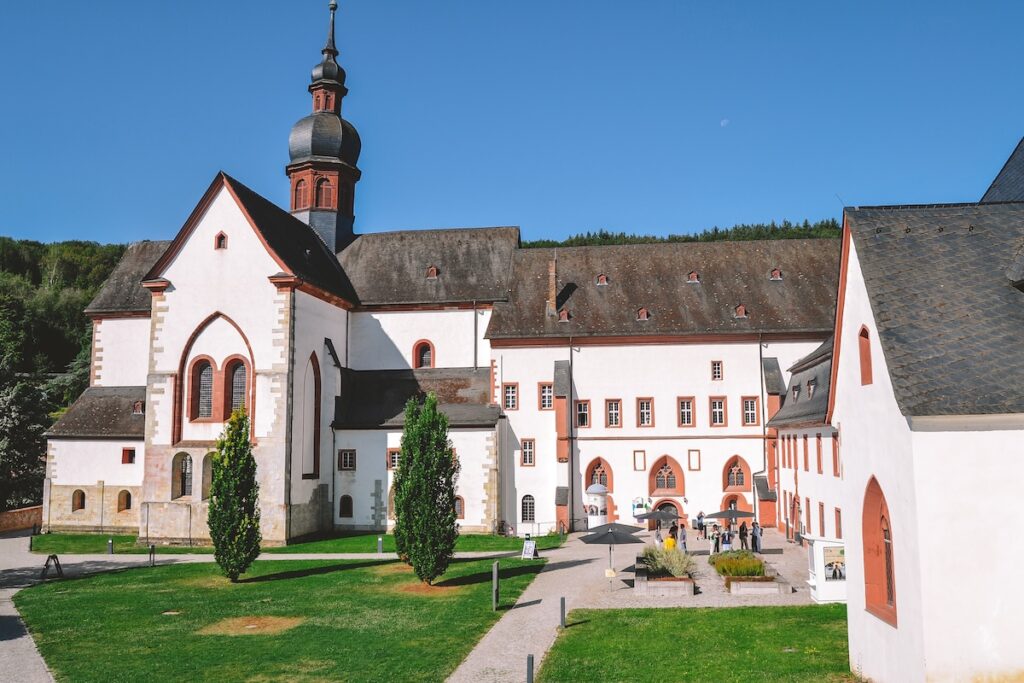
When you think of German wines, a sweet Riesling likely comes to mind — and Eberbach Abbey is where Riesling was created!
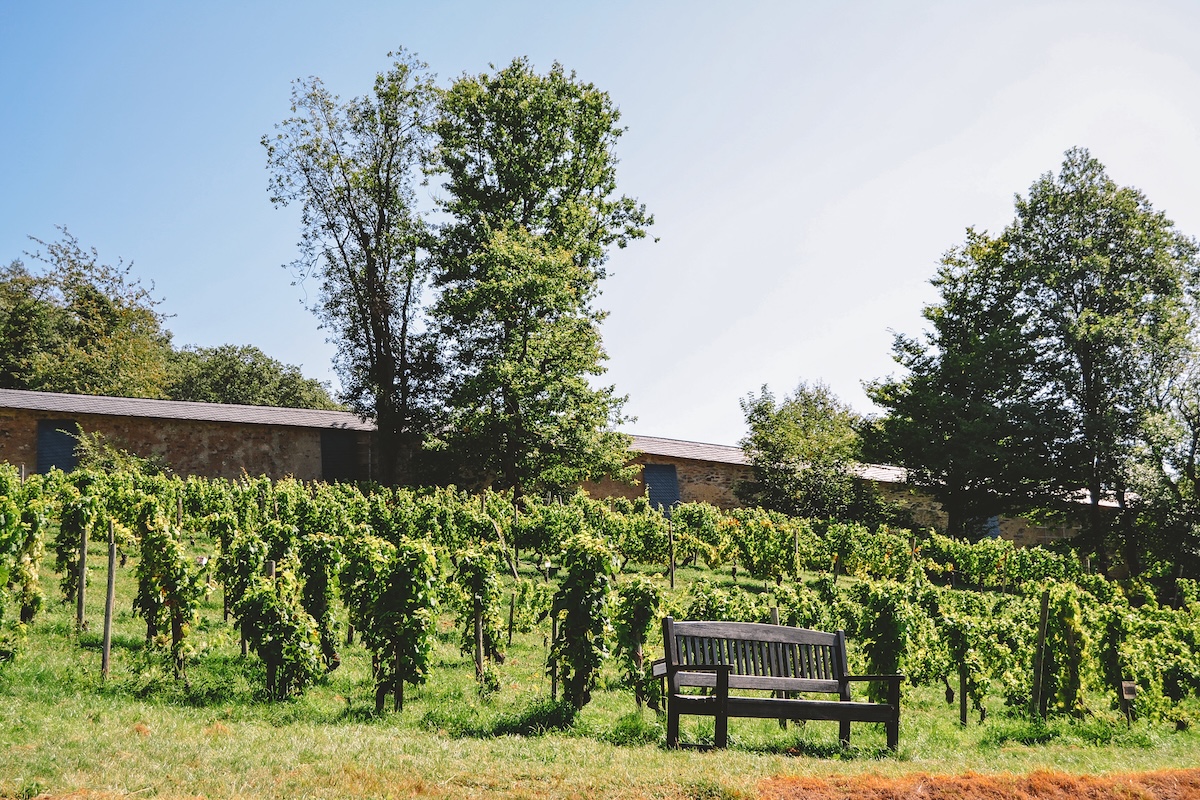
The former Cistertian monastery dates back to 1136 AD. During the Middle Ages, Eberbach Abbey had one of the largest vineyards in Europe (more than 300 hectares!). The monks produced wine for use in their daily religious services, for drinking, and to make money. They discovered early on that the unique terrain of the Rheingau — its protected slopes, mild climate, and clay-rich soil — was ideal for growing white grapes, which they used to produce the first ever batch of Riesling.
Obviously, a lot has happened in the Rheingau since 1136 AD. These days, the Abbey is owned by a non-profit organization whose goal is to preserve this historic location so it can remain open to the public for generations to come. Wine is no longer produced at the abbey itself, but rather at Domäne Steinberg just down the road.
A visit to Eberbach Abbey is a must while you’re traveling through the Rheingau! It’s one of the most historically significant sites in Germany and shouldn’t be missed.
Here’s what you can expect during a visit to Eberbach Abbey, plus practical tips for planning your trip!
Enjoy your time among the vineyards! ~Claire
PS. There’s also a hotel on site, should you want to spend the night at a former monastery!
Ticket Prices and Opening Hours
💶 Ticket price: 13 Euros for adults, 6 to 8 Euros for children (depends on their age), 30 Euros for a family ticket (2 adults + up to 4 children)
⏰ Opening hours: Monday – Friday 10am to 7pm, Saturday – Sunday 9am to 7pm
🏰 Suggested amount of time: 90 minutes to tour the abbey on a self-guided tour + 1 hour or more to do a wine tasting (you can purchase a flight from the wine store in the former wine press)
How to Get Here
On a wine tasting day tour: I actually visited Eberbach Abbey for the first time as part of a Rheingau wine tour with Bottlestops (you can read my full review here). We were given a guided tour of the abbey and did a tasting at the wine store afterwards. This is the exact tour I went on and I’d highly recommend it! I rarely drink alcohol but still had a great time, and I plan on taking my mom on one of the Bottlestops tours when she next visits me in Germany.
By public transportation: Ride the RB10 regional train to Eltville Hauptbahnhof (the central station). Transfer to bus #172 and disembark after 20 minutes at “Eltville (Rhein)-Hattenheim Kloster Eberbach.” From there, it’s just another 5 or so minutes of walking to reach the entrance.
By car: There’s a parking lot at the abbey, but you’ll have to pay 6 Euros to park there. If coming from Wiesbaden or Frankfurt am Main, you can reach the abbey via the A66; if coming from Koblenz you’ll take the L335; and if coming from nearby Rüdesheim you’ll take the B42 along the river. I suggest purchasing an e-sim (I recommend Airalo) so you have plenty of data for using the maps app on your phone to navigate!
As part of a hike: There’s a 14-kilometer loop trail called the “Eltville Abbey Route” that takes you up through the vineyards, to the abbey, and back into Eltville am Rhein. Theoretically the hike should take you about 5 hours, but I’ve not done it yet, so just this one time don’t take my word for it!
What to Expect During Your Visit
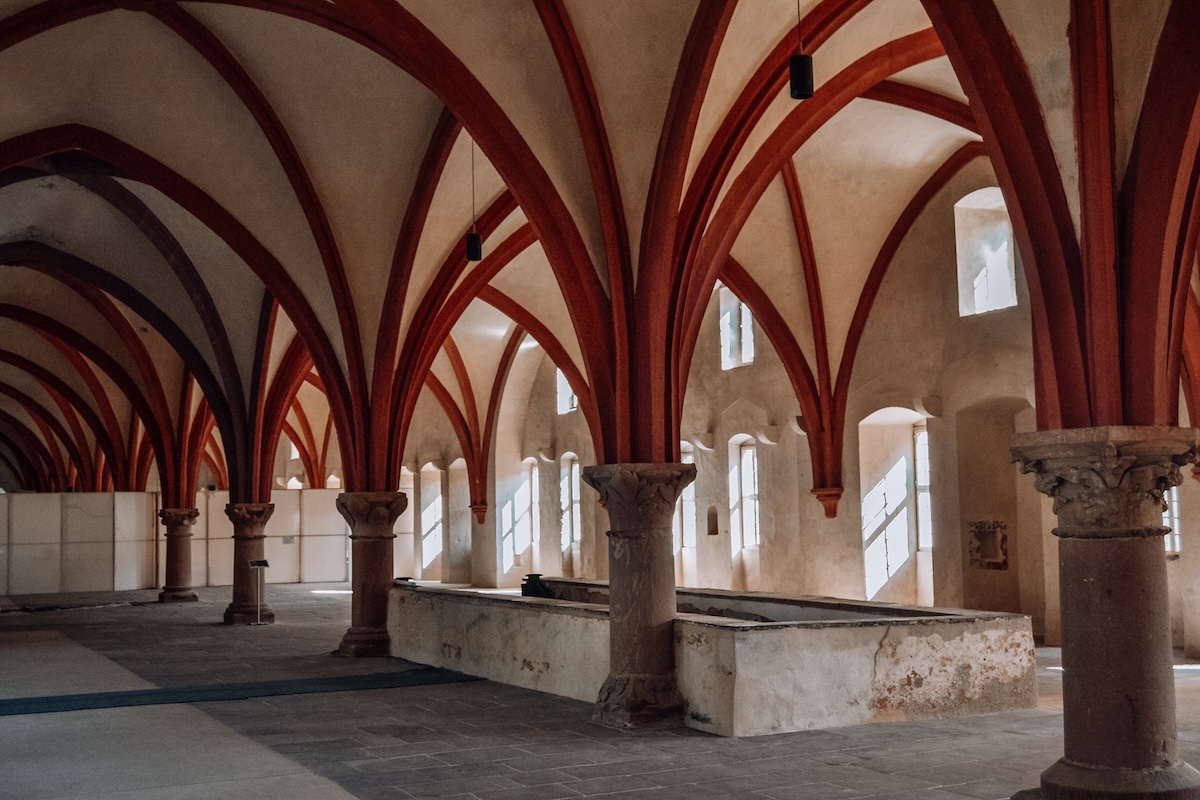
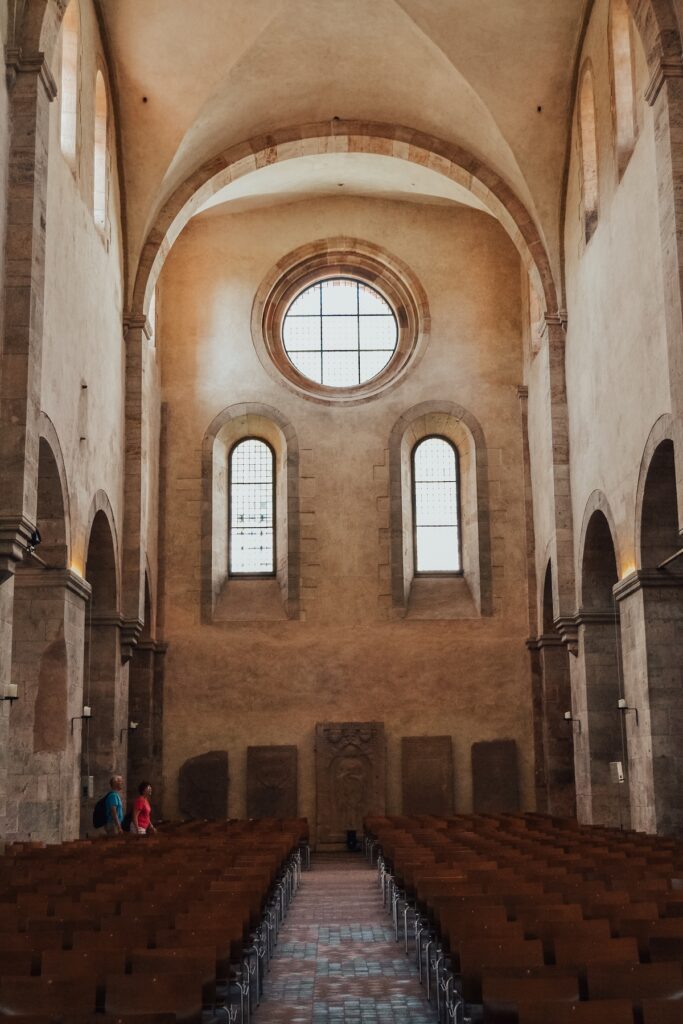
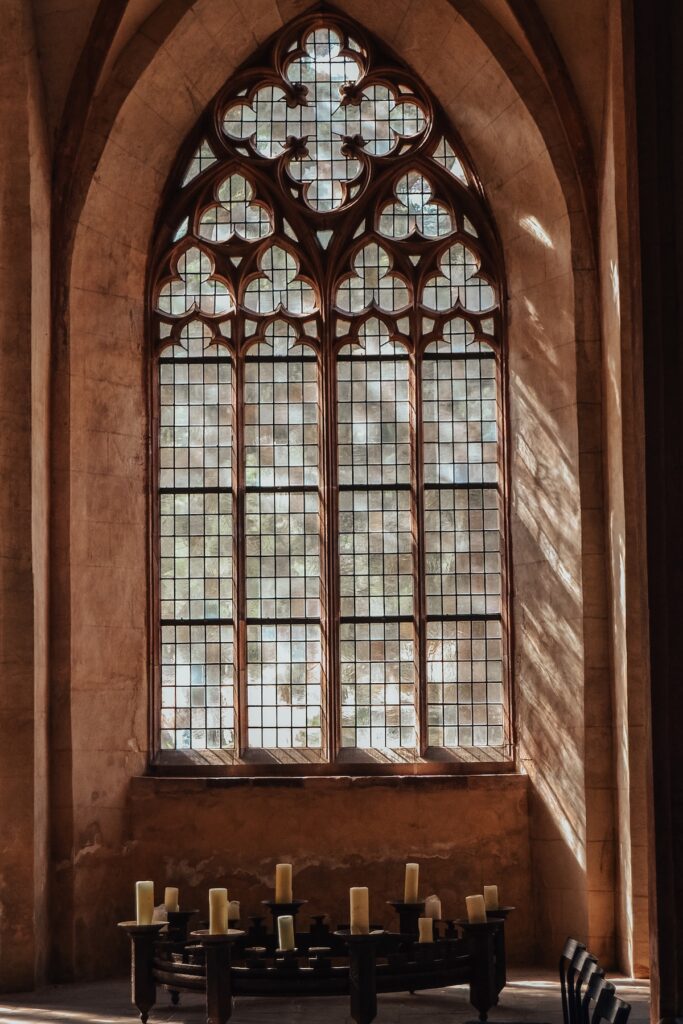
If you purchase a standard day pass, you’ll be able to explore the abbey on a self-guided tour. You’ll see where the monks worked and slept, the old wine cellars, and the simple but beautiful abbey church.
The monastery was sacked and looted repeatedly over the years, most notably during the Thirty Years War and under Napoleon, so don’t come here expecting it to look like a medieval monastery that’s been miraculously suspended in time! You’re traveling to Eberbach Abbey for the history and ambience, not for refurbished rooms that try to make you feel like you’ve stepped into the Middle Ages.
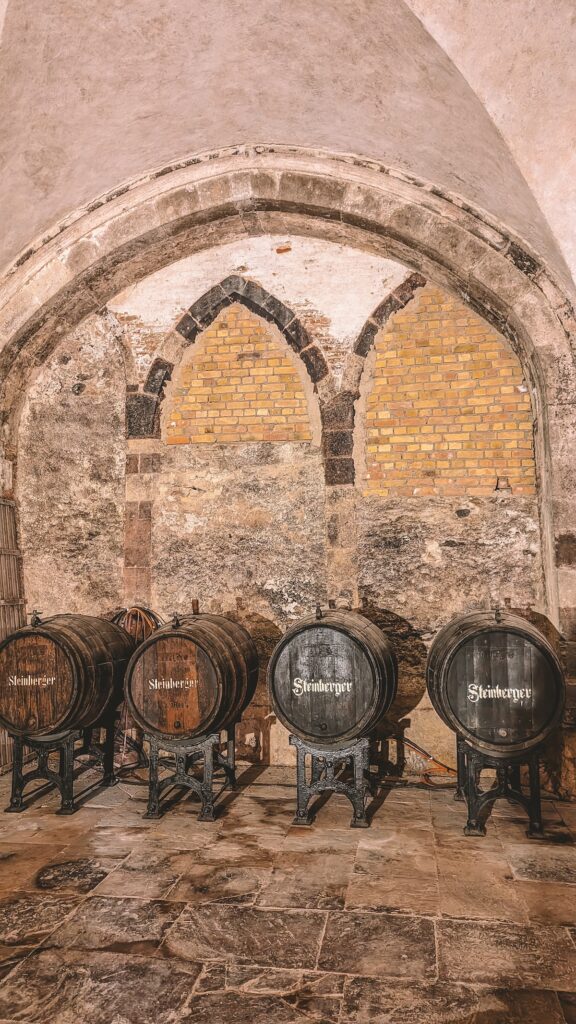
Seeing the wine cellars was a personal highlight of mine! Wine barrels of all sizes are still stored there, but they’re all empty.
Claire’s Tip: The cellars are very dark and cool, so you may want to bring an extra layer with you to bundle up.
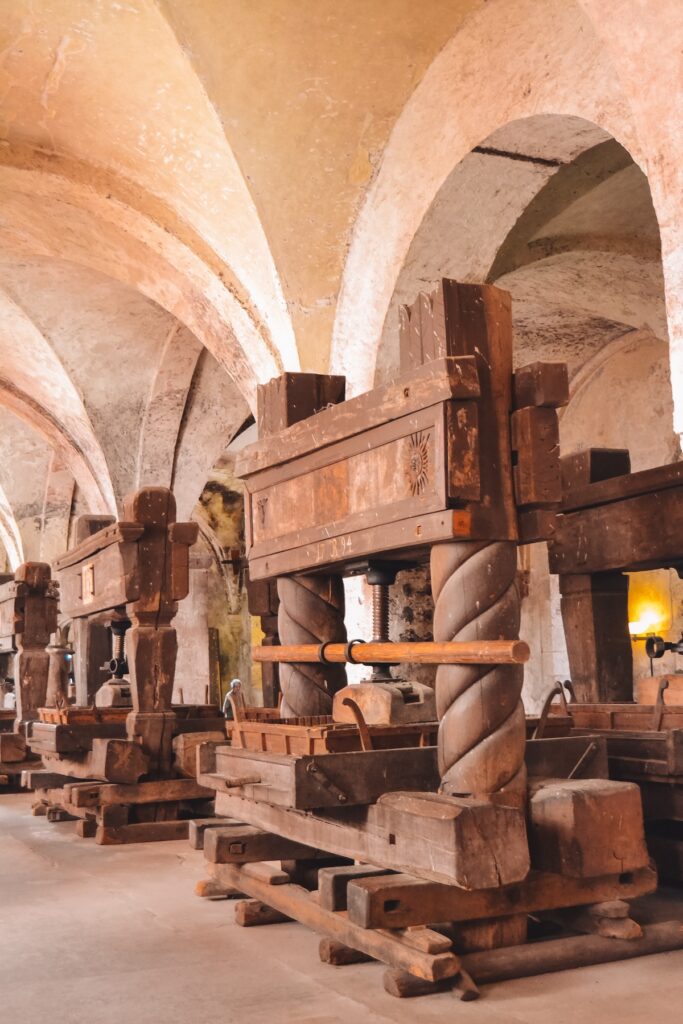
In the former refectory, you can see the historic wine presses. These things are HUGE! The oldest one is dated 1668, and they’re all so much more beautiful than anticipated.
Seeing all of the old wine presses and wine cellars in person and being immersed in the place where German wine got its start truly wowed me. And getting to explore the lush grounds and sample the wines from Domäne Steinberg (which is where the abbey’s wine production moved to down the road) was the cherry on top of a fantastic visit!
Wine Tasting & Food Options
Klosterschänke is the restaurant on site, and it can fill up fast during peak season so you might want to reserve a table in advance. The chef prepares dishes with regional ingredients, and the overall vibe is “fine dining” but with a more comfortable price tag of 20 to 30 Euros per plate.
Claire’s Tip: Each menu item comes with a wine pairing suggestion, which is helpful if you want to sample the local wine during your meal.
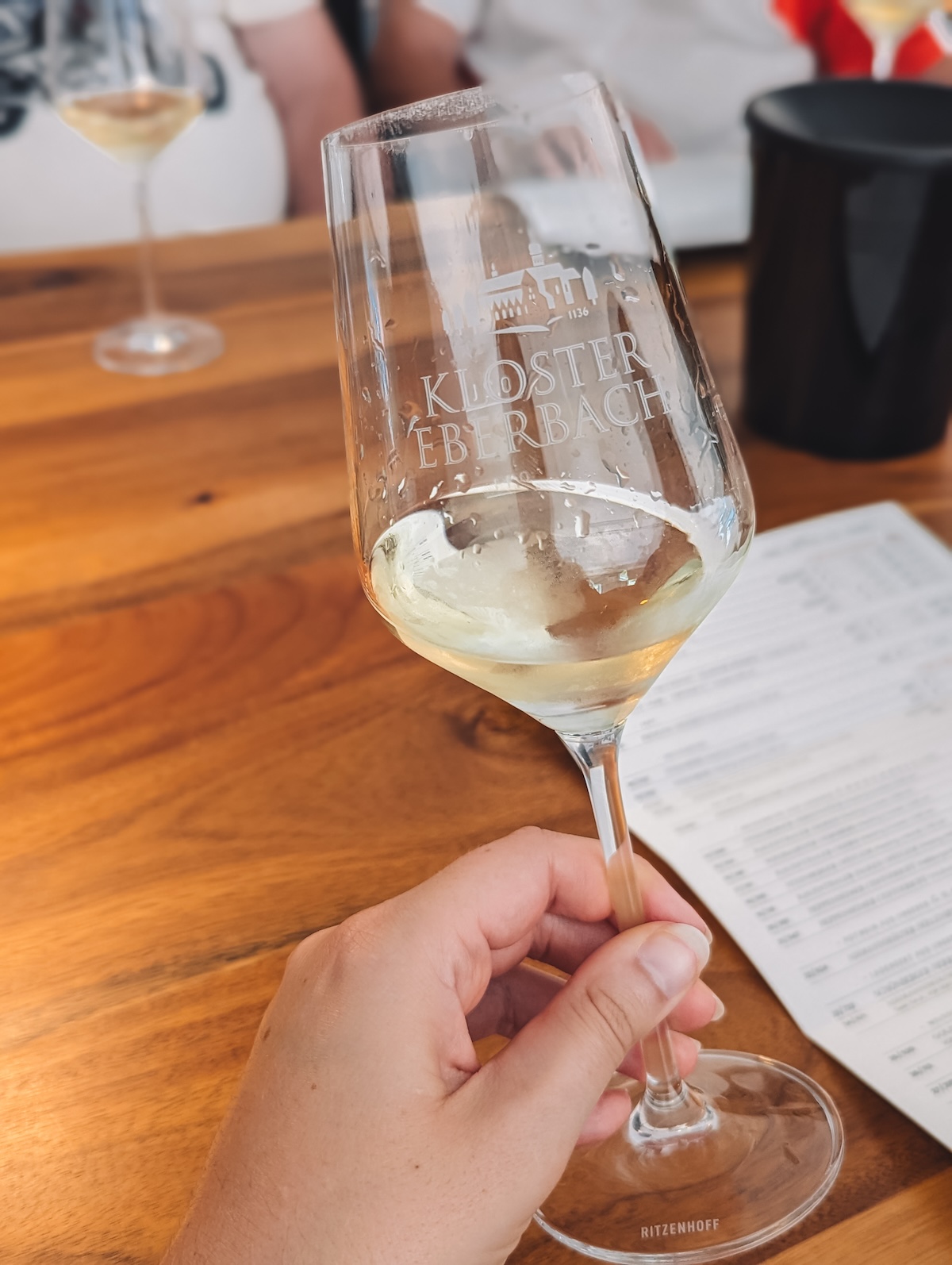
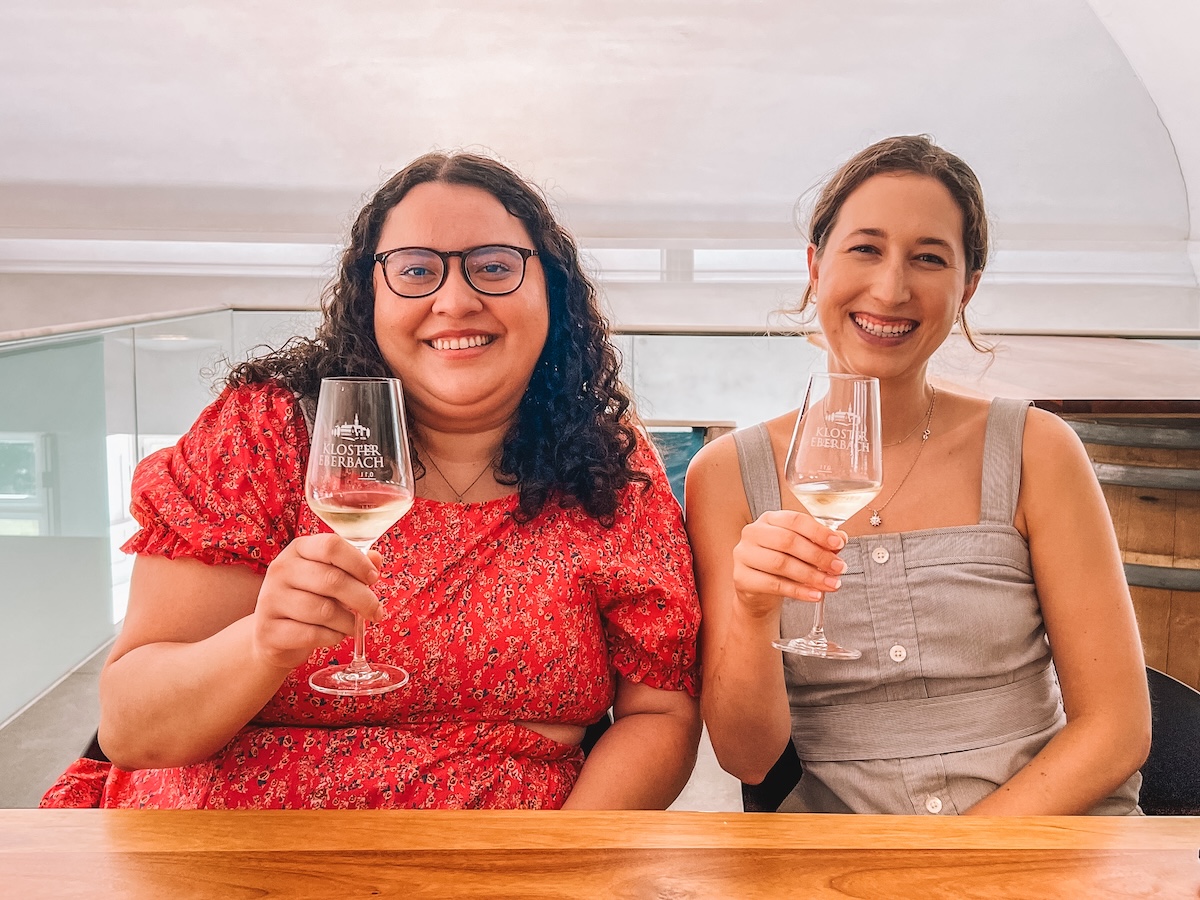
Otherwise you can sample the wines produced in the immediate area at the wine store (Vinothek). Definitely peruse the shelves for a bottle or two to take home, or head straight to the bar to order a glass to sip outside on the terrace (or on the upper mezzanine level indoors if it’s raining).
You can also purchase a wine flight if you’re not sure which wine you’ll like best. When selecting a wine to purchase, I recommend looking for any labeled “VDP.”
What is VDP? VDP stands for “Verband Deutscher Prädikatsweingüter,” or “Association of Distinguished German Wine Estates.” Only the best of the best regional wineries are awarded this certification. It’s not something a winery can apply for, which means VDP-certified wines are truly of the highest quality!
Final Thoughts: Is Eberbach Abbery Worth Visiting?
Eberbach Abbey is a must when planning a trip to Germany’s wine region! As the birthplace of Riesling wine, it’s steeped in history and there’s so much good wine still being produced in the area.
Eberbach Abbey can be paired with a visit to Eltville am Rhein (famous for its roses), Rüdesheim am Rhein (a beautiful half-timbered town on the banks of the river), Wiesbaden (a spa town that survived WWII intact), or Mainz (the “wine capital” of Germany).
Leave me a comment below if you have any questions about planning a trip to Eberbach Abbey. I’ve traveled to the Rheingau several times and am happy to offer additional advice!
Don’t forget to follow me on Instagram to keep up with my daily adventures in Berlin and beyond!

More Places to Visit in the Rheingau
- Day Trip Guide to Rüdesheim am Rhein: Jewel of the Rheingau
- What to Do and See in Eltville am Rhein: The Rheingau’s “City of Roses”
- Visiting Germany’s Wine Capital: What to Do & See in Mainz
- What to Do in Wiesbaden: A Gorgeous Spa City in the Rheingau
- What to Do in Hattenheim am Rhein: An Underrated Wine Destination in the Rheingau
- All of my FREE Rheingau travel guides!

Leave A Reply!