Once the “Queen of the Hanseatic League,” Lübeck is a charming city in Northern Germany that’s famous for its marzipan, red brick churches, and maritime flair. Here are the things you simply MUST do in Lübeck when visiting its medieval Old Town!
This post contains affiliate links, from which we may receive a commission. You can read our full affiliate disclosure here.
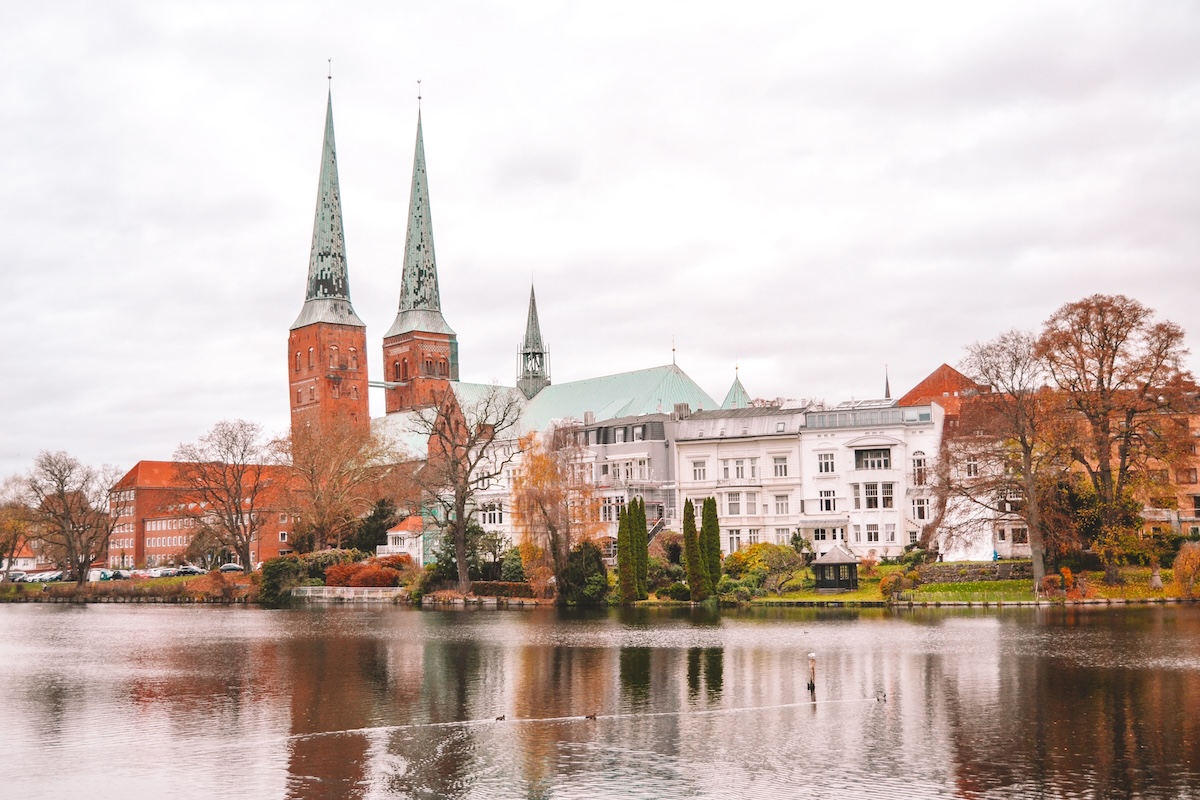
Having traveled extensively throughout Northern Germany since moving to Berlin in 2019, I can say with confidence that Lübeck is one of the Baltic Sea’s must-visit destinations.
Why Lübeck? Let me count the reasons:
- It’s one of the most historically significant maritime trading cities in Europe (The “Laws of Lübeck” that the city used during the Middle Ages were adopted by over 100 cities in the area!)
- Its medieval Old Town was granted UNESCO status in 1987.
- It’s the birthplace of the famous German writers Thomas and Heinrich Mann.
- It’s the marzipan capital of Germany AND the “Christmas capital of Northern Germany.”
Despite being destroyed during a 1942 air raid, Lübeck’s Old Town is a thing of beauty. It sits on an island in the middle of the Trave River, and the maritime ambience of the city just can’t be beat!
Here are the places you need to visit in Lübeck, all visited and personally vetted by yours truly.
Have fun! ~Claire
PS. 1 – 2 full days is plenty of time to see the main attractions. If you’re in town for longer than that, plan a day trip from Lübeck!
Map of Lübeck’s Top Attractions
Walk Through the Iconic Holsten Gate
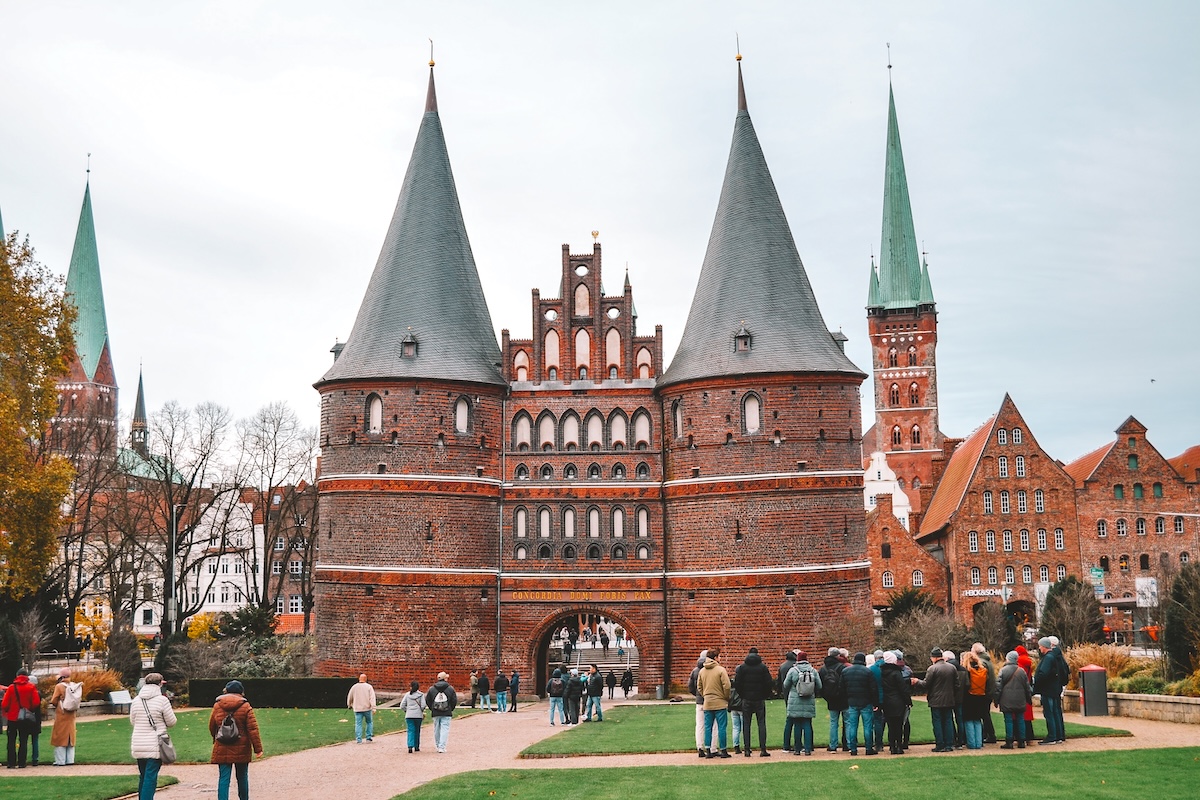
The Holsten Gate (Hostentor) isn’t just one of the best known symbols of Lübeck, it’s one of the best known symbols of all of Northern Germany!
The now-standalone gate was once part of the city’s extensive fortifications (remember: the Old Town is on an island, so it wasn’t so easy to get inside back in the day).
If you look closely at the gate from the side, you’ll notice that it’s tilting fairly dramatically — that’s because it was built on marshy ground, and the weight of its massive walls has caused it to shift over the centuries. The walls facing away from the Old Town are 3.5 meters thick (!) and the walls facing the Old Town are “only” 1.5 meters thick. I’d be amazed if the gate wasn’t leaning!
Claire’s Tip: There’s a small museum inside the Holsten gate that’s dedicated to Lübeck’s trading history. I don’t think it’s a top attraction, so you can skip it in favor of other (better) museums in the city!
See All 5 of the Medieval Brick Churches
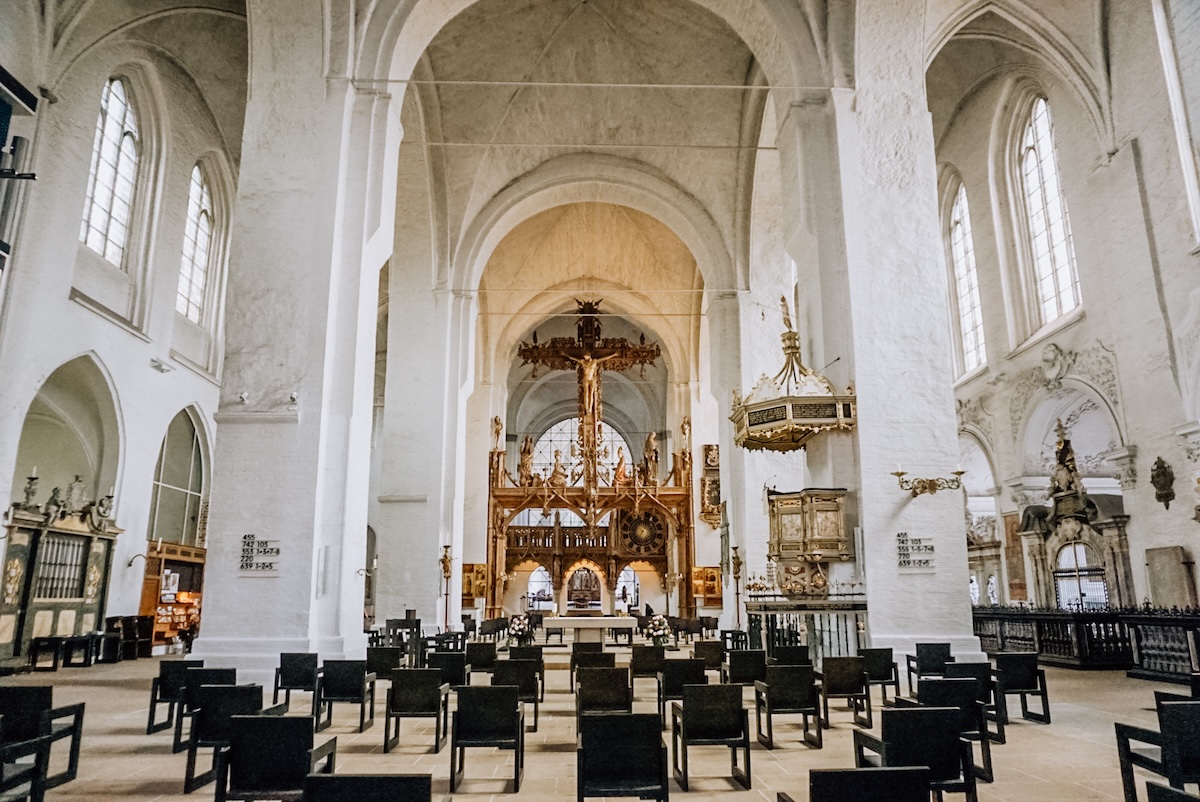
When admiring Lübeck’s skyline, you can’t miss the seven soaring spires that dominate the city. The spires belong to the five medieval brick churches that Lübeck is famous for: the cathedral, St. Jacob’s, St. Mary’s, St. Peter’s, and St. Giles.
Now, Lübeck’s Old Town is fairly large, but it’s not that large. So why five massive churches? Because medieval Lübeck was practically made of money thanks to its extensive maritime trade network!
And as the headquarters of the Hanseatic League (essentially the European Union of its day, no biggie), locals wanted to showcase just how impressive their city and trade connections were by building some of the most magnificent churches the Baltic Coast has ever seen.
Here’s a rundown of the five churches and which I recommend visiting while sightseeing in Lübeck:
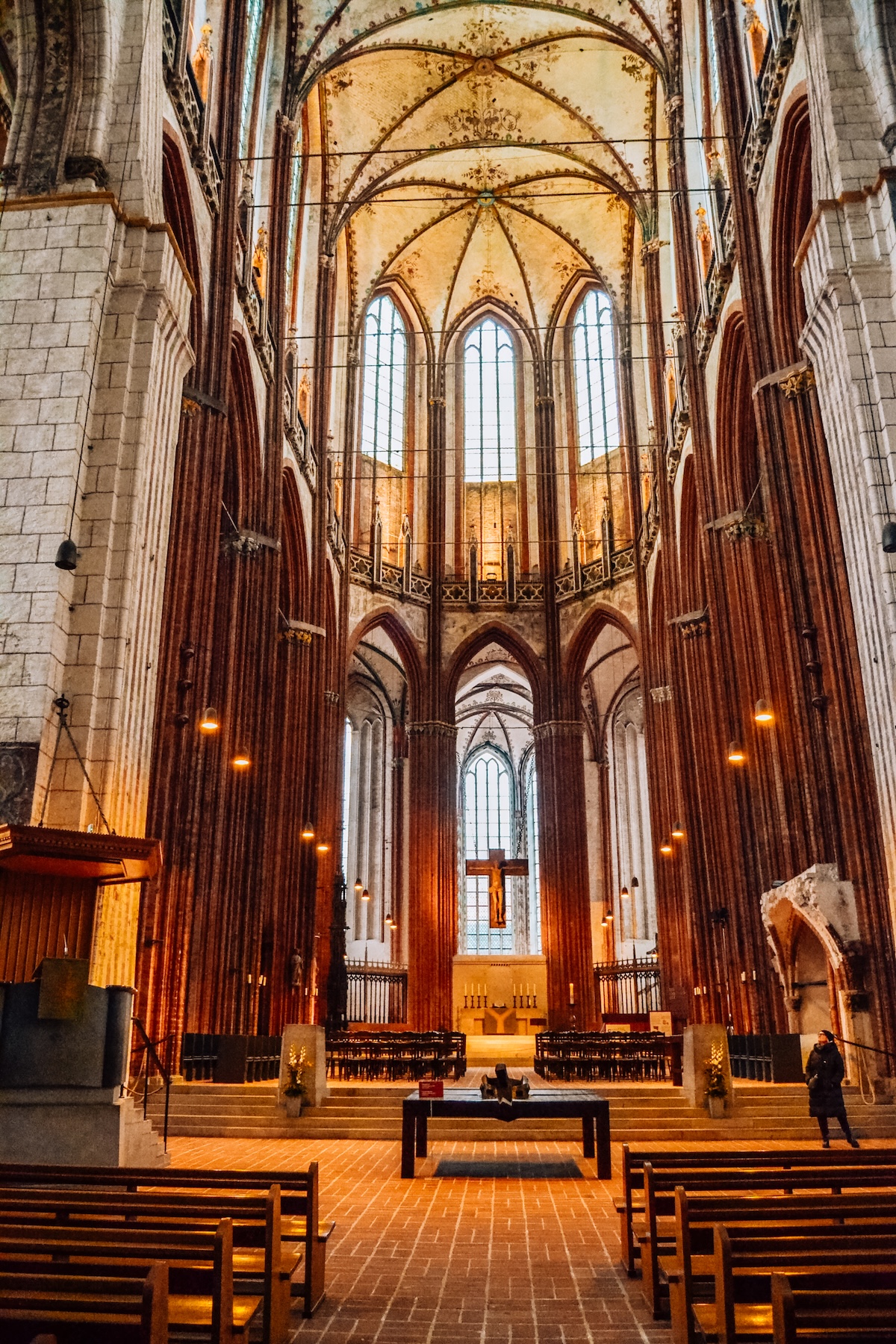
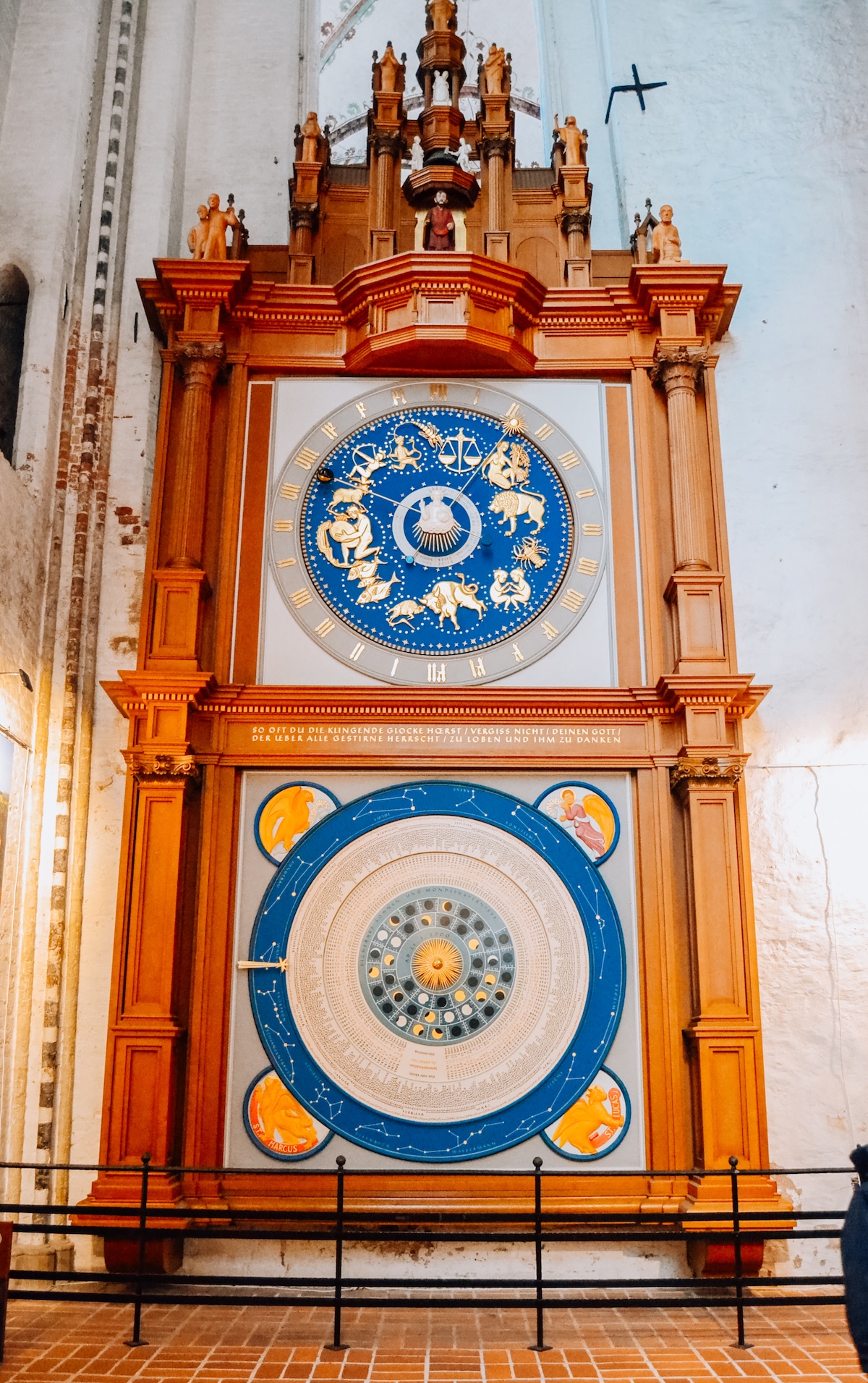
Lübeck Cathedral (Dom) — The foundation stone of the Lübeck Cathedral was laid in 1160 by Henry the Lion. There was originally a wooden church built on this site, but a brick church in the Gothic style replaced it. Destroyed in the 1942 air raid that damaged much of the Old Town, the cathedral was rebuilt and re-consecrated in 1973. While you’re inside, look for the Lettner clock that’s decorated with skeletons (perhaps to signify that life on Earth is fleeting but life in Heaven is eternal?)
Church of St. Mary’s — The “Mother of Gothic Brick Churches,” the Church of St. Mary’s was used as a model for more than 70 other churches in the region. There’s a fabulous astronomical clock inside, and the church in general is lovely. This is my personal favorite church in Lübeck, so if you only visit one, make it St. Mary’s!
St. Jacob’s Church — Another favorite of mine! It was built in 1334 and historically has served as the church for sailors. Surprisingly, St. Jacob’s was NOT damaged during WWII so all of the decorations are original to the building.
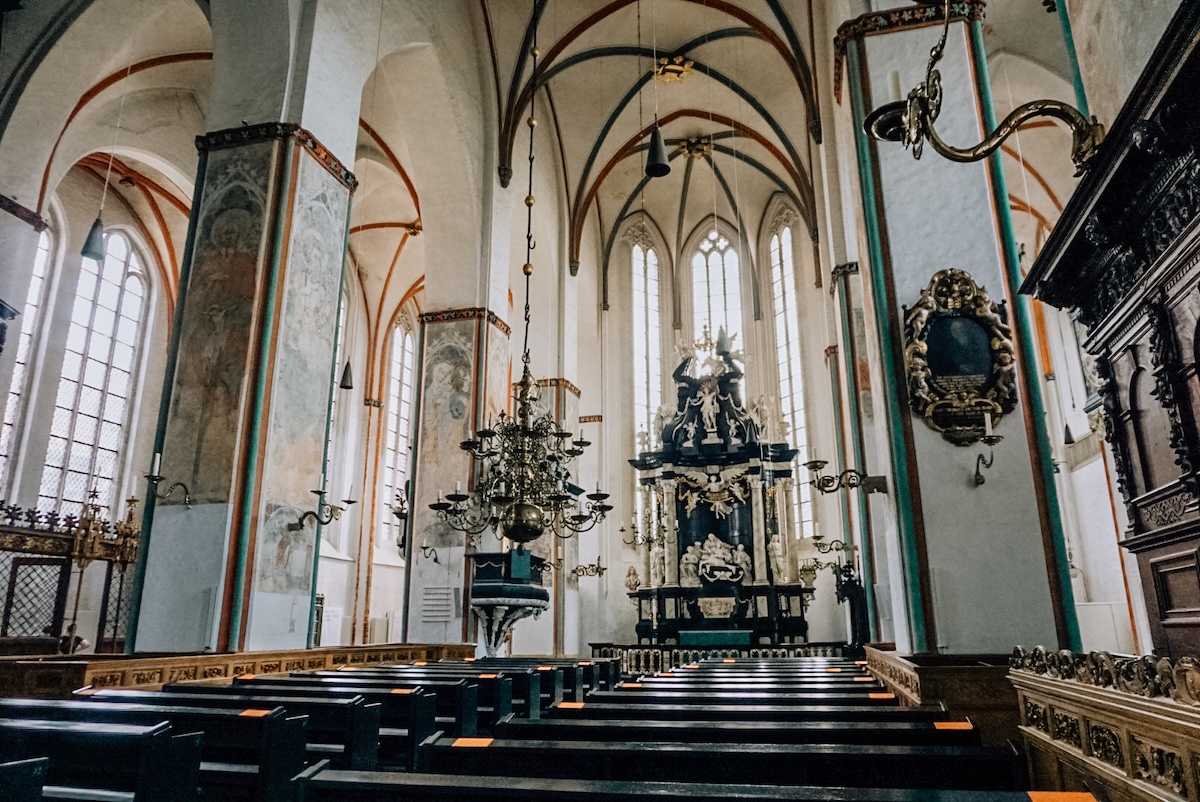
St. Giles’ Church — This church dates back to the 14th century. It’s decorated with Gothic wall paintings and has an impressive organ and pulpit. While I don’t think St. Giles’ is a “must see” Lübeck attraction, it’s certainly worth visiting if you happen to be passing by! It’s near the St. Annen Museum, so swing by if you can.
St. Peter’s — This 15th century Gothic church was leveled during a WWII air raid, and its interior was not restored to its former glory. The white-washed space is now primarily used for events (although you can pop your head inside to look around, if you’re curious!). However, if you climb up the tower, you’ll be treated to an epic view of Lübeck from above.
See the Hospital of the Holy Spirit
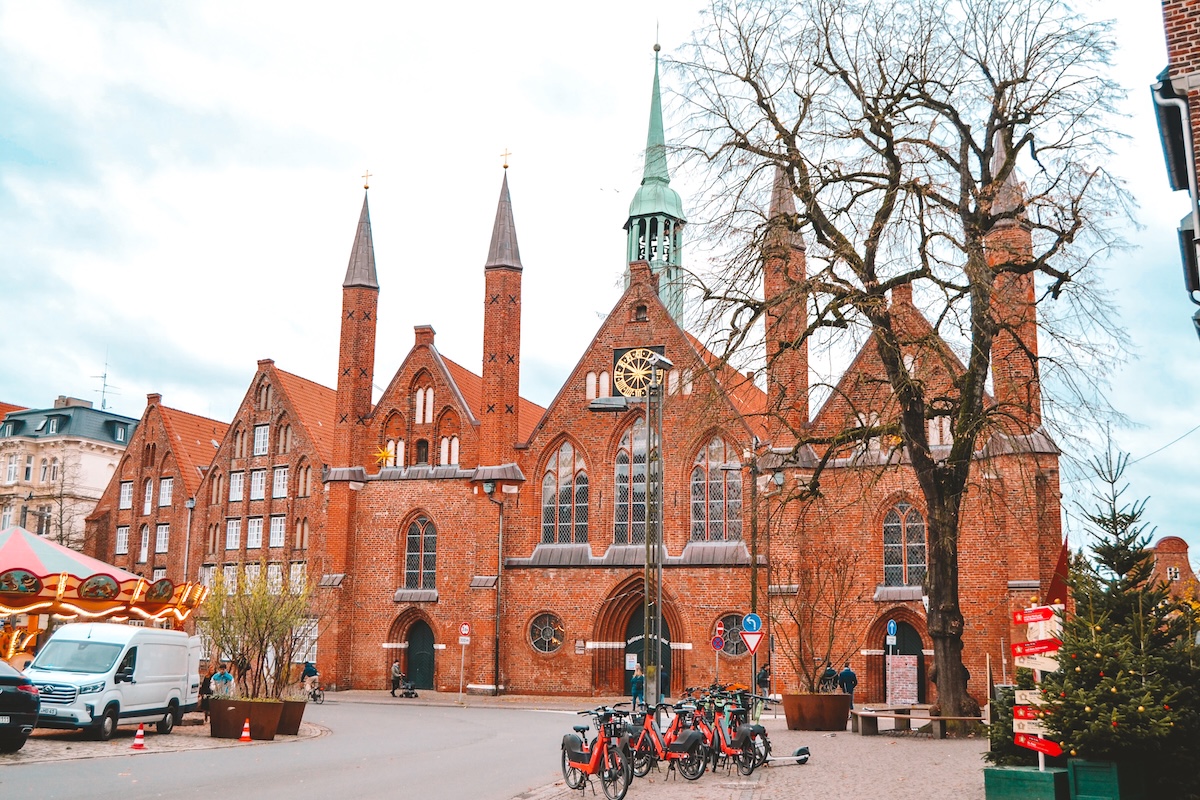
Completed in 1286, the Hospital of the Holy Spirit is one of the oldest social institutions still in use in the world.
You enter the hospital through the church in the front. In the back is the Long House, which historically has housed the elderly and others in need of aid. People were given tiny “cubby holes” to live in, which had a bed, wash basin, and other amenities.
The Long House wasn’t open to the public when I visited. I believe it’s in a state of disrepair and is in the process of being restored so it’s safe to visit again.
Hole Up at a Museum (My Top Recs!)
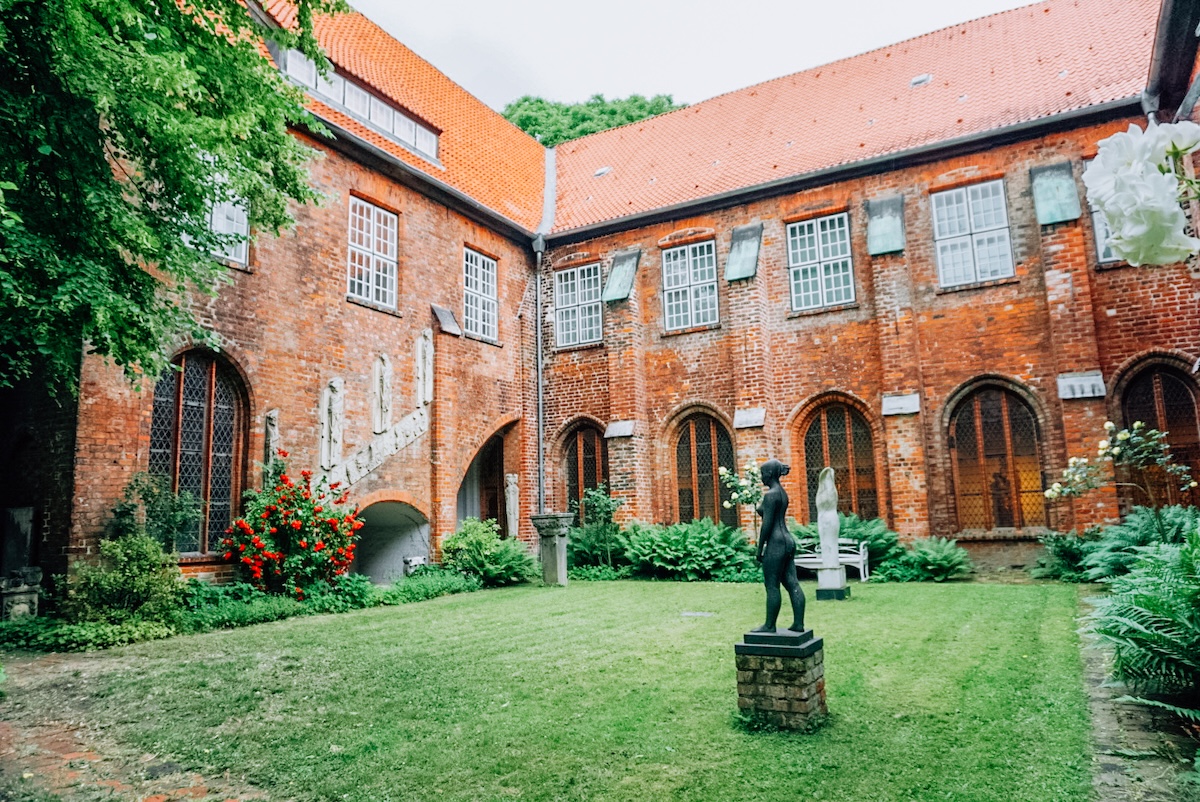
I’ve visited Lübeck a couple times now and am slowly making my way through all of the city’s museums.
My personal favorites are the St. Annen Museum and the Behnhaus Drägerhaus Museum, but here’s a rundown of what you can expect from all of the museums I’ve visited so far:
St. Annen Museum — So-called because it’s housed in the former St. Anne’s Priory. The priory was founded in 1502 as a home for the unmarried daughters of wealthy Lübeck citizens. Today, the museum showcases a collection of sacred art from the 13th to 16th century. There’s also a collection of household items and decor that illustrate what life in Lübeck was like between the 16th and 18th centuries.
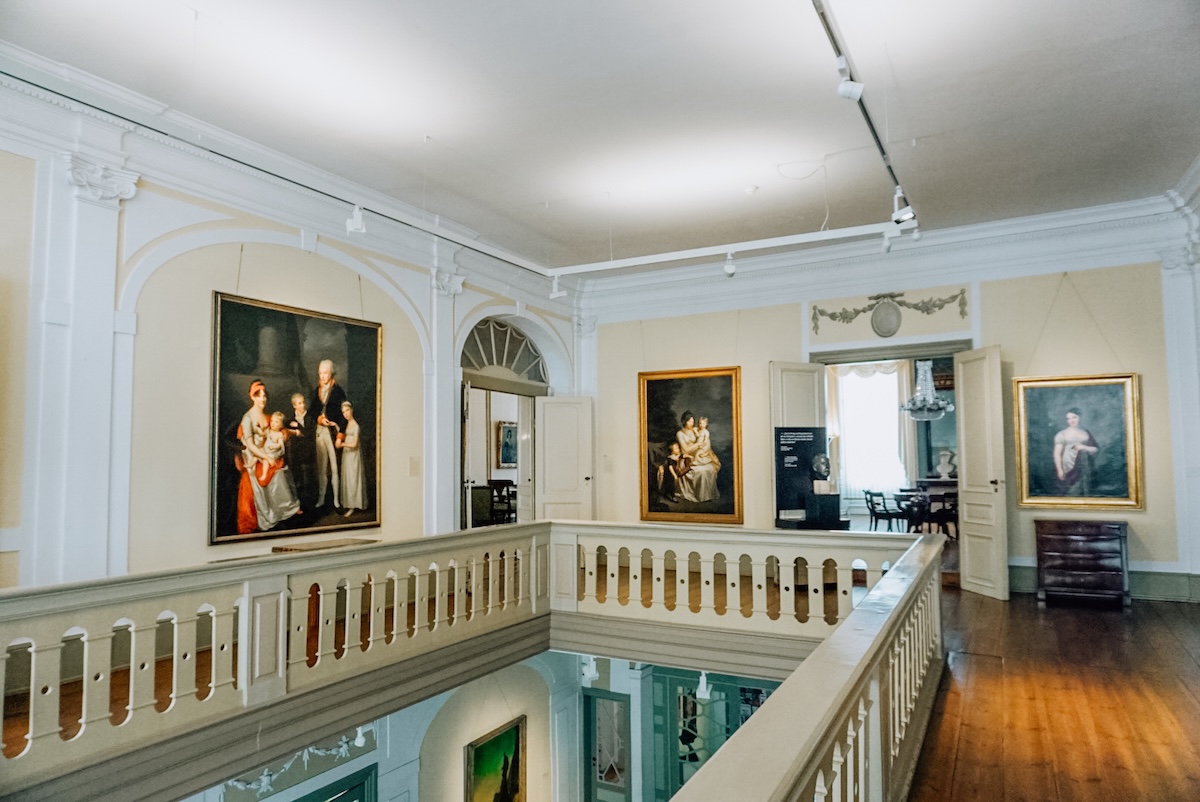
Behnhaus Drägerhaus Museum — Part museum, part historic home tour, this museum is what (my) dreams are made of! It’s located in two old homes dating from the 18th and 19th centuries; one was called the Behn Haus and the other the Dräger Haus, hence the name of the museum. The museum displays paintings from the 19th century and features works by artists like Caspar David Friedrich. There are also a few rooms that have been furnished to show how the families who’d inhabited the homes would have lived.
European Hansemuseum — This museum is housed in an old monastery. It discusses Hanse history. If you’ve been traveling around Northern Germany and have heard the Hanseatic League referenced several times but still aren’t quite sure what it was or why it was so important, I cannot recommend this museum enough!
Willy Brandt House — Willy Brandt was the Chancellor of Germany from 1969 – 74. Entrance to the museum is free. It’s not a “must” for me, but if political history gets you going, you can’t beat a free exhibit like this!
Claire’s Tip: For the best deal, purchase a Lübeck Day Pass if you plan on visiting more than 1 museum. The day pass also includes entry to St. Peter’s tower as well as St. Mary’s Church.
Explore the Town Hall & Market Square
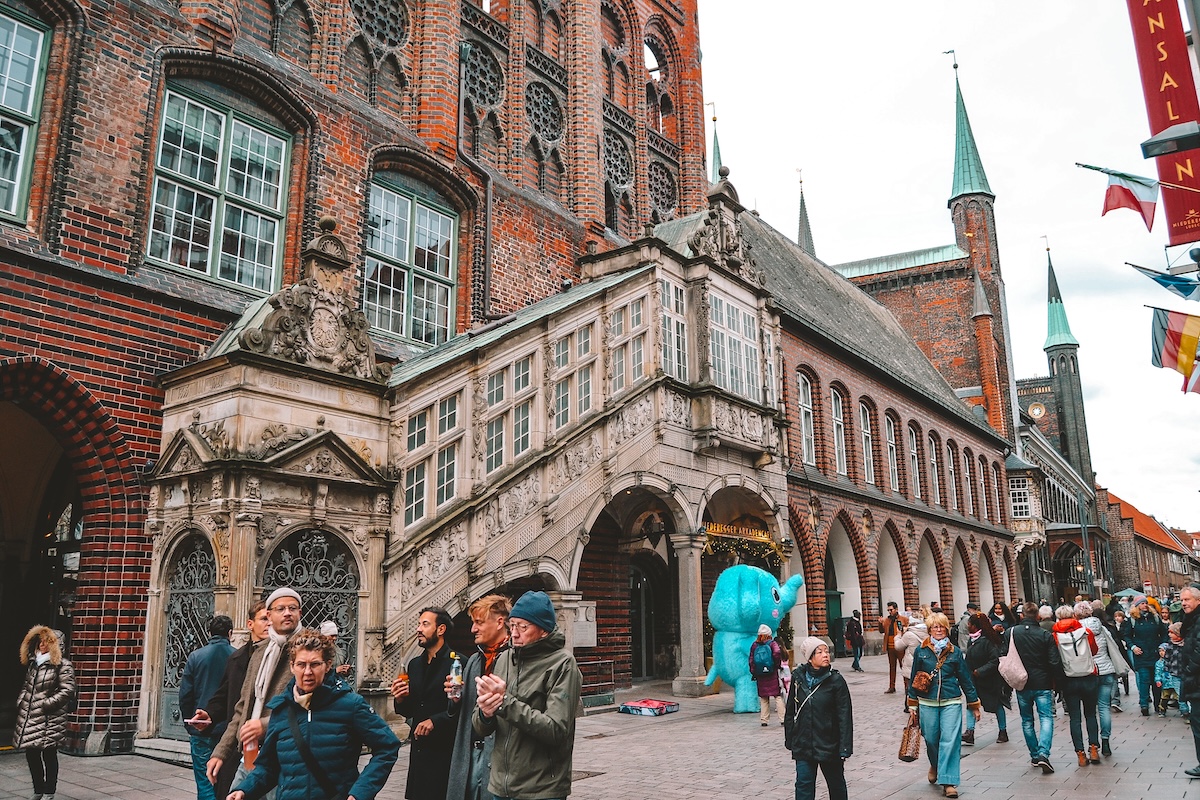
Lübeck’s town hall is the most spectacular I’ve seen to date. Work on the town hall and market square began in 1230 and was built in brick in the Gothic style.
The town hall has had extensions added to it almost every century since being built. The building you see today is a unique mixture of architectural styles.
Claire’s Tip: Note that this is still a working town hall, so if you want to see inside you’ll have to sign up for a tour!
Buy Your Bodyweight in Marzipan at Cafe Niederegger
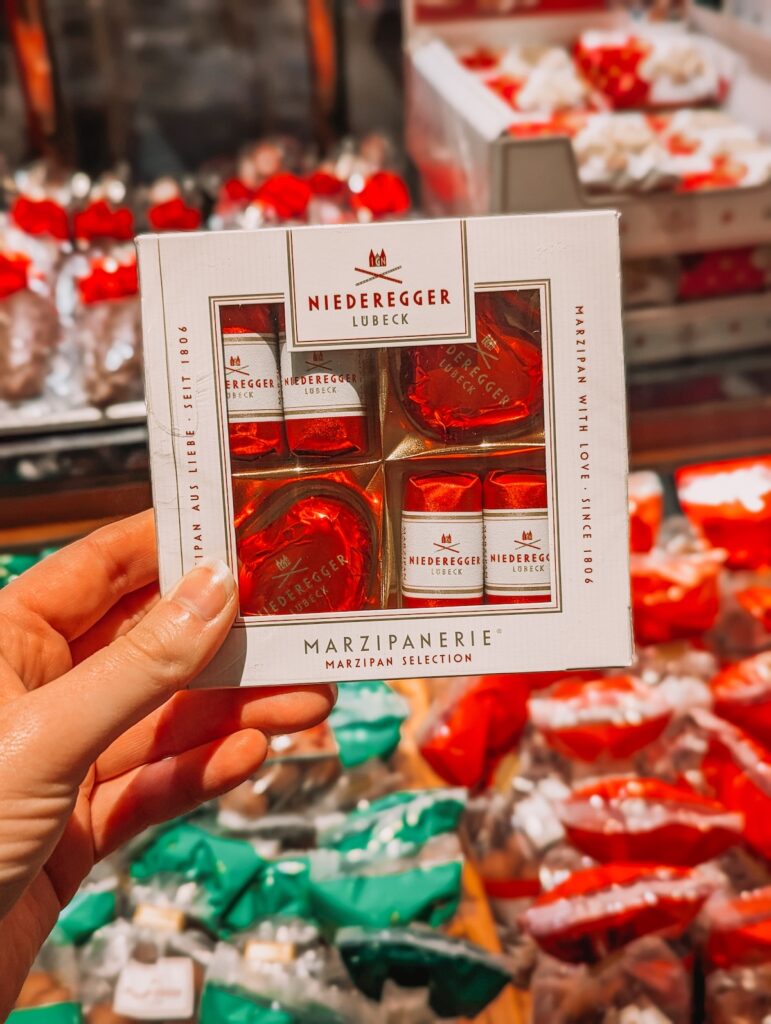
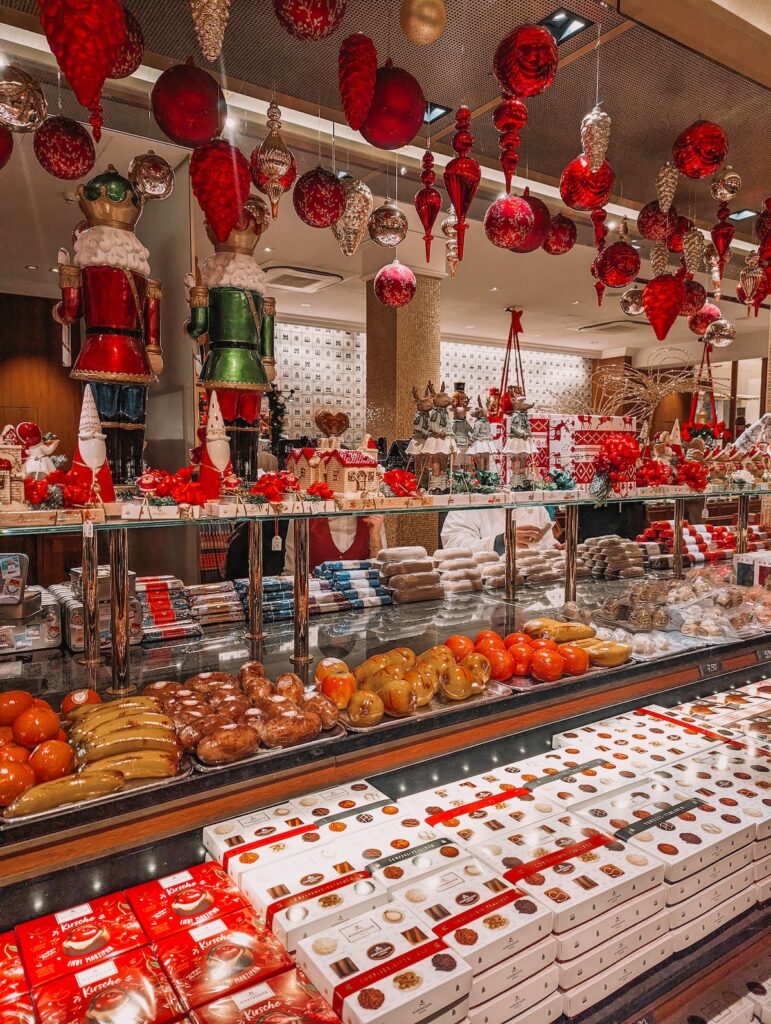
Marzipan is a confection made of sugar and almond meal, and it’s often shaped to look like fruits or vegetables. It’s a popular treat in Germany year-round, but it’s especially popular during Christmastime.
And it just so happens that Lübeck marzipan is famous!
Of the Lübeck marzipan producers, Niederegger is the best known. It was founded in Lübeck in 1806 and is still popular today.
Although you can find Niederegger in any German grocery store, it’s worth visiting the Niederegger Café in Lübeck’s Old Town, if only to admire the gorgeous marzipan creations in the window. I ordered a marzipan hot chocolate while I was there, and I swear it was sweeter than sugar!
Go on a Walking Tour
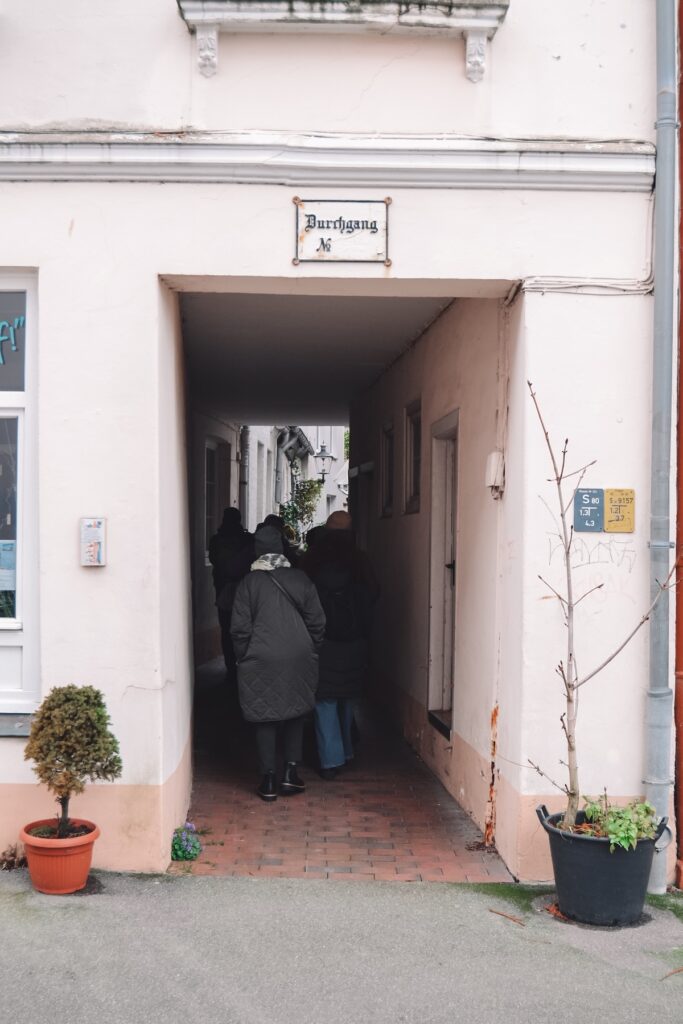
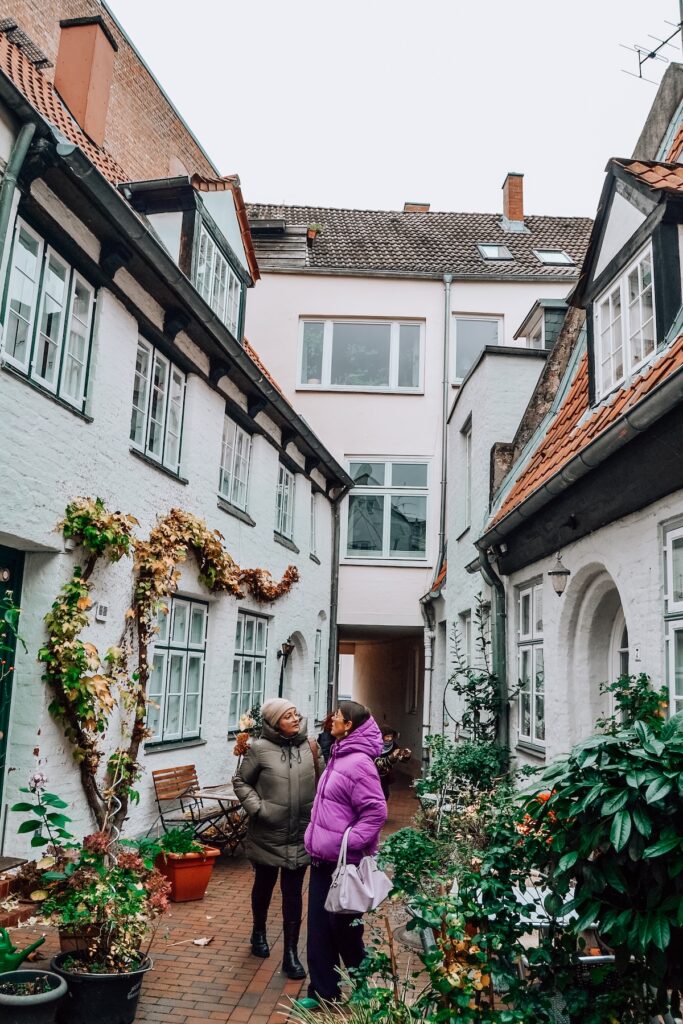
On my last visit to Lübeck, I signed up for a 2-hour walking tour of the city center directly at the tourist information office. I learned SO much on the tour and got a better feel for the city.
A highlight of the tour was getting to explore some of the hidden passageways that run between the older homes. There used to be 180 such alleyways and courtyards that divided the clusters of homes within the Old Town, and now there are only 80 left. I’d never have known to go down some of the alleys we did had I not taken the walking tour!
It looks like tours are primarily offered in German, but there are guided walking tours in English too (just less frequently).
Window Shop Along the Cute Side Streets
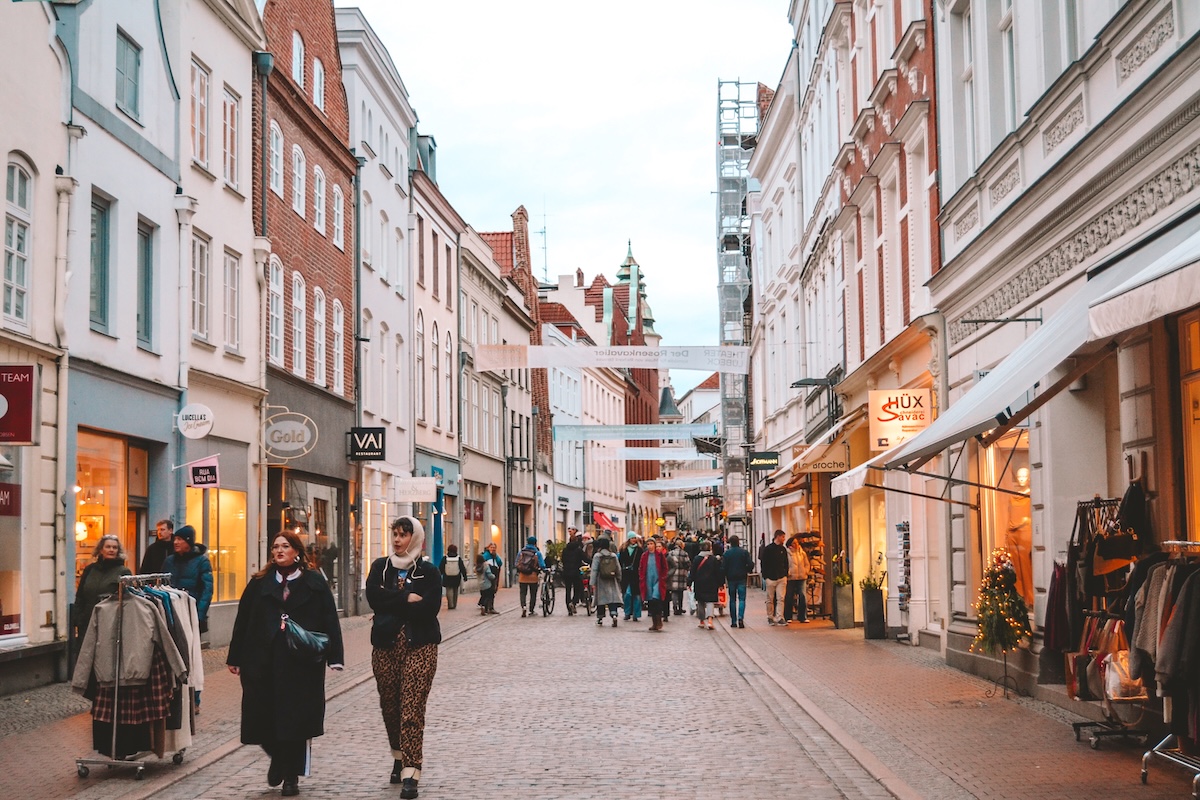
Breite Straße and Königstraße are the two main streets in Lübeck’s Old Town and where you’ll find most of the city’s top attractions.
However, I recommend turning off the main thoroughfares if you love local boutiques and quaint cafes as much as I do!
My two favorite streets for window shopping in Lübeck are Hüxstraße and Fleischhauerstraße. You won’t find any chain stores or big box stores here, just lots of local charm and good opportunities for shopping and people watching.
Tips for Visiting Lübeck
- Where to stay — I recommend staying at Hotel Motel One Lübeck, Hotel Anno 1216, or Hotel zur alten Stadtmauer.
- Time needed — If you want to “see it all,” I recommend spending at least two full days in Lübeck. However, a single day should be enough to walk the entirety of the Old Town area and pop into a museum.
- Coming from the train station — The Old Town is within walking distance of the train station, but buses also run between the two.
- Storing your luggage — There are lots of storage lockers at the train station. If you’ll be in Lübeck for just a day, it’s worth locking up your luggage so you don’t have to haul it over the cobblestone streets.
- Save your museum ticket — Many of the museums in Lübeck are part of the same museum family. If you show your ticket from one museum when you visit another in the same family, you’ll get the second museum ticket at half price! Or, purchase a day pass if you know for sure you want to visit more than one museum.
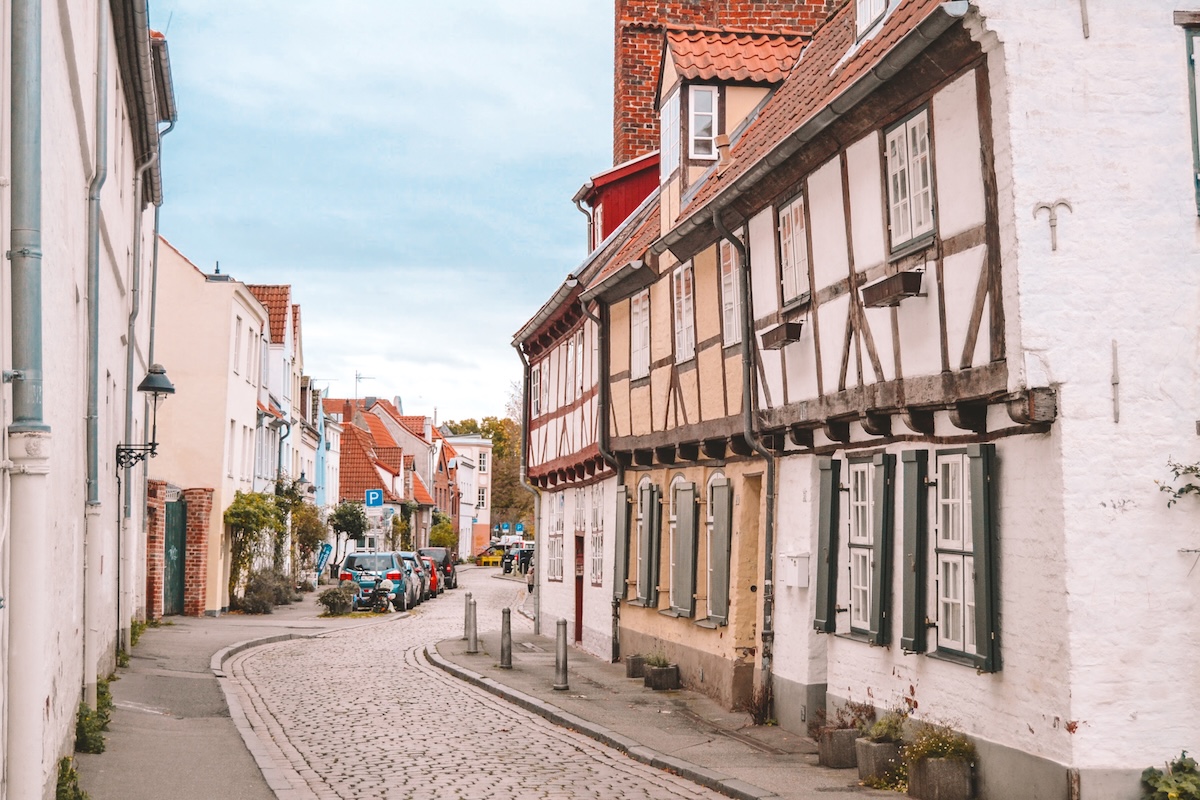
- For super cute historic houses — The section of the street “An der Mauer” near the Krähenteich (pond) is lined with higgedly-piggedly historic buildings that make for a great photo op.
Excited to Discover Lübeck, Germany?
There is a lot of history to learn and things to do in gorgeous Lübeck! I was dead on my feet after two days there, but I’m glad I managed to see so much of the beautiful city.
Now that you know what all there is to see in Lübeck, I hope you’re excited to visit! If you have any questions about the attractions mentioned in this guide, just drop me a comment below.
Don’t forget to follow me on Instagram to keep up with my daily adventures in Berlin and beyond!


Comments & Reviews
Thanks, I’m visiting Lubeck & Hamburg in May, your comments are helpful
I think you’ll really enjoy both cities! Glad you found this guide useful 🙂
Hi Claire, love reading your advice on visiting northern Germany. My parents immigrated to US in 1956 and met on the boat. Makeing a 4 week trip to Germany in September. 2 nights in Dusseldorf, 3 nights in Hamburg, 2 nights Rugen Island, 2-3 nights Berlin, 2 nights somewhere on East side, 10 days on a tour from Vienna Austria through southern Germany, Zurich & Lucerenne Switzerland, then maybe back to Munich before ending 3 days in Normandy.
Too many things not enough days.
Question: 3 nights in Hamburg, we were looking at Kiel, Schwerin, Wismar, Lubeck, Rostock and of course Hamburg…………..don’t think we can do it all. What would you suggest best way to spend three days. We will have a rental car. Be happy to compensate you for your time / advice.
Hi James, I loved hearing the story of how your parents met – how special! Your 4-week trip to Germany sounds like quite the whirlwind, and as you said you unfortunately can’t do and see everything you’d like to.
For your 3 nights in Hamburg, I’d say spend at *least* 1 full day in the city itself since there’s lots to do beyond just the Old Town / city center area. And after that my top suggestions are Schwerin (I love the castle and grounds) and Lübeck (such a charming Old Town, lots of history, and excellent marzipan.) Of course, Wismar is absolutely darling too so if you’d like to visit a quaint town after seeing so many cities, it’s really wonderful there.
I have guides to all of the German destinations you mentioned — except for Kiel and Rügen — so feel free to look around my blog and either leave more comments or send me an email if you have further questions. Always happy to help!