Bamberg is one of the prettiest towns in Bavaria (if not all of Germany!) and its preserved medieval center make it one of my all-time favorite day trips from Nuremberg and Munich. Here are the best things to do in Bamberg for first time visitors, with tips for your visit!
This post contains affiliate links, from which we may receive a commission. You can read our full affiliate disclosure here.
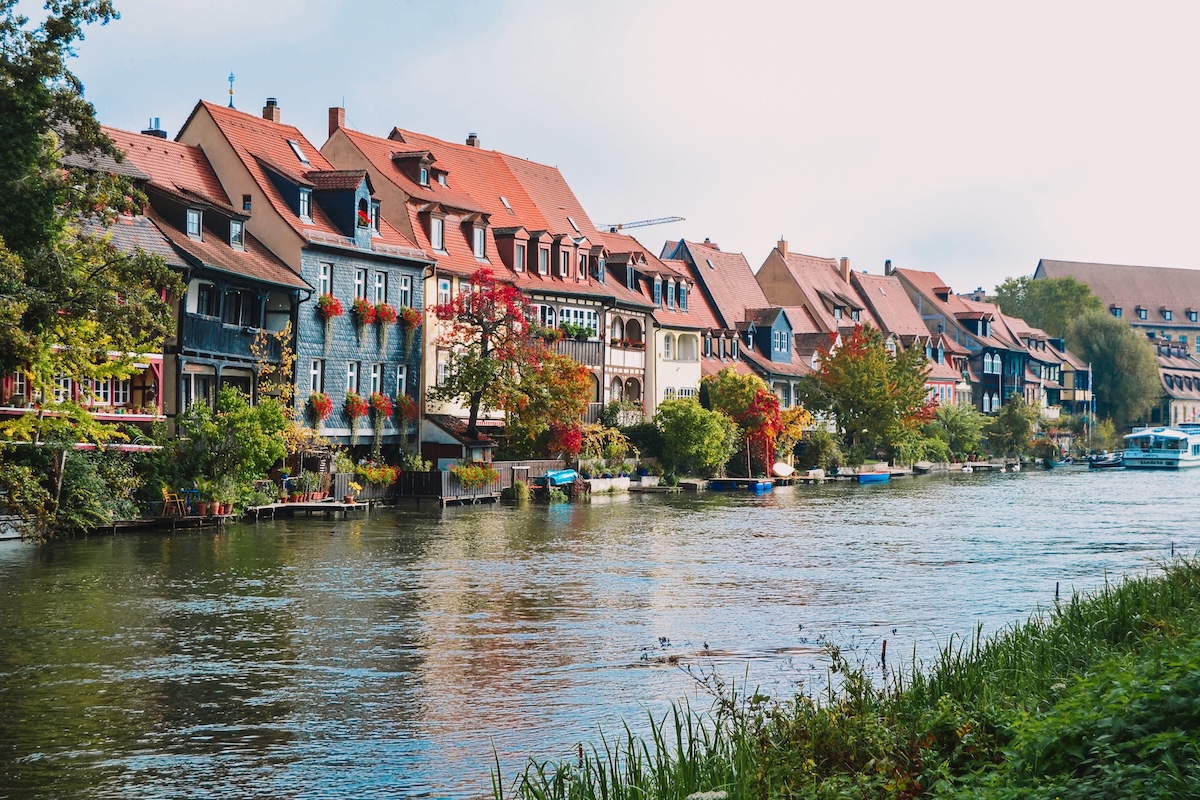
Look up “postcard perfect” in the dictionary, and Bamberg will pop up. Okay, maybe not literally, but it should because this small Bavarian town is gorgeous!
When the German King — and later Holy Roman Emperor — Henry II granted Bamberg a bishopric in the early 1000s, he intended it to be a “Little Rome.” Bamberg never reached the level of cultural or political significance that Henry envisioned, but it’s long remained one of the gems of Bavaria regardless.
What sets Bamberg apart is its medieval center (which wasn’t destroyed in World War II, unlike neighboring Munich and Nuremberg). Between its UNESCO-listed city center, half-timbered houses, and picturesque location along the Regnitz River, Bamberg is an absolute must-visit city in Bavaria!
Here are the top things to do, see, and eat in the City of Seven Hills, with lots of tips for your visit sprinkled in by yours truly.
Happy exploring! -Claire
PS. If you’re debating between visiting Rothenburg ob der Tauber or Bamberg, my vote goes to Bamberg simply because it’s 1) less crowded, 2) has a more authentic vibe, and 3) is SO much easier to reach by train.

The Top Things to Do in Bamberg
Claire’s Tip: Take bus #901 from the central station (Hauptbahnhof) to the stop “Bamberg Schranne.” Then, walk 5 minutes to the tourist information office (address: Geyerswörthstraße 5) to pick up a free map of the Old Town. It’s so much easier than following the blue dot on your phone’s navigation app!
Old Town Hall (Altes Rathaus)
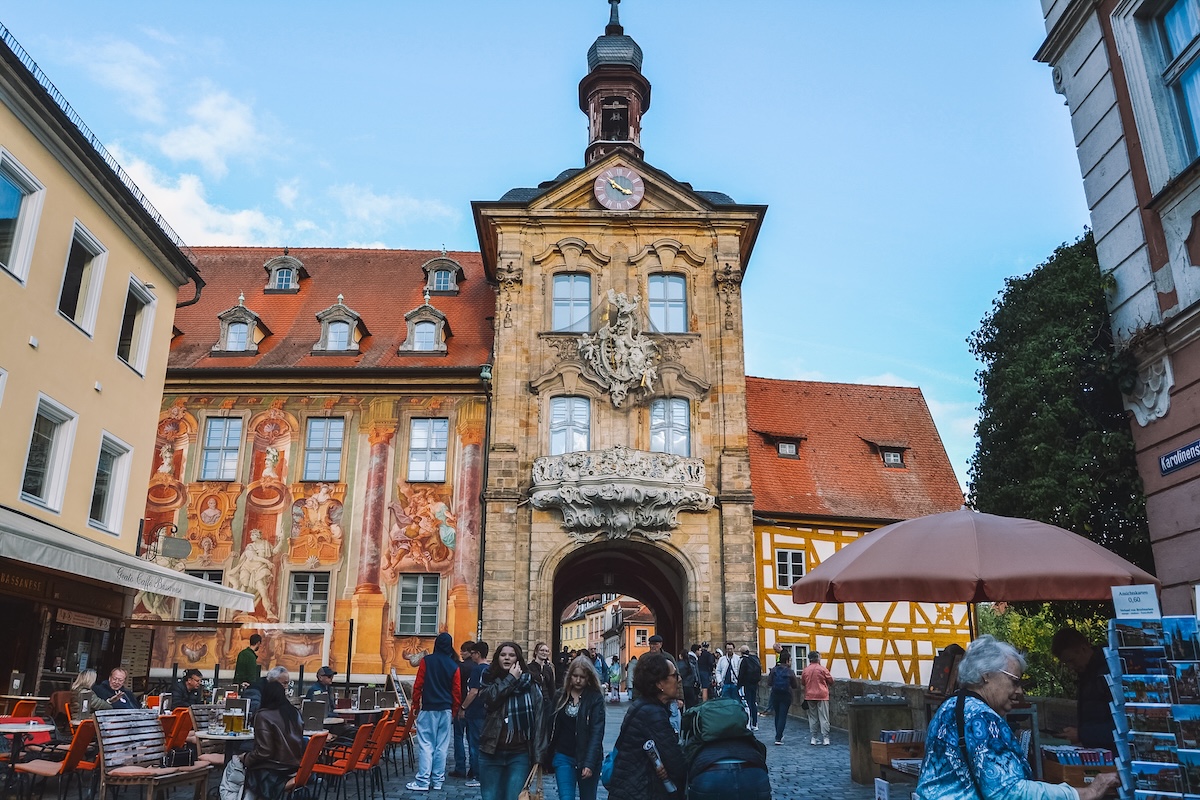
Built in the 1460s, Bamberg’s Old Town Hall is the crowning jewel of Bamberg. If you’ve traveled around Germany for any length of time, I’m sure you’ve seen half a dozen town halls by this point, but trust me when I say that Bamberg’s is special.
There are a few reasons the Old Town Hall is freaking amazing:
- It’s built on an artificial island. The bishop wouldn’t allow the citizens of Bamberg to build a town hall, so they drove stakes into the middle of the Regnitz River to create a man-made island for it.
- It’s (almost) all original, baby. The foundation has definitely been reinforced over the centuries, but the Old Town Hall is otherwise an authentic medieval structure — not a touristy gimmick or reproduction!
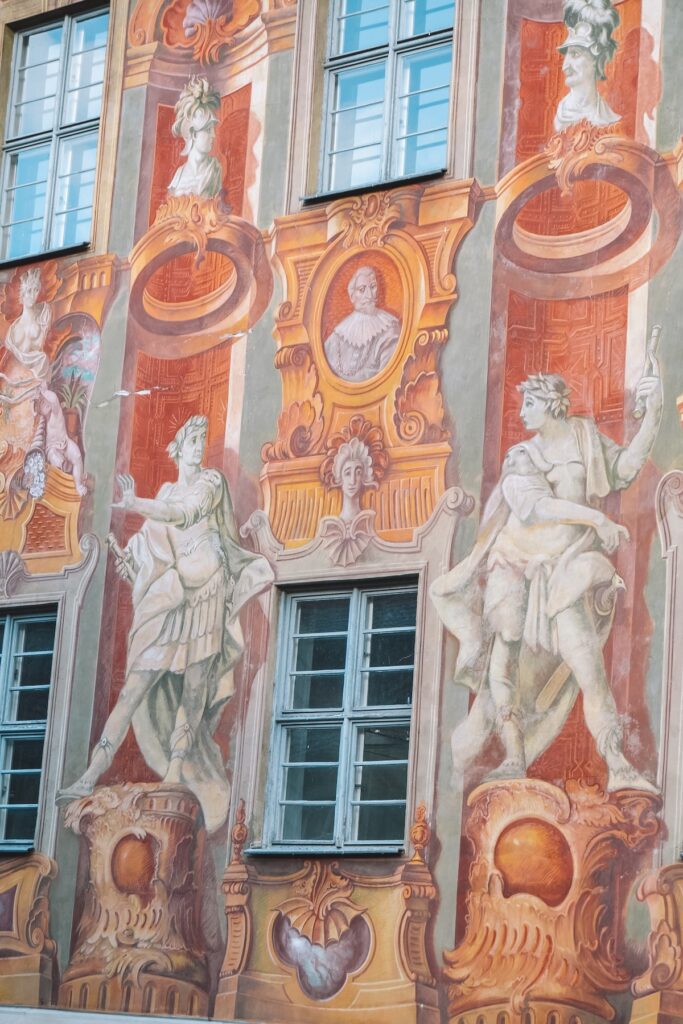
- It’s covered in trompe l’oeil frescoes. I saved the best for last! The real reason you want to visit the Old Town Hall is to admire the meticulously detailed frescoes up close. They cover the building and add to its Old World charm.

For the best photo of the Old Town Hall, walk across the Geyerswörthsteg (it’s a small suspension bridge running across the river, near the locks. You can’t miss it!). This will give you a perfect view of the half-timbered portion of the Town Hall.
And to see the trompe l’oeil frescoes up close, I suggest walking across both the Untere and Obere Brücke (bridges) that actually connect with the Town Hall.
Claire’s Tip: There’s a small porcelain museum inside the Old Town Hall. It’s not a “must see” attraction in Bamberg, in my opinion. I suggest saving your time and money for other sights mentioned in this guide.
Bamberg Cathedral (Bamberger Dom)
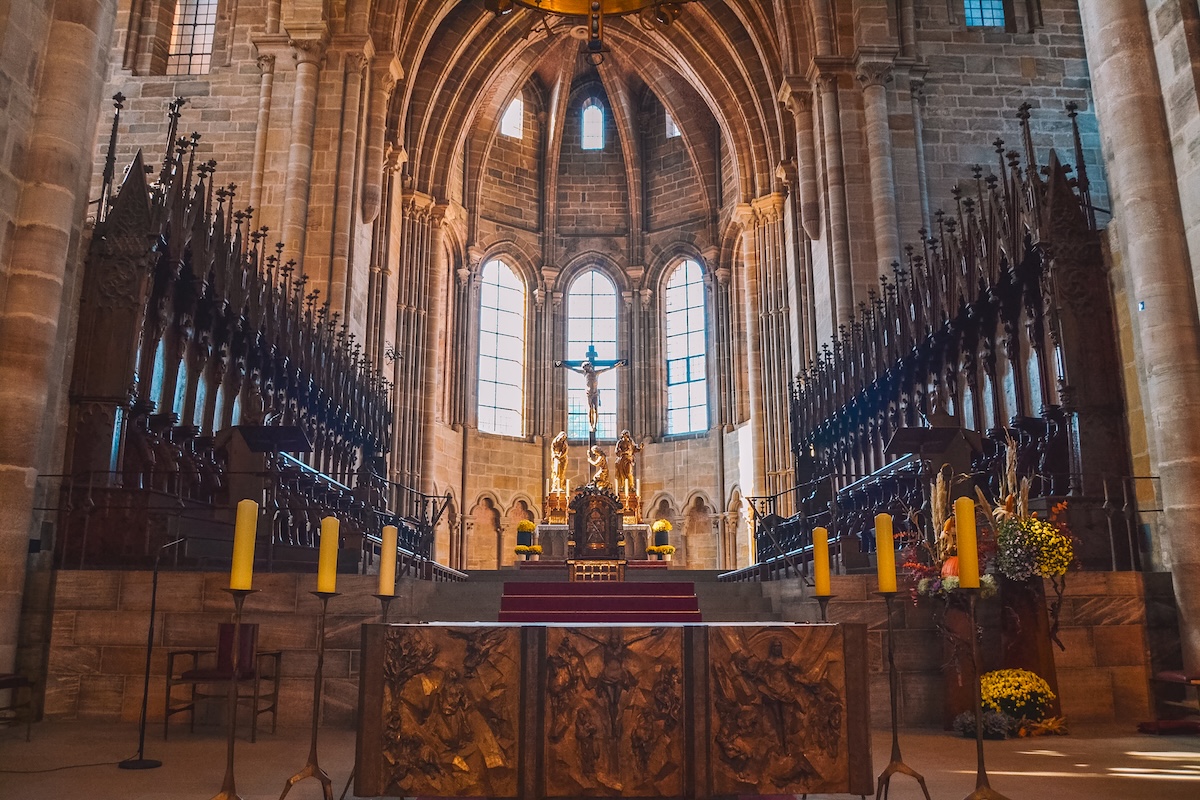
The other top tourist attraction in Bamberg is its soaring, four-towered cathedral built upon one of the city’s seven hills. Fun fact: this is actually the third cathedral that’s been built on this spot — the first two burned down, and the current cathedral was built in the 1230’s in the Romanesque style.
If you see just two things in Bamberg, make it the Old Town Hall and the cathedral!
The cathedral was built by Henry II, the same man who officially founded the city. That’s a key fact to remember, because Henry and his wife, Cunigunde, are both entombed at the front of the cathedral near the apse.
Did you know? Henry II died without an heir, and Cunigunde ruled briefly before becoming a nun at a Benedictine monastery she had founded in Kassel. Some believe that the couple took a vow of chastity, which is why their marriage resulted in no kids. Both were canonized post-mortem, making their tombs a significant feature of the Bamberg cathedral.
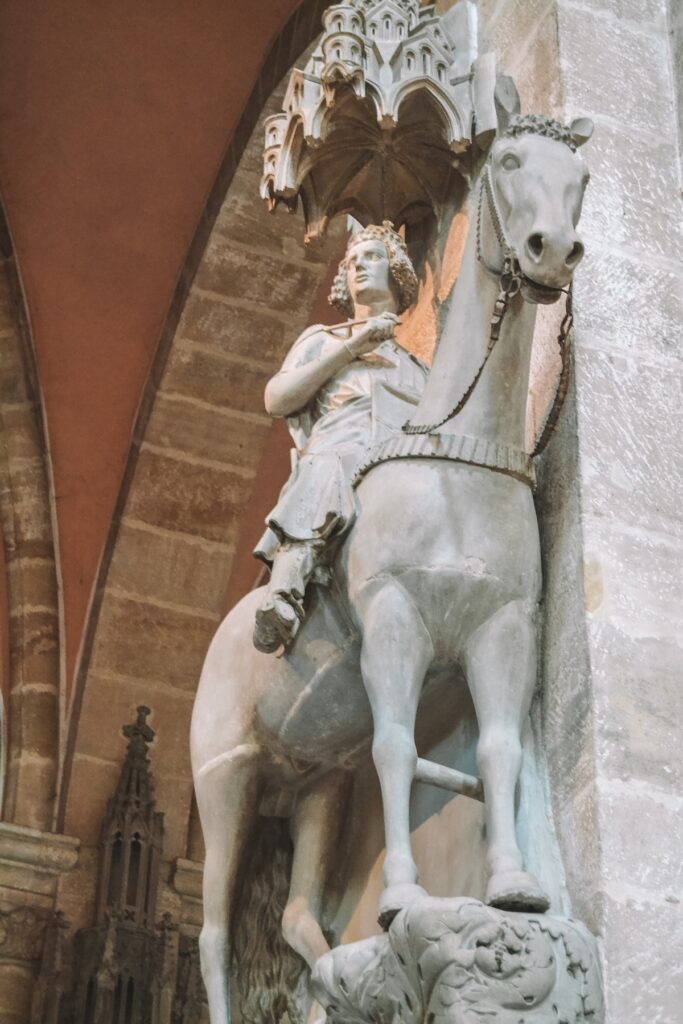

In addition to the tombs of Henry II and his wife, the other can’t-miss feature of the cathedral is the mysterious “Bamberg Rider.” What makes it so mysterious is that no one knows who the man is or why he was pictured on horseback!
The cathedral is also the final resting place of Pope Clemens II and is the only papal tomb found north of the Alps.
Claire’s Tip: There’s a Diocesan Museum at the cathedral, but I suggest skipping it.
Old Court (Alte Hofladung)
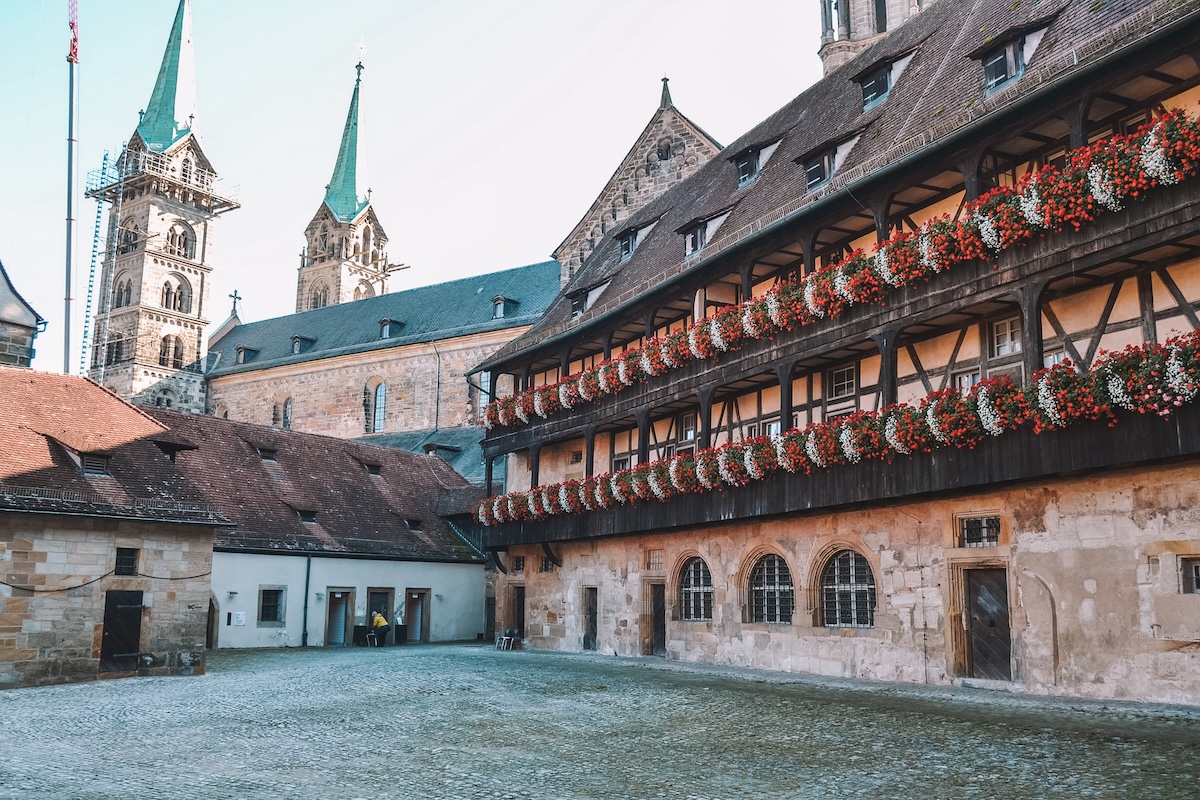
Just around the corner from the cathedral is the Old Court, a medieval courtyard lined with some of the most beautiful half-timbered buildings you’ve ever seen. The court was originally linked with the cathedral, but the structures you see today were built in the 1470’s after a remodel.
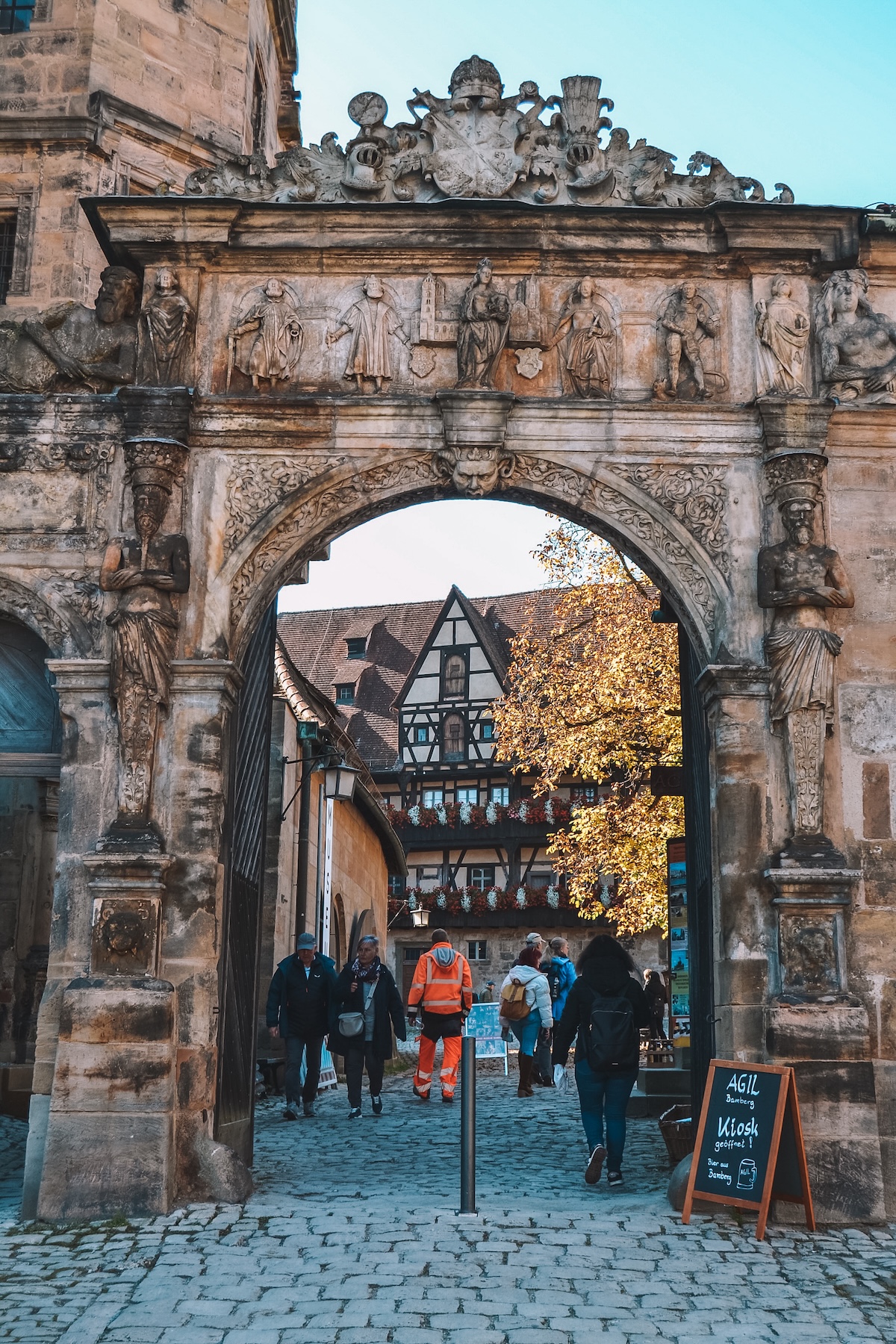
To enter the Old Court, you have to walk through the Beautiful Gate (Schöne Pforte) which is indeed very pretty. As you pass through, look up and see if you can recognize the depictions of Mary, Henry II and Cunigunde, and the Saints George and Peter.
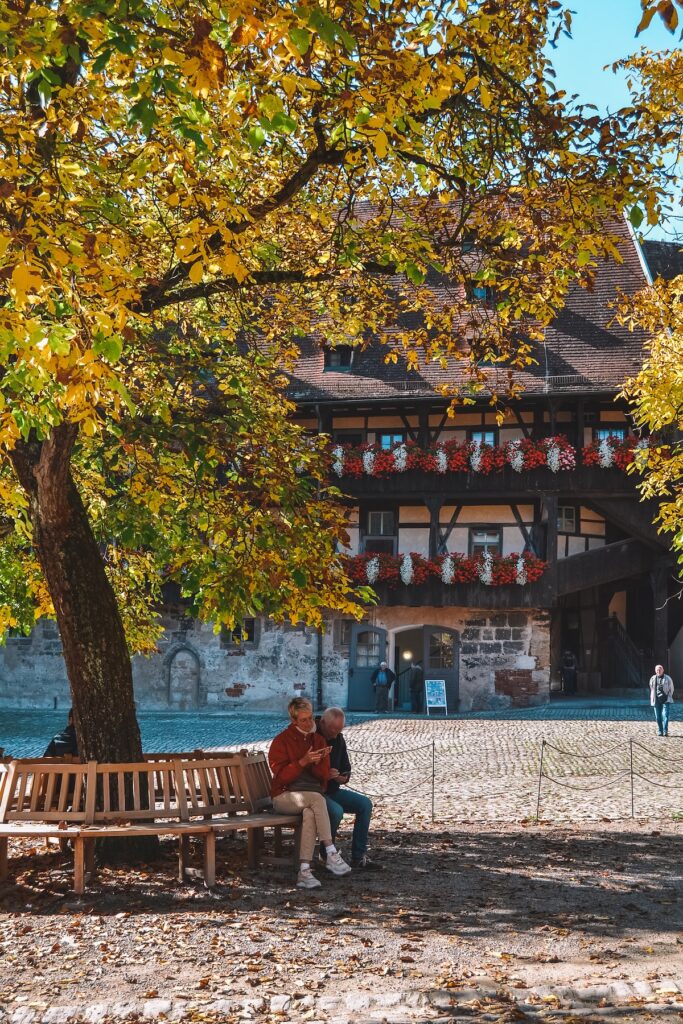
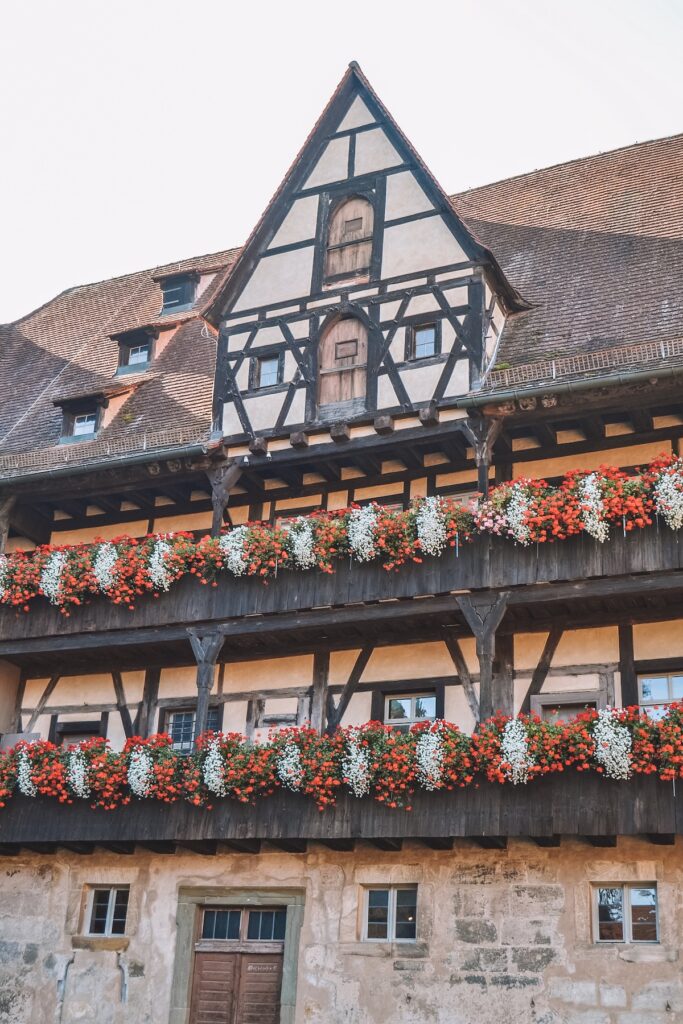
The Historical Museum is located within the Old Court, but I opted to skip it on my last visit in favor of touring the Residence.
I mainly suggest popping into the court to take some photos — the half-timbered buildings are a beautiful backdrop for photos. It really feels like you’ve stepped into a medieval courtyard!
Claire’s Tip: There are public toilets located within the Old Court, which you can use for a small fee (1 Euro or less). I always suggest keeping a few coins in your wallet when traveling through Germany because bathrooms are almost never free!
New Residence (Neue Residenz)

One of my personal favorite things to do in Bamberg is tour the New Residence, which served as the home for the Prince Bishops of Bamberg until 1802.
What’s a Prince Bishop? The Prince Bishop was both a political leader and the head of the church in Bamberg.
The New Residence is a massive compound with four wings (two Baroque and two Renaissance). With your ticket, you’ll get access to 40+ rooms decorated in the styles most popular throughout the 17th and 18th centuries.
Of note is the Imperial Hall as well as the stately apartments, the latter only being accessible on a guided tour. Note that the guided tour is in German, with information cards provided in English (or your mother tongue).
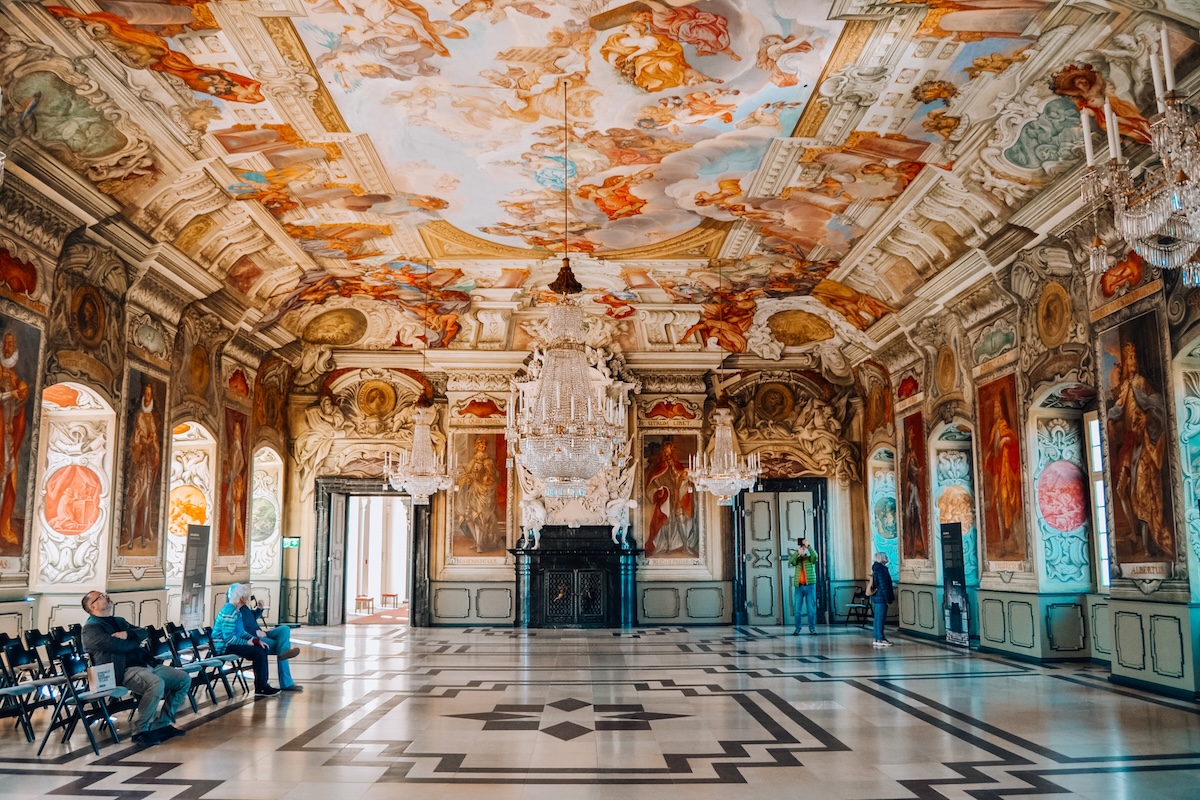
I speak German and loved the tour, but my aunt and uncle who only speak English were a little bored by the end because the detail provided on the info cards was nothing compared to what the tour guide provided. The stately apartments are stunning though!
In summer, head to the rose garden out back after touring the interior. The flowers (4,500 of them!) are beautiful and you’ll have a great view of Bamberg’s Old Town from above.
Claire’s Tip: Guided tours of the Prince-Bishop’s apartments take place every 30 minutes, and you pay a little extra for it. Note that the New Residence is cash only and they don’t accept credit cards.
Little Venice (Klein Venedig)
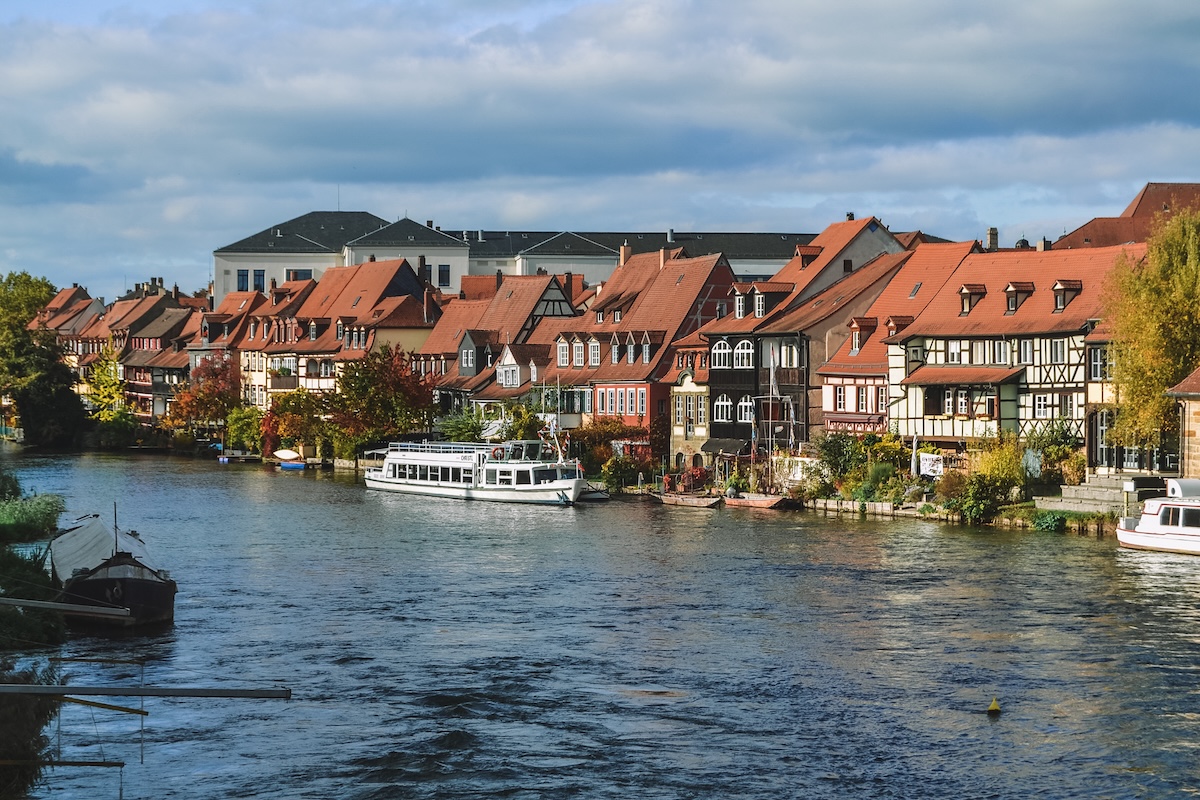
Bamberg’s Old Town has lots of winding cobbled streets and half-timbered houses to get lost amongst, but the “Little Venice” area is hands down the most beautiful corner of the city.
Once the fisherman’s district, this strip of charming half-timbered houses butt up against the Regnitz River. The houses have small docks or mooring spots; this would have given the fishermen immediate access to their place of work.
Most of the houses date back to the Middle Ages, but unfortunately you can’t go into them. The best place to photograph them is along “Am Leinritt,” an old towpath on the opposite bank that horses once plodded along as they pulled heavier boats down the river.
Maximilian’s Square (Maximiliansplatz)
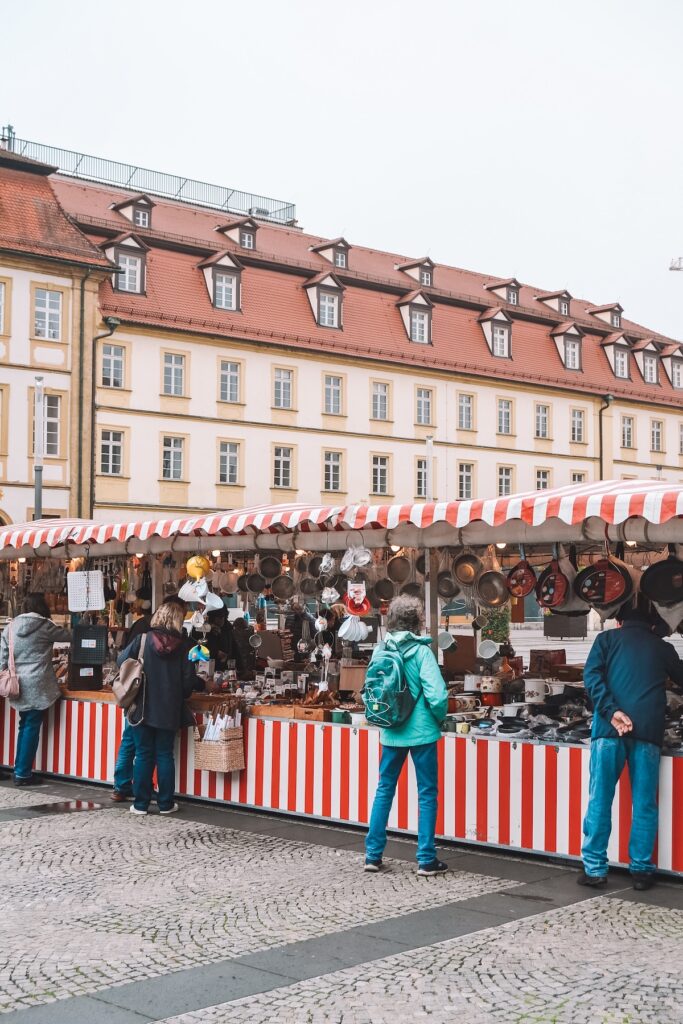
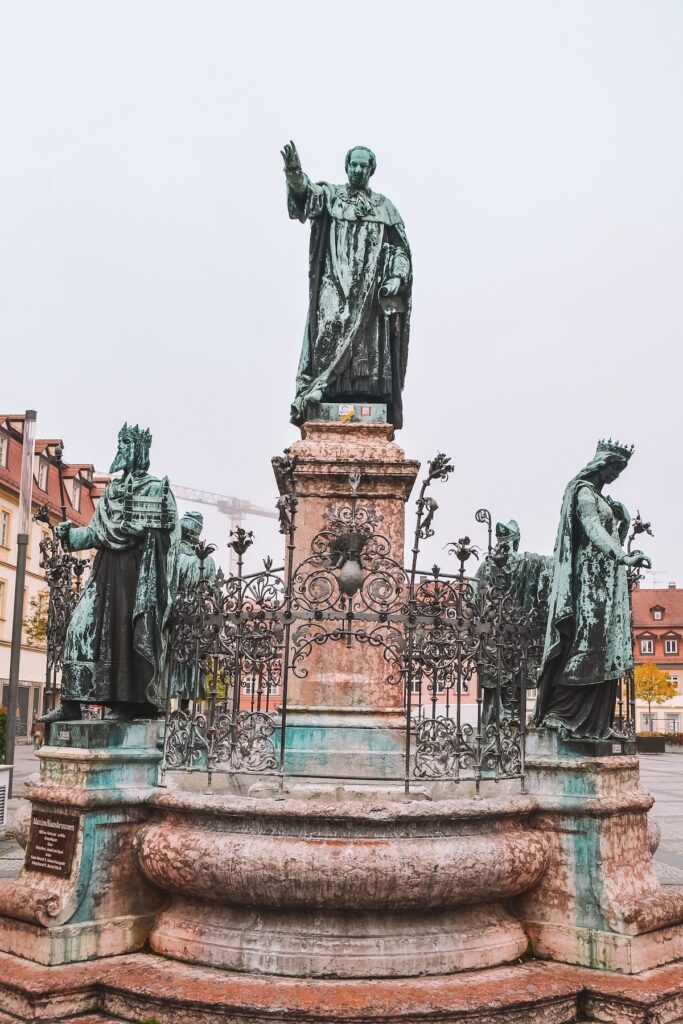
Named after Maximilian I Joseph, King of Bavaria, Bamberg’s central square was expanded in 1802 into what you see today (part of a modernization effort at the time).
I won’t lie, Maximiliansplatz isn’t the prettiest square you’ll see in Bavaria, but it’s got a great market that takes place Monday to Saturday from 7am – 6pm.
I suggest visiting the market for a cheap but filling lunch, if a pricier sit-down meal isn’t in your budget. Like any German weekly market worth its salt, there’s a bratwurst stall here as well as a few other food vendors.
The New Town Hall is also located on this square.
Claire’s Tip: In December, this is where Bamberg’s quaint Christmas market takes place.
Green Market (Grüner Markt)

Another favorite tourist attraction in Bamberg is the lovely Green Market, which is a pedestrian area that’s lined with small shops as well as stalls selling fresh produce and flowers Monday to Saturday.
Claire’s Tip: As you make your way along the Green Market, look for the famous Neptune Fountain at the end of the street.
St. Martin’s Church (Kirche St. Martin)

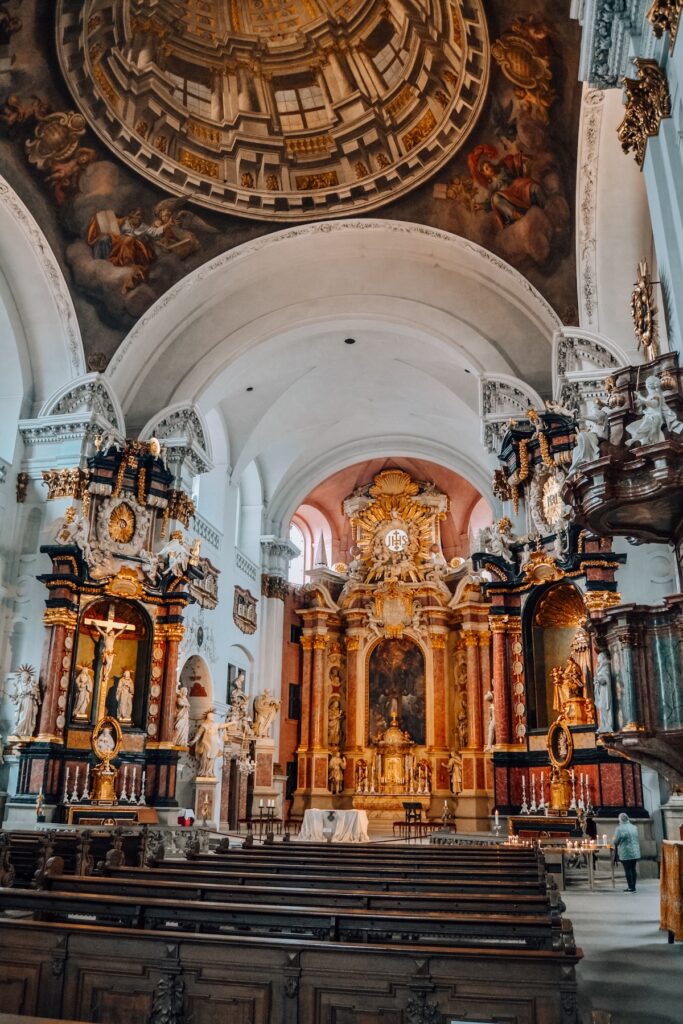
Located along the Grüner Markt, St. Martin’s is the only Baroque church in Bamberg and is yet another masterful example of trompe l’oeil.
Instead of decorating the walls of the church, St. Martin’s trompe l’oeil can be found on its dome. Except it’s not a real dome — it’s just painted to look like one! Giovanni Francesco Marchini is responsible for the “dome,” and it’s a personal highlight for me every time I visit Bamberg.
Fruit Market Fountain (Obstmarkt Brunnen)

The fountain at the Fruit Market has tiered seating around it, in the shade of a big tree.
The Fruit Market Square in general is one of the most relaxing in the Old Town, and I suggest grabbing an ice cream from Riffelmacher (Ob. Brücke 12) and sitting around the fountain on warm afternoons.
Even More Things to Do
- Christmas market — You can read my full review of the Bamberg Christmas market. It runs for about 4 weeks during Advent and takes place on Maximiliansplatz.
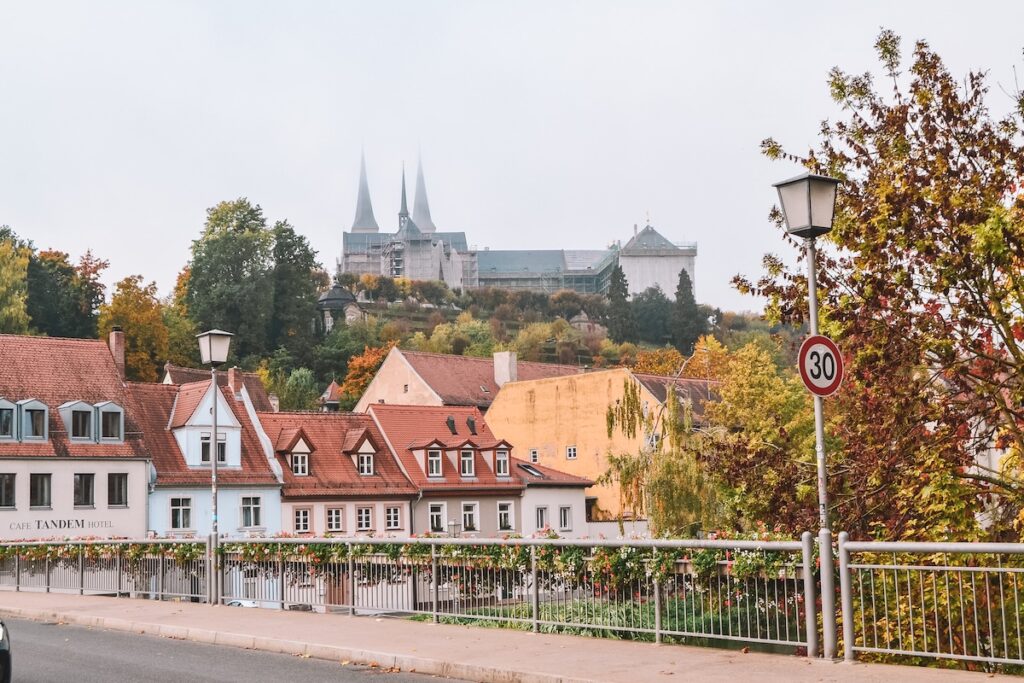
- St. Michael’s Monastery (Michaelsberg) — A baroque monastery built on one of the seven hills. It’s been closed for the past 14 years and is set to reopen in April 2026. I can’t wait to return to Bamberg to see it!
- Guided walking tour — If you’re crunched for time or simply want someone else to do the thinking for you, sign up for a guided walking tour of the Old Town to see the main attractions and learn about Bamberg’s fascinating history.
- Natural History Museum — Located within a former Jesuit college, this museum has one of the oldest natural history exhibits in the world.
What to Eat and Drink in Bamberg

Thanks to its location in central Bavaria, Bamberg is a great place to try hardy Bavarian fare like Schweinebraten (roast pork), Spätzle (cheesy noodles), and Brezeln (soft pretzels).
Bamberg-specific foods and drinks you won’t find anywhere else include:
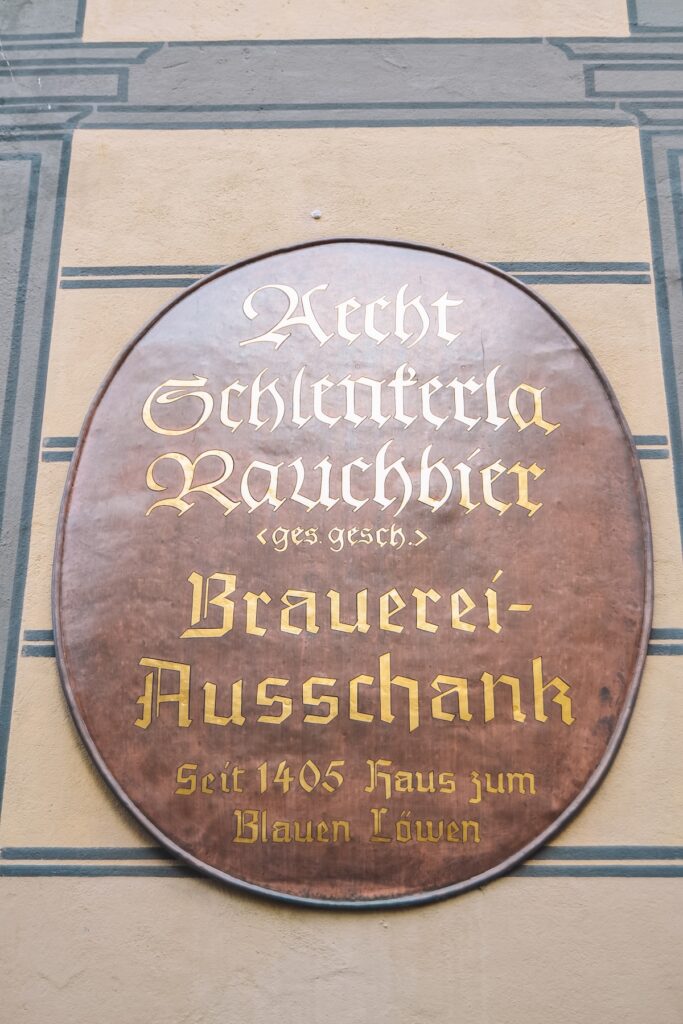
- Smoked Beer (Rauchbier) — If you want to drink the original Rauchbier, head to Schlenkerla. They still serve their beer from wooden barrels and make it using the traditional method. Smoked beer tastes super smoky thanks to its unique malting process, which uses a beechwood fire to smoke the malt (read about the process here). Note that big tour groups often go to Schlenkerla; if that’s a no-no for you, order a Rauchbier at the slightly less well-known Brauerei Speziel instead. They also make Rauchbier using the traditional method!
- Bamberg Crescent (Bamberger Hörnla) — Similar to a croissant, but not as flaky. This is a Bamberg specialty and is definitely more of a crowd-pleaser than the smoked beer.
Claire’s Tip: If you love trying new foods when you travel, consider signing up for a culinary walking tour or beer and brewery tour while you’re in Bamberg.
Visiting on a Day Trip? Use This Itinerary!
If you need some help planning your trip to Bamberg, here’s the day trip itinerary I recommend following. This is the exact stop-by-stop itinerary I used the last time I visited (with aunt and uncle in tow, I might add!), with instructions on how to reach Bamberg by train and which kind of train ticket to buy.
Is Bamberg Worth Visiting? Final Thoughts
I’ve visited Bamberg several times now and always come away smiling. The town can get a little crowded in the summer, but it’s still somewhat of a “hidden gem” in the winter.
Now that you know what to do and see in Bamberg, it’s time you booked those tickets to make your visit happen! Feel free to leave me a comment below with any questions you might have. I’m always happy to offer extra advice when needed!
Don’t forget to follow me on Instagram to keep up with my daily adventures in Berlin and beyond!


Leave A Reply!