It’s no secret that Munich is one of Germany’s most expensive cities, but that doesn’t mean you can’t visit on a budget! Here are 25+ FREE things to do in Munich that will still make for an amazing trip.
This post contains affiliate links, from which we may receive a commission. You can read our full affiliate disclosure here.
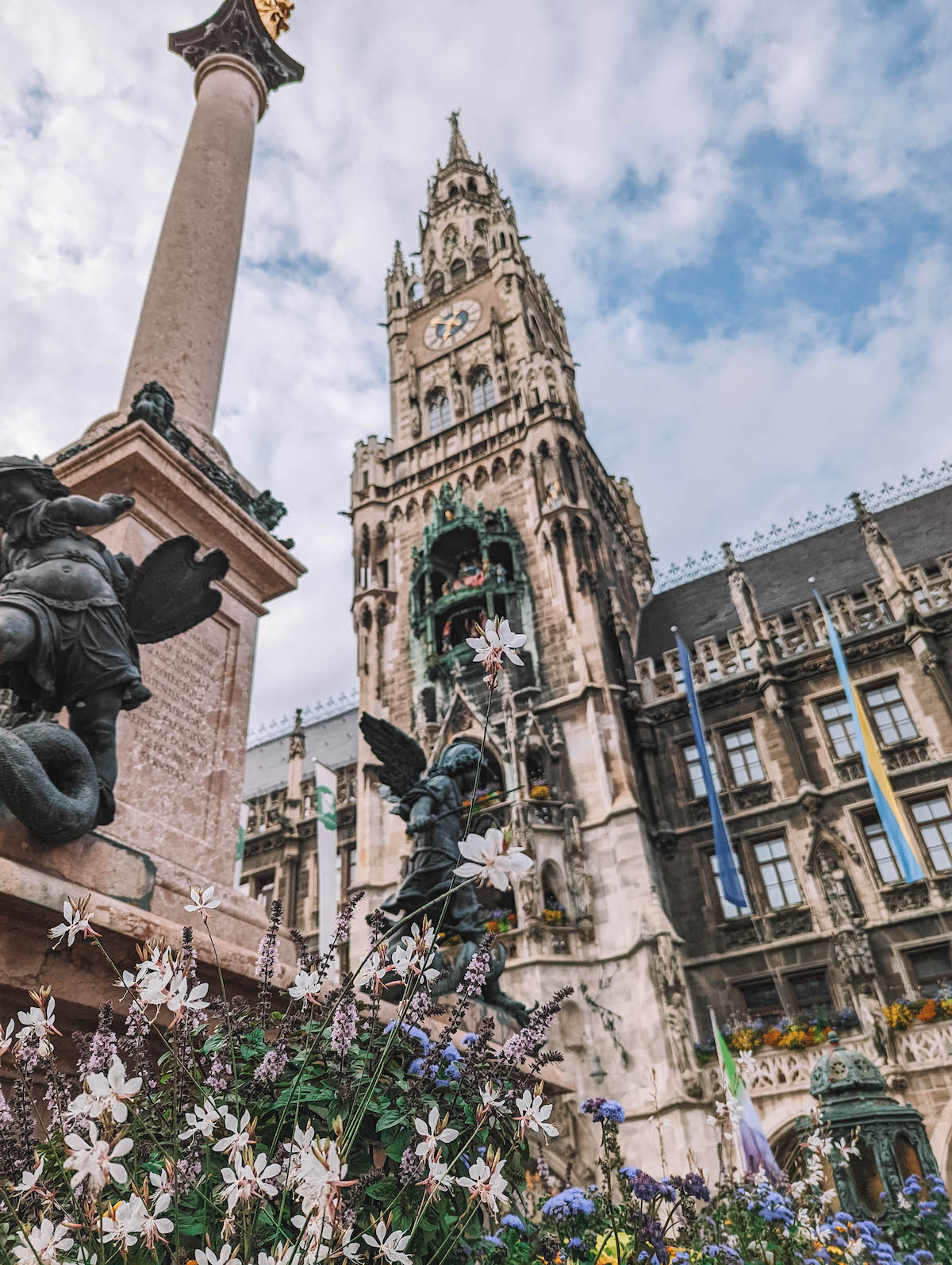
Munich is a gorgeous city in southern Germany with a rich history, stunning architecture, and a unique culture. As the capital of Bavaria, it’s one of the top tourist destinations in all of Germany — and it’s also the most expensive city to live in, to boot.
If you think visiting Munich on a budget is impossible, think again! Whether you’re a local who’s trying to save some cash for other adventures or a first-time visitor who doesn’t want to pay out the nose for attractions, this list of free things in Munich is for you.
There are SO many places to visit in Munich for free, and if you know where to go you won’t feel like you’re missing out whatsoever on the city’s paid attractions. Pinky promise!
Have fun! ~Claire
PS. Although I’m not a super strict “budget traveler,” per se, I definitely err on the side of saving money as much as possible when traveling around Germany. I recently shared the 3-day Munich itinerary that I suggest to family and friends when they come to visit, and though it’s already budget-friendly it can be adjusted to be a completely free tour of the city when paired with this guide.
All of the Free Activities at a Glance
There are TONS of free attractions in Munich; if you don’t want to scan the entire post (I get it!) here’s a quick overview of all of the activities mentioned.
- Visit a free museum (see the full list below!)
- Take a free walking tour
- See the courtyards within the Residence
- Relax in a park or garden (3 ideas below)
- Wander through the main farmers market
- Listen to the famous Glockenspiel
- Visit the churches in the Old Town
- Explore the Nymphenburg Palace gardens
- Tour the Dachau Concentration Camp Memorial Site
- Take in the view from Olympic Hill
- See the latest cars at BMW World
- Watch the Eisbach surfers
- See the Bavaria Statue
- Visit Dallmayr Delikatessenhaus
- Walk down Ludwigstraße
- Explore the Gärtnerplatz district
- Attend one of the many (free!) festivals
Budget Hotel and Hostel Options
- THE TENT Youth Hostel (15 mins from the center, but only for people 30 years and younger)
- Wombat’s City Hostel Munich Hauptbahnhof (centrally located near the central station)
- Any of the ibis hotels (they have multiple locations, so shop around to see which have the best rates during your stay)
- Bayer’s Boardinghouse und Hotel (near the central station; I stayed here last time with my aunt and uncle, and while it was nothing fancy it was clean and got the job done!)
Map of Munich’s Free Attractions
Visit One of the Free Museums in Munich
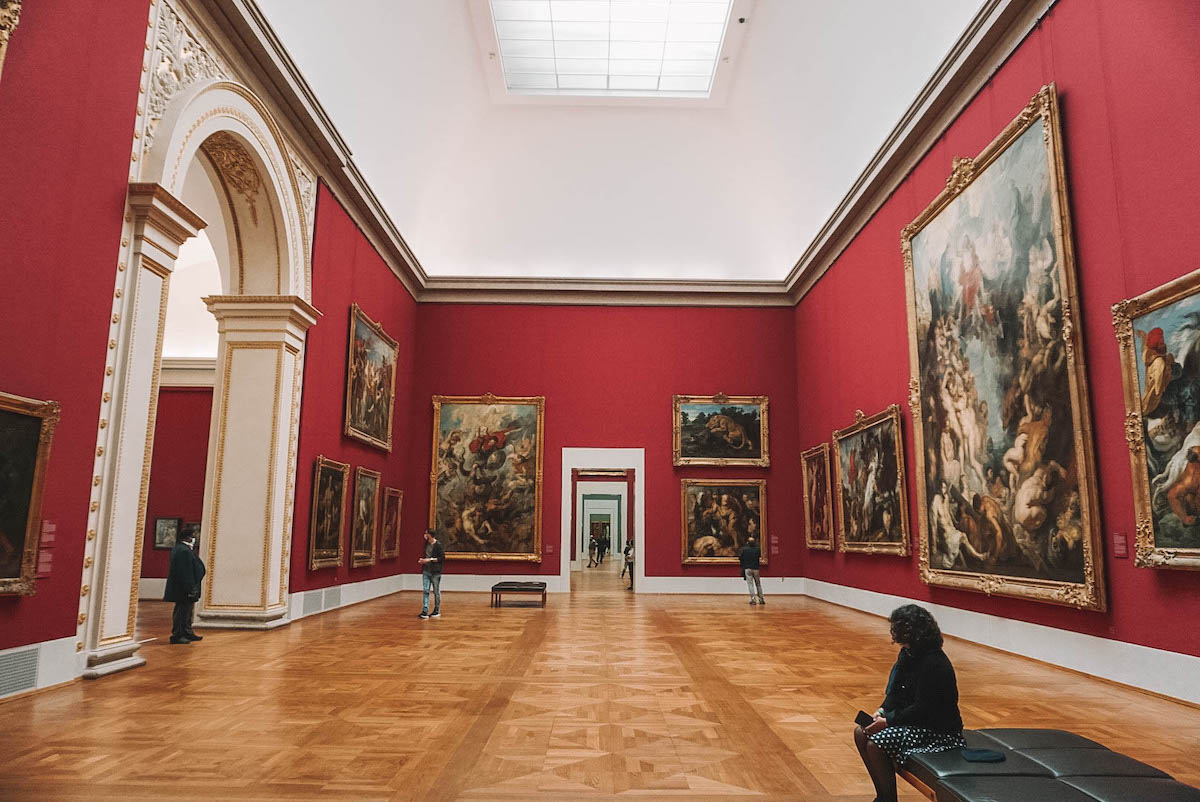
Munich might not have the most extensive roster of museums with free entry, but the ones that don’t charge anything are top notch! The free museums in Munich you should know about include:
- Archiv Geiger — Rotating exhibits showcasing the work of German artist Rupprecht Geiger.
- Paleontological Museum — Dinosaurs, fossils, saber-tooth tigers, oh my!
- Geological Museum — Even more fossils.
- Museum of Casts of Classical Sculptures — The title says it all! Plaster casts of some of the most famous sculptures from ancient times.
- Documentation Center for the History of National Socialism — Takes you through the Nazi party’s rise and fall via accompanying videos and photos.
- Bavarian State Library — The library offers rotating exhibitions, which are free to enter.
Claire’s Tip: Pay Just 1 Euro on Museum Sundays!
Another way to get super cheap entry into Munich’s most popular museums is to visit on Sundays. As part of the Museum Sunday program, many of the top museums charge just 1 Euro every Sunday.
Definitely double check to see if the museum you’re interested in visiting participates in Museum Sunday before you visit. My top recommendations for museums with 1 Euro entry on Sundays are:
Take a Free Walking Tour
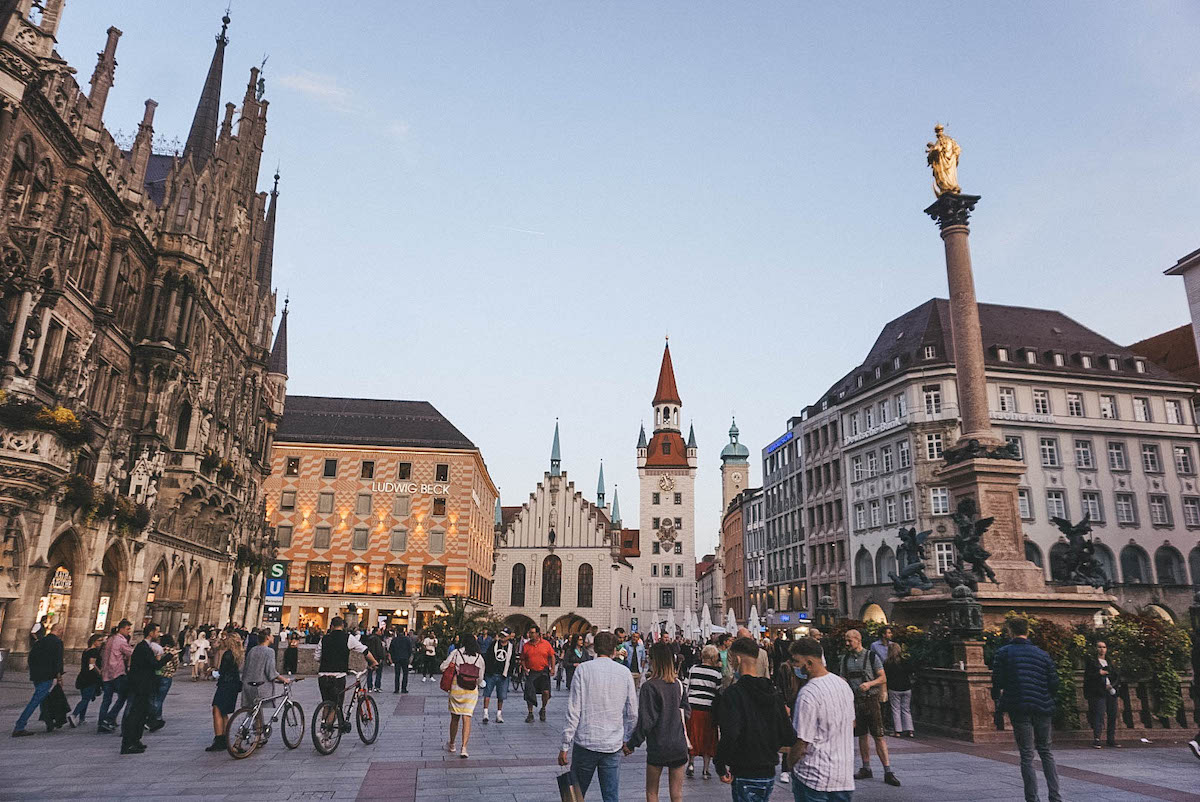
The free walking tour offered through Sandeman’s New Europe is seriously good. It’s a 2.5-hour tour that will take you to the main sights in the Old Town, including the soaring Frauenkirche (Church of Our Lady), the Glockenspiel at Marienplatz, and the Royal Residence.
If you don’t plan on touring any of the historic sites in the Old Town (like the Residence, for instance), this free walking tour will be the best way for you to hear about the city’s founding, the exploits of the royal family, and the critical role the city of Munich played in Adolf Hitler’s rise to power.
Claire’s Tip: Even if you take a free walking tour, you should still tip your tour guide!
See the Courtyards of the Residence
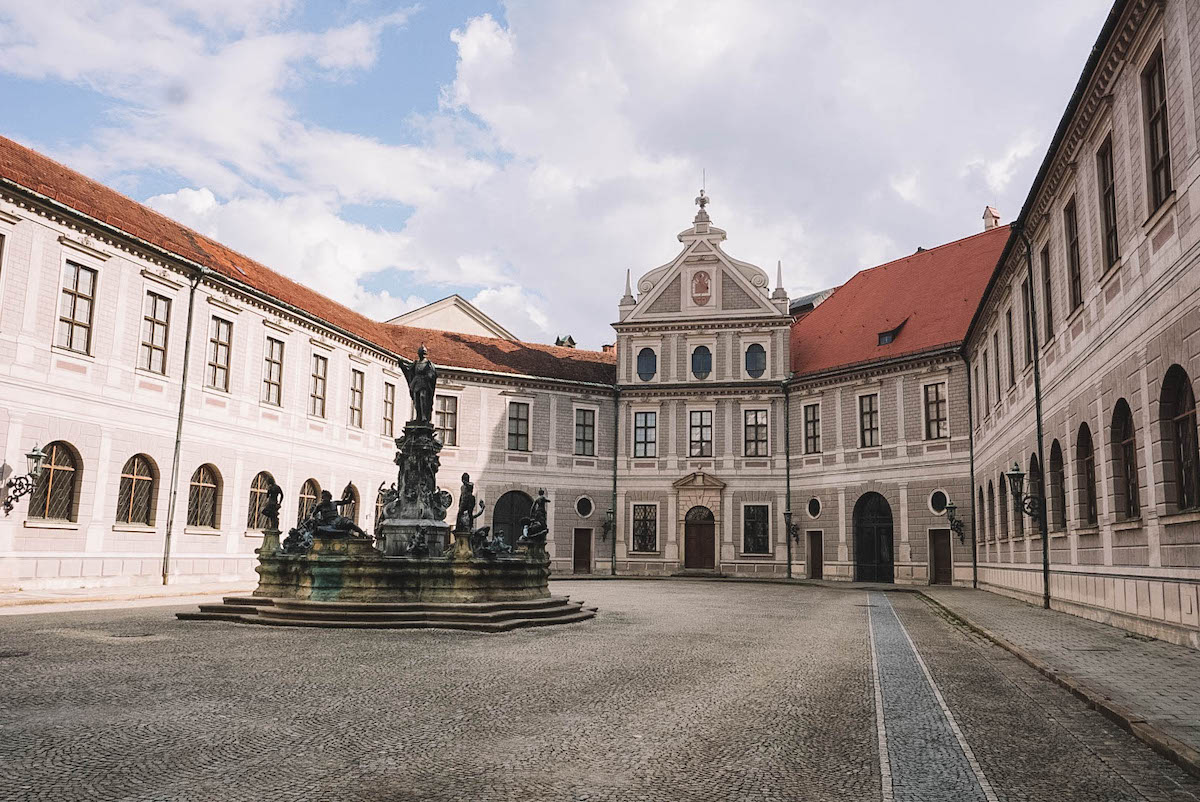
Munich’s Residence was the seat of government and home of the Bavarian royal family from 1508 to 1918. The building complex you see today is massive (if you pay the 10 Euros to tour the Residence, you’ll get to see around 100 rooms — a mere fraction of what’s inside!). However, the Residence didn’t start out this big!
Over the years, each new Bavarian monarch added a wing or series of rooms to the Residence. That’s how the palace complex wound up with 10 lovely courtyards.
The courtyards of the Munich Residence are highly underrated, as they can be visited without a palace ticket. Some of the courtyards you have to visit include:
- Fountain Courtyard (Brunnenhof) — An octagonal courtyard with a fountain in the center with the likeness of Duke Otto I on top. This courtyard makes for an especially good photo op!
- Imperial Courtyard (Kaiserhof) — Built in the early 1600s. In December, one of Munich’s many Christmas markets can be found here.
- Comité Courtyard (Comitéhof) — A beautiful courtyard covered by a glass roof that leads into the stunning Cuvilliés Theater.
Relax in One of Munich’s Many Parks and Gardens
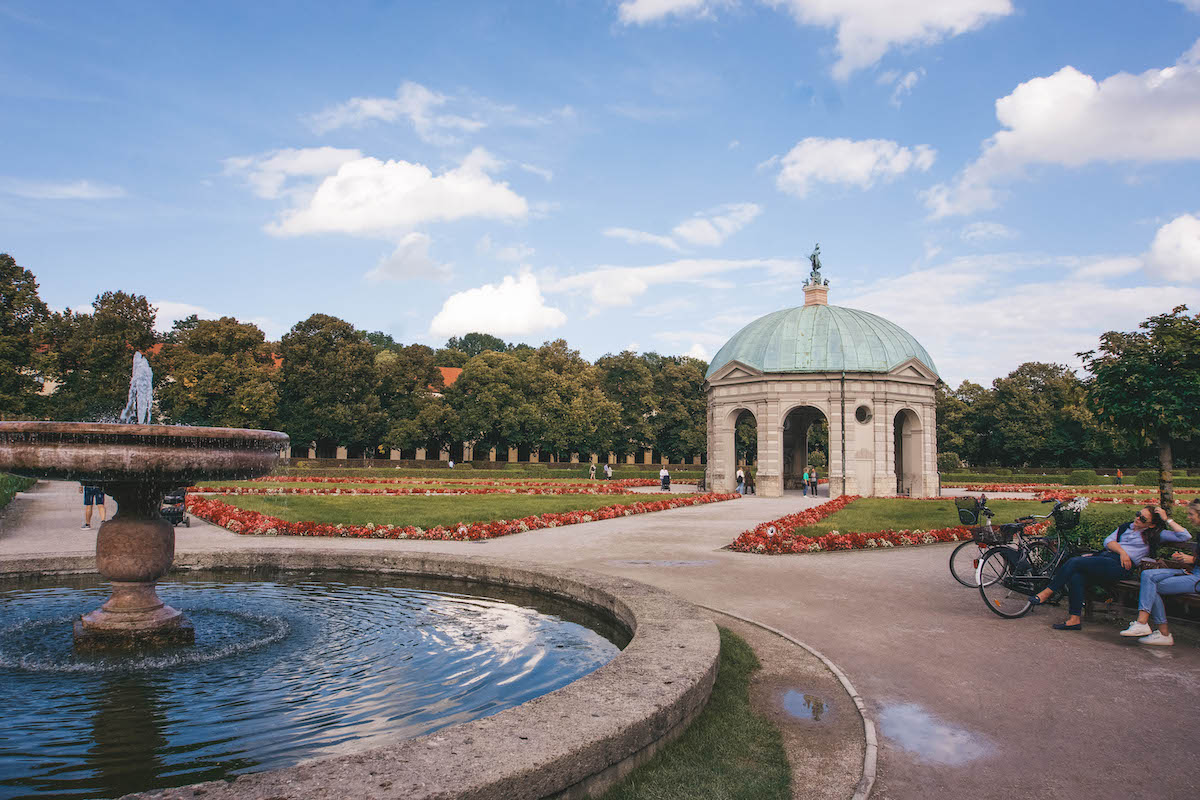
Despite being the capital of Bavaria, Munich is a surprisingly green city with lots of lovely parks and gardens. They’re perfect for relaxing, taking a walk or bike ride, or meeting friends. And they’re free, of course!
Some of my favorite parks in Munich include:
- Hofgarten (Court Garden) — Formerly part of the Residence, it was built in the style of Italian Renaissance gardens. Take a turn around the garden to fully appreciate the beautiful landscaping that so entranced the nobility when it was designed in the 17th century.
- English Garden — Munich’s largest public park! It’s a wonderful place to sit and read a book, rest your legs after a morning on your feet, or wander around to enjoy the scenery. Make sure to see the Chinese Tower (Chinescischer Turm), which was opened in 1790 and now is the home of Munich’s second-largest beer garden.
- Luitpoldpark — A hidden gem north of the city center. Make sure to climb to the top of the Luitpoldhügel (Luitpold Hill), which is also known as the Schuttberg (rubble mountain). The hill is 37 meters tall and was built from the rubble left over from the air raids in WWII.
See What’s for Sale at the Viktualienmarkt
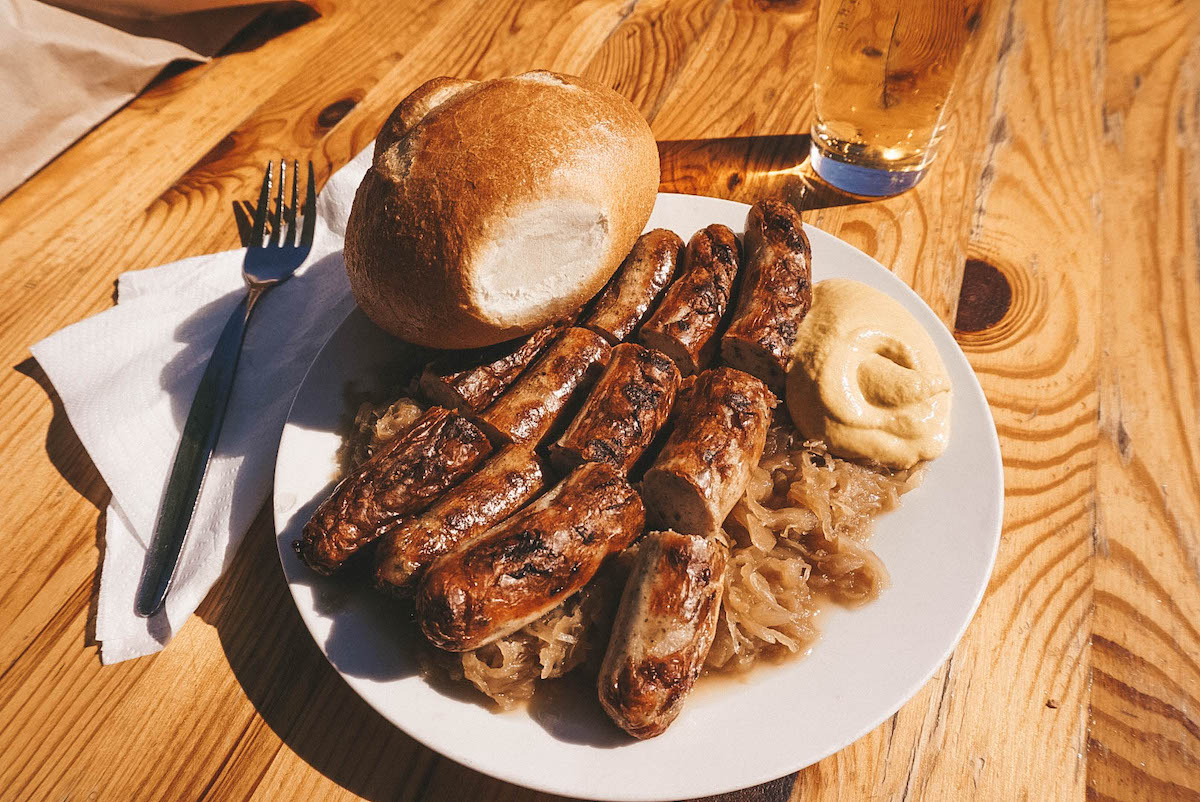
Munich’s Victuals Market began as a small farmers market in the 1700s and has since expanded to become the city’s main market.
The Viktualienmarkt is one of my personal favorite free things to see in Munich; the abundance of fresh produce, cut flowers, handmade gifts, and locally produced honey is a feast for the eyes!
Entrance to the market costs nothing, but if you’re traveling on a budget this is the best place to come for a cheap, hearty, and delicious meal. You can easily throw together a quick lunch for less than 10 Euros. You’ve got your pick of fresh fruits and veggies, pre-made soups, grilled bratwurst, and more!
Claire’s Tip: The Viktualienmarkt is open every day but Sunday.
Listen to the Glockenspiel at Marienplatz
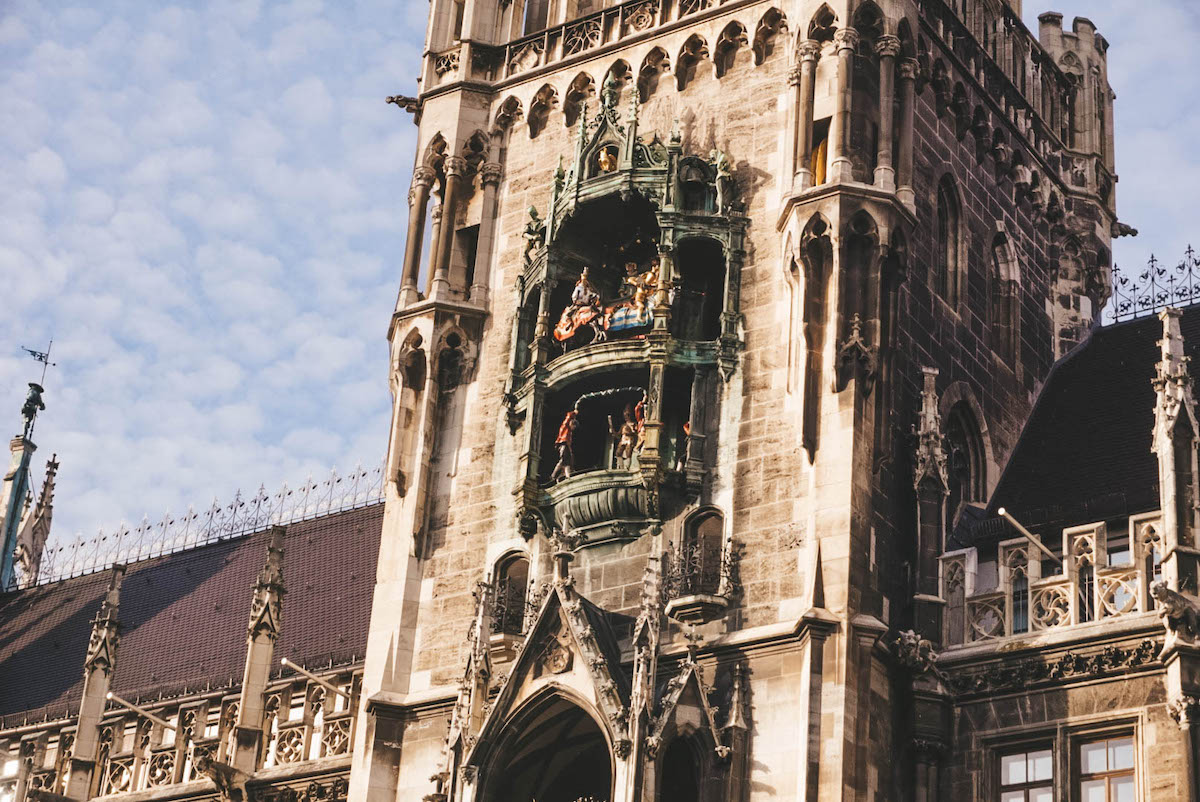
The famous Glockenspiel of the Neues Rathaus (New City Hall) plays a 15-minute song each day at 11am, noon, and also at 5pm in the summer.
While the bells chime their merry tune, the figures underneath the clock spring to life! They tell the story of a jousting tournament held in the 1560s as part of the wedding celebrations for Bavarian Duke Wilhelm V and Renata of Lorraine.
Additional figures below the jousting tournament show the dance of the coopers, which they performed to celebrate the end of the plague in 1517. I’d certainly have danced to that, too!
Visit the Churches in the Old Town
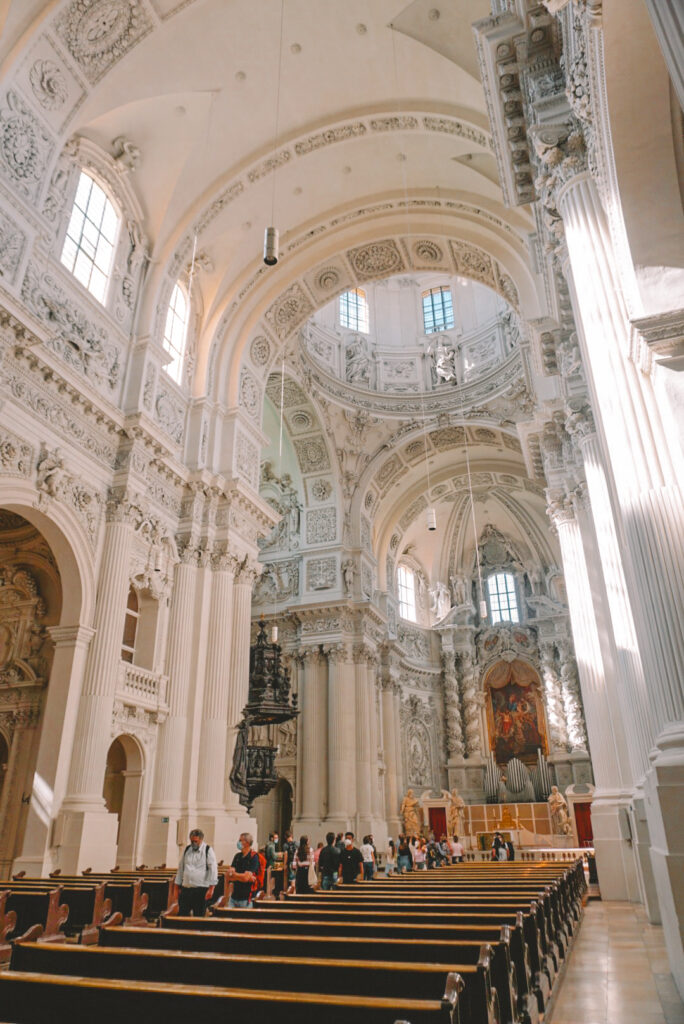
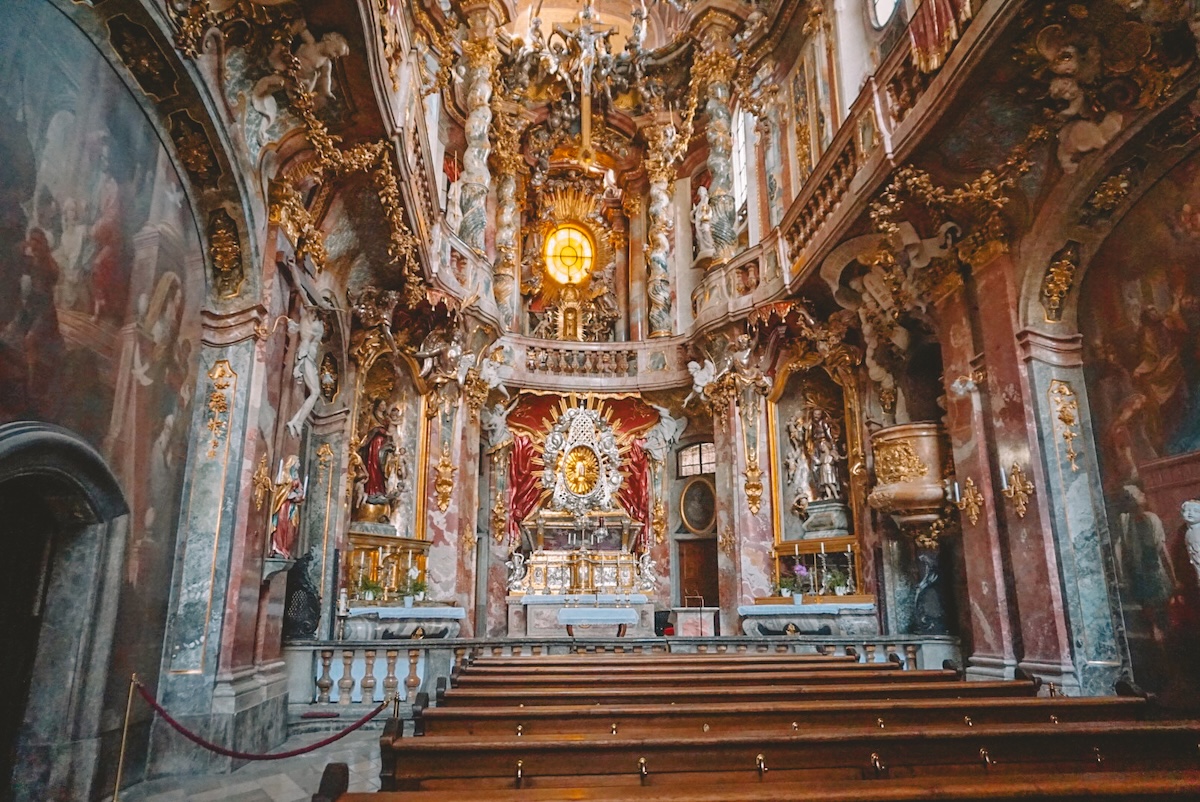
Unlike the rest of Germany, the city of Munich never converted from Catholicism to Protestantism following the Reformation in the 16th Century. As such, there are a number of beautiful Catholic churches in Munich’s Old Town that you can visit free of charge.
- Frauenkirche (Cathedral of Our Lady) — A soaring cathedral that was miraculously built in just 20 years. How? The architect made a deal with the devil! Read all about “The Devil’s Footprint” inside the cathedral and the legend behind it here.
- Alter Peterskirche (St. Peter’s Church) — The bell tower with its epic bird’s-eye view of Munich is a popular tourist attraction, but the church itself is free to enter and is well worth visiting!
- Asamkirche (Saint Johann Nepomuk Church) — Nicknamed the “Asamkirche” because it was built by the Asam brothers in the 1740s. The church is just 30 feet wide but is one of the most opulent Baroque churches you’ll ever see because it was built to advertise their skills as painters, sculptors, and architects. They actually lived next door to the church and could see the high altar from their bedroom windows!
- Theatinerkirche (Theatine Church) — The mustard-colored church was built by Elector Ferdinand as part of a promise he made to build a church in honor of Saint Cajetan of Theatine if the saint blessed them with a child. The interior is a gorgeous example of the Italian high-Baroque style, while the facade is in the Rococo style.
- Michaelskirche (St. Michael’s Church) — The largest Renaissance church north of the Alps. Be sure to visit the royal crypt where “Mad” King Ludwig II rests alongside nearly 40 other Wittelsbach royals.
Explore the Gardens at Nymphenburg Palace
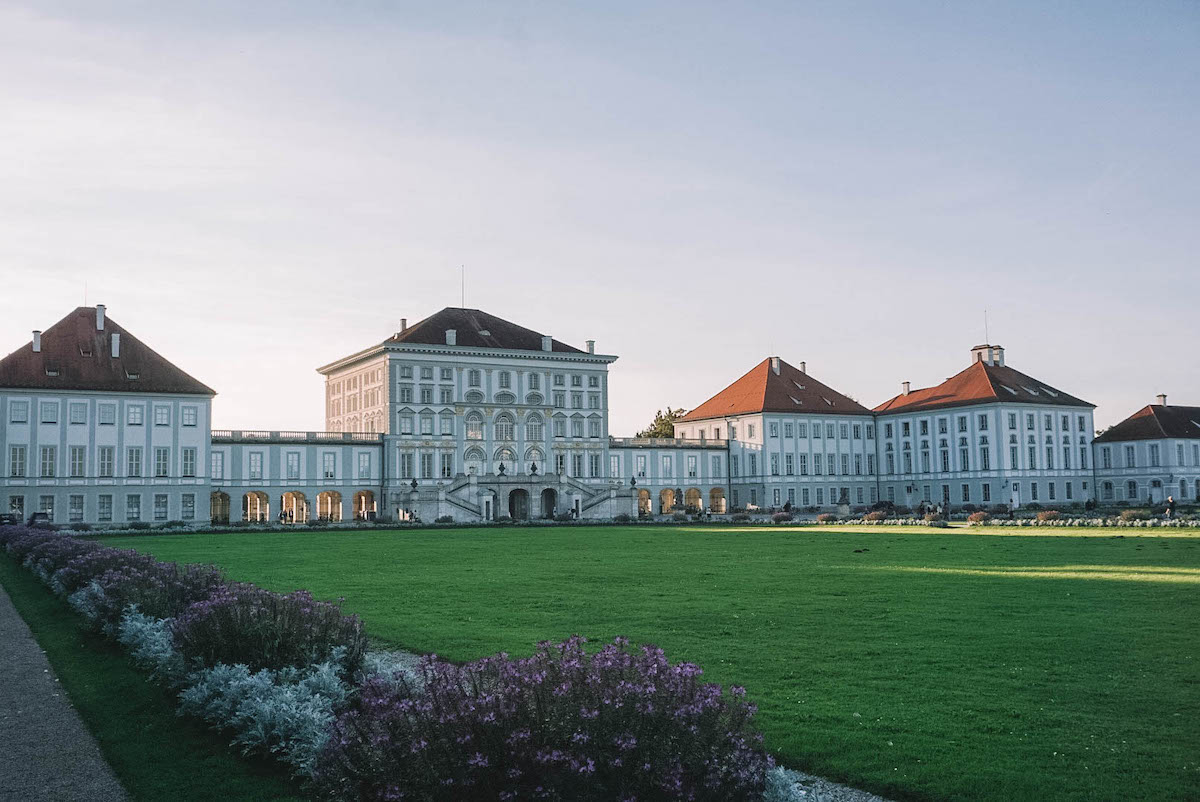
Nymphenburg Palace is a stunning Italianate-style palace located roughly 30 minutes from the city center. It was built in the 1660s as a summer residence for Elector Ferdinand Maria and his wife, Henriette Adelaide of Savoy (and boy, did they know how to do a place up in style!).
If I had to pick an all-time favorite free attraction in Munich, it would have to be the Baroque-style gardens and extensive parkland that extend behind the palace. You can enter the gardens without a palace ticket and stay however long you want.
While you’re there, make sure to visit the village with the old pump house, the historic green houses, and the great cascade. The park is packed with real and faux historic sites, statues, and fountains — you can tell this was once a playground for nobility!
Tour the Dachau Concentration Camp Memorial Site
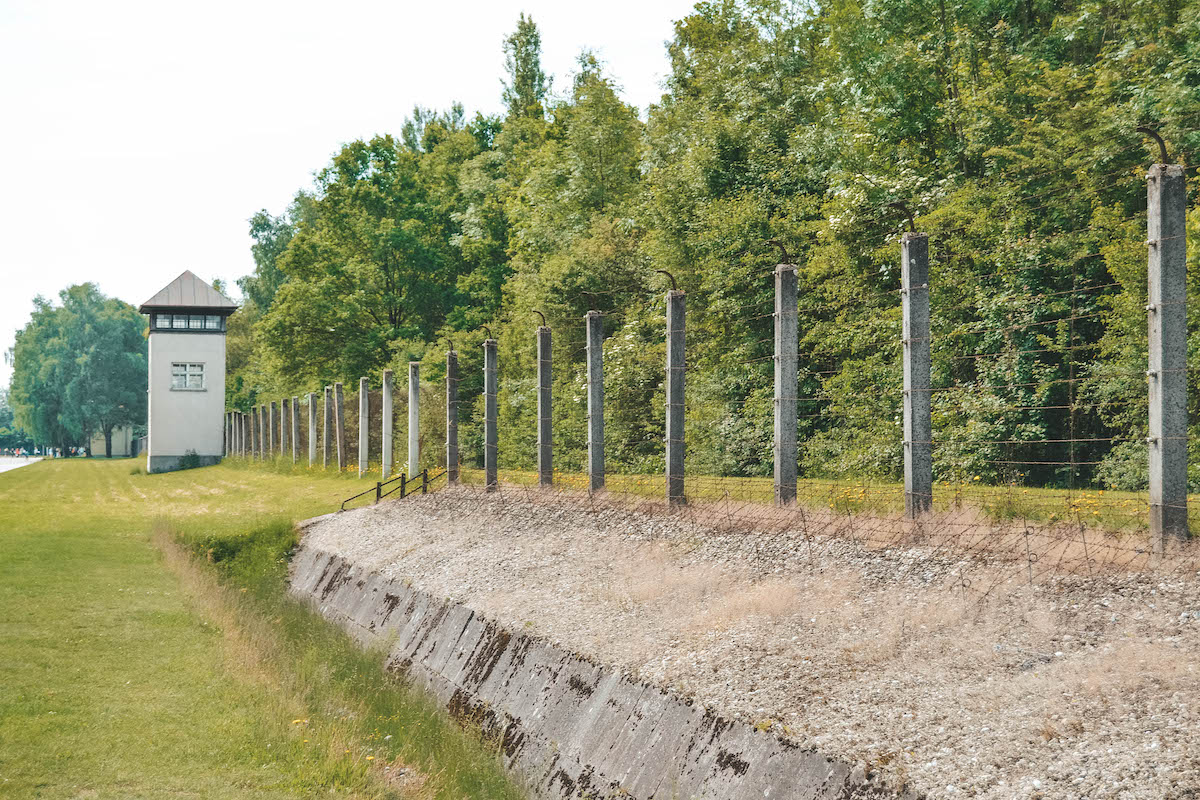
Dachau served as the first ever Nazi concentration camp and was the model for all others built during WWII. Today, the site has been largely preserved and turned into the Dachau Memorial Site.
Many of the original camp buildings still stand, and you can visit them free of charge. Some of the buildings house exhibitions detailing the camp’s history and the personal histories of some of its victims.
Enjoy the View from the Olympiaberg (Olympic Hill)
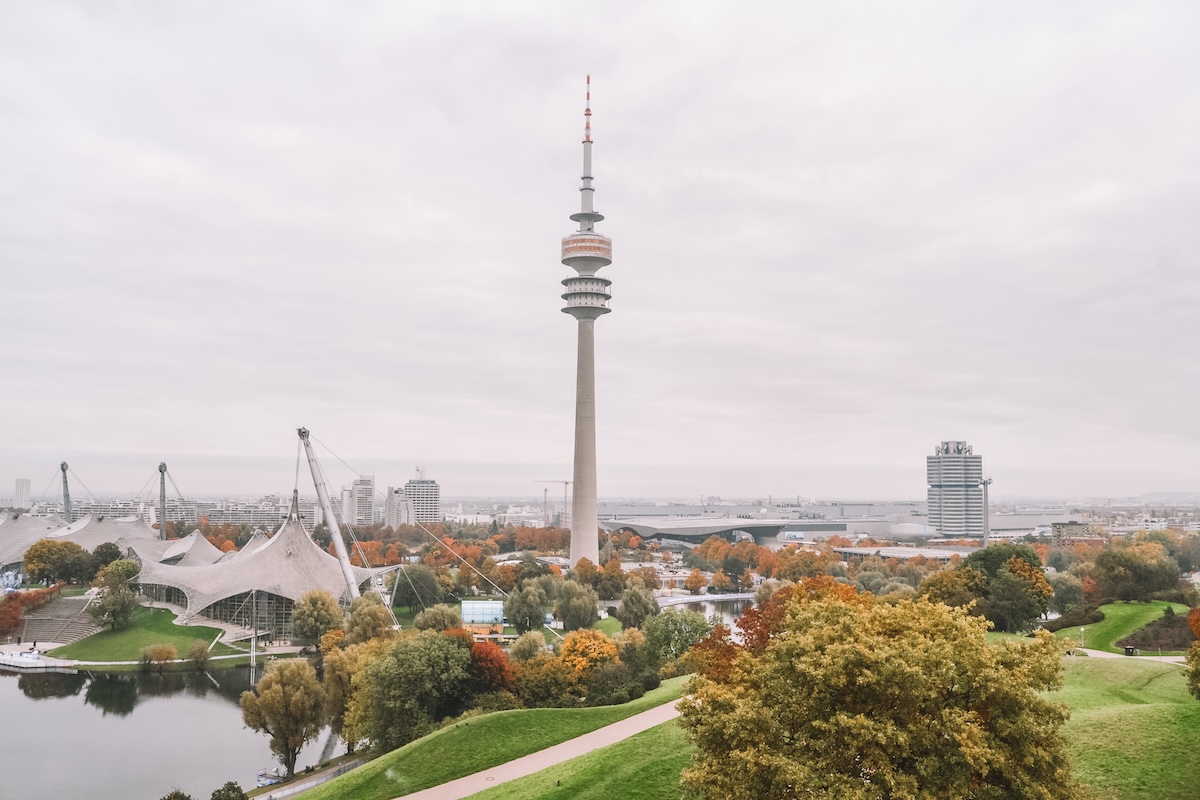
Yet another fun, free place to visit in Munich is Olympic Park. As the name suggests, the park was built for the 1972 summer olympics and continues to be a favorite gathering place and event location for locals.
In the middle of Olympic Park, there’s a 60-meter tall hill called the Olympiaberg (Olympic Hill). The hill was built from the rubble of the hundreds of buildings that were destroyed in the WWII air raids.
From the top of the Olympiaberg, you get a great view of the park, Munich, and — on a clear day — even the Alps!
Claire’s Tip: When popular singers perform at Olympic Stadium, people like to gather on Olympic Hill to listen to the music for free (albeit from a distance).
Check Out the Newest Cars at BMW World
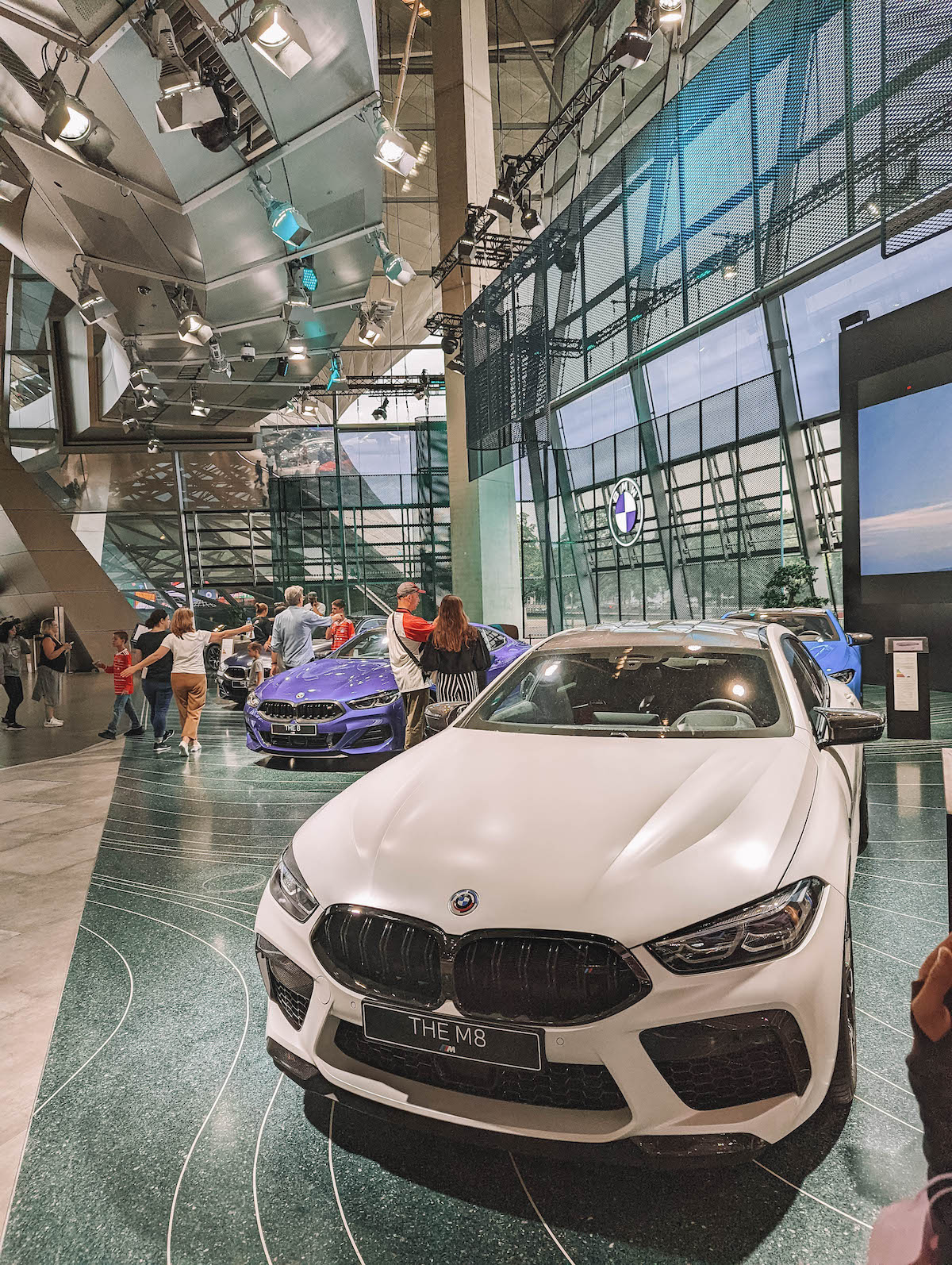
BMW (Bayerischen Motoren Werke) is headquartered in Munich, and in addition to the BMW Museum (which charges an admission fee) there’s a free exhibit near Olympic Park called BMW World.
This two-story space showcases the latest cars and motorcycles from BMW, MINI, and Rolls-Royce. You’re allowed to climb into most of the vehicles and take lots of cheesy “action” shots (which my friend and I most assuredly did!).
Watch the Eisbach Surfers
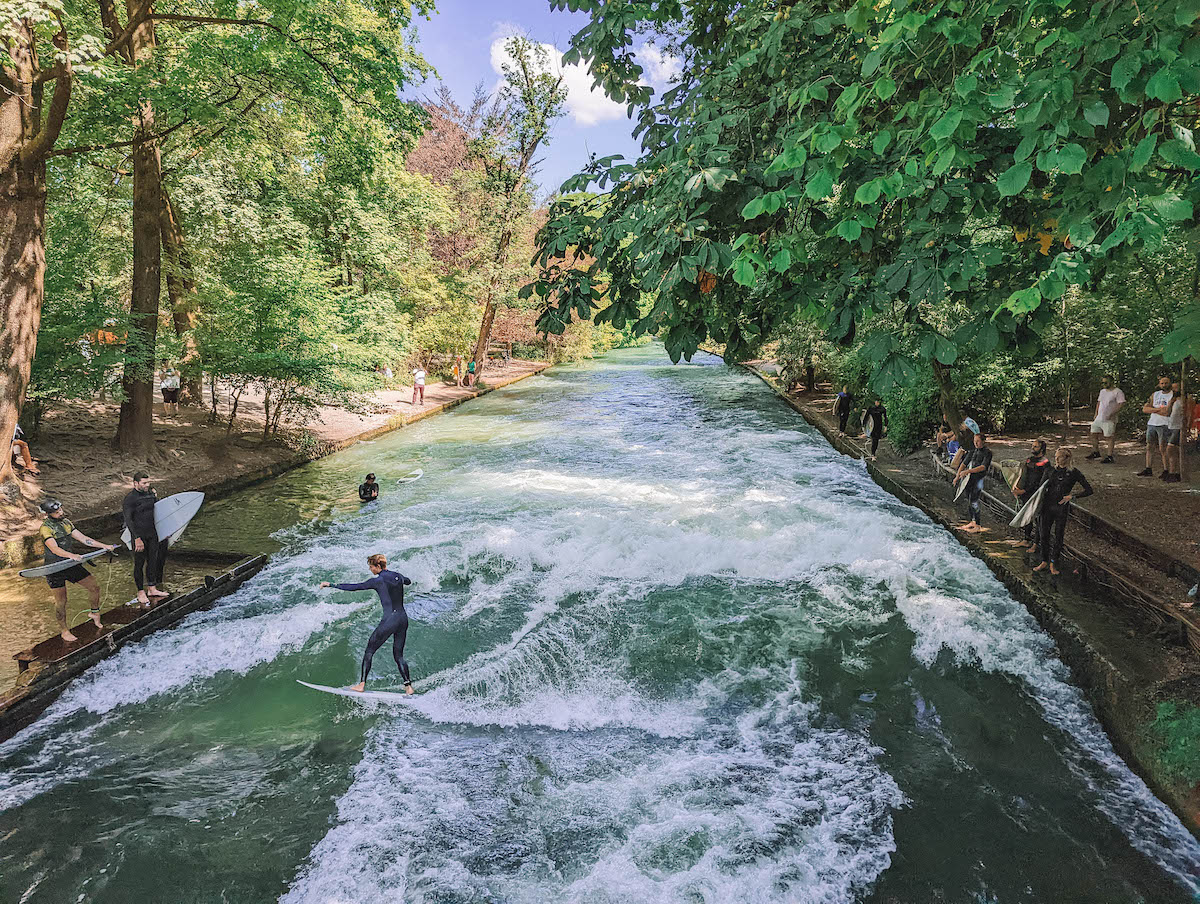
One of the star attractions in Munich is the surfers at the Eisbach River. The Eisbach is a man-made river, with an artificial wave at one end where surfers don their wetsuits and hop on their surfboards.
Claire’s Tip: For the best view of the surfers, stand along the Eisbach Bridge (Eisbachbrücke).
See the Famous Bavaria Statue
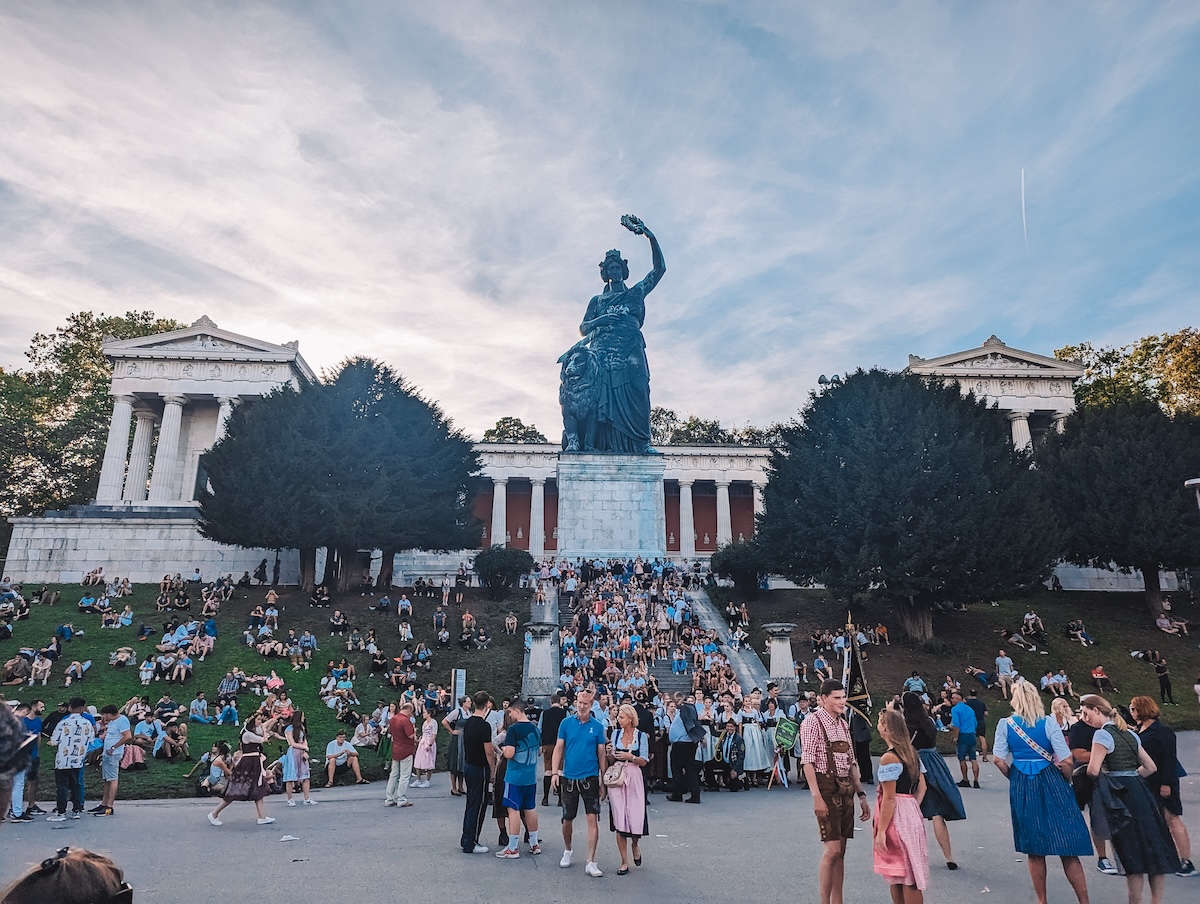
An impressive 18 meters tall, the bronze Bavaria statue on Munich’s famous Theresienwiese was designed by Ludwig Schwanthaler. The beloved statue was erected in 1850 and overlooks the city’s festival grounds, where events like Oktoberfest, the Spring Festival, and the Winter Festival take place.
Behind her is the Hall of Fame, which is filled with busts of the most famous Bavarians and is free to walk through. It was built shortly after the Bavaria statue was erected and is styled to look like a classical Greek temple.
Claire’s Tip: The Bavarian statue and Hall of Fame are only open April through September. I took the photo above during Oktoberfest, and as you can see visitors are only allowed on the steps up to a certain point.
Visit One of Germany’s Oldest Coffee Houses
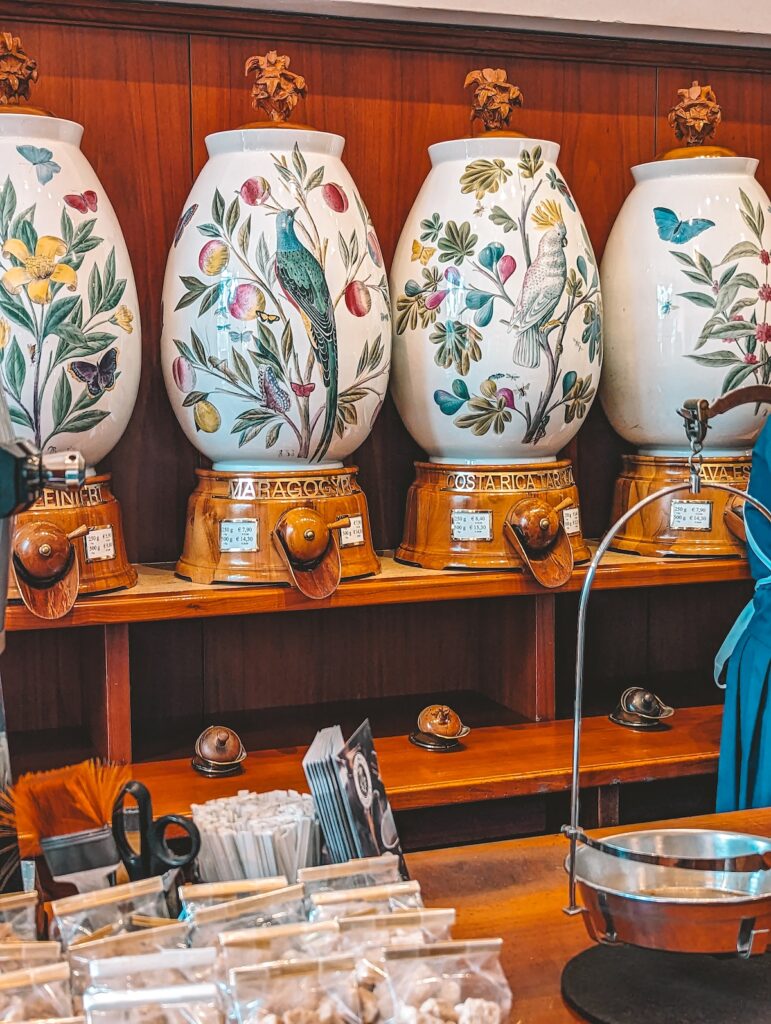
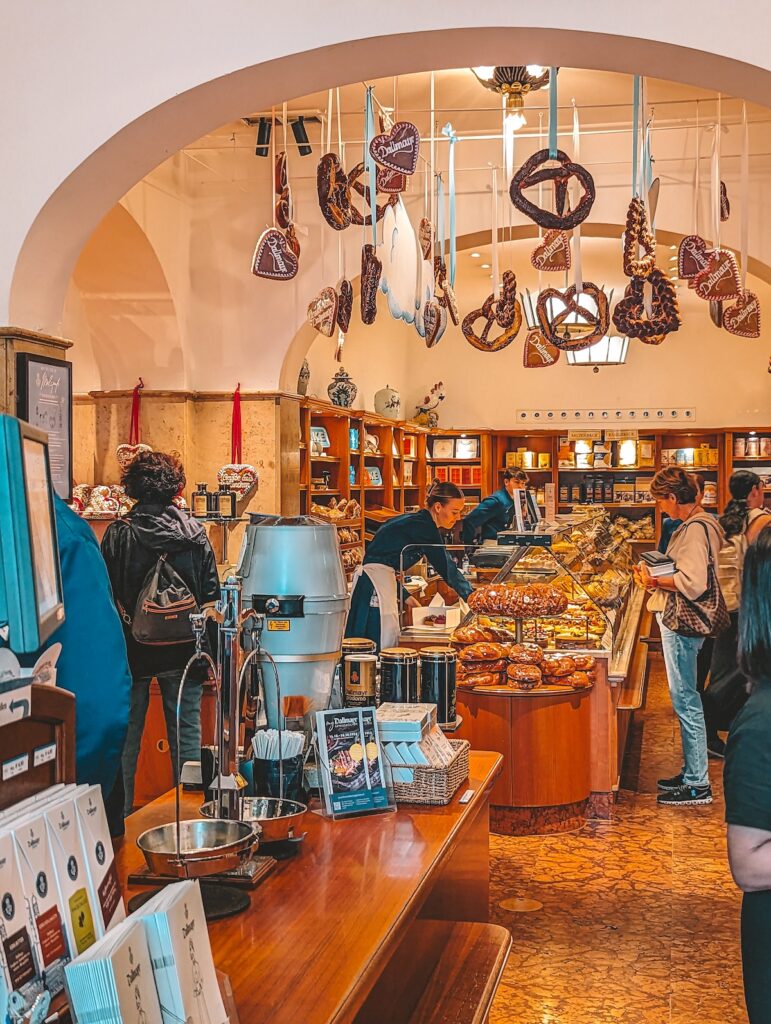
Dallmayr is one of the oldest coffee companies in Germany. It was founded in 1700 in Munich (although the name “Dallmayr” wasn’t adopted until 1870).
You’ll find Dallmayr coffee in cafes and grocery stores throughout the country, but while you’re in Munich I highly recommend visiting Dallmayr’s Delicatessen. It’s a gourmet grocery store with all kinds of produce and goods for sale, including, of course, a range of Dallmayr’s beloved coffee.
Obviously, if you’re looking for a free activity in Munich you won’t want to purchase anything at the Dallmayr Delicatessen, but since this is such an iconic Munich brand I still recommend popping in and taking a look around. (But if you need an affordable souvenir from your time in Munich, go ahead buy a bag of Dallmayr coffee beans!)
Walk Down Ludwigstraße
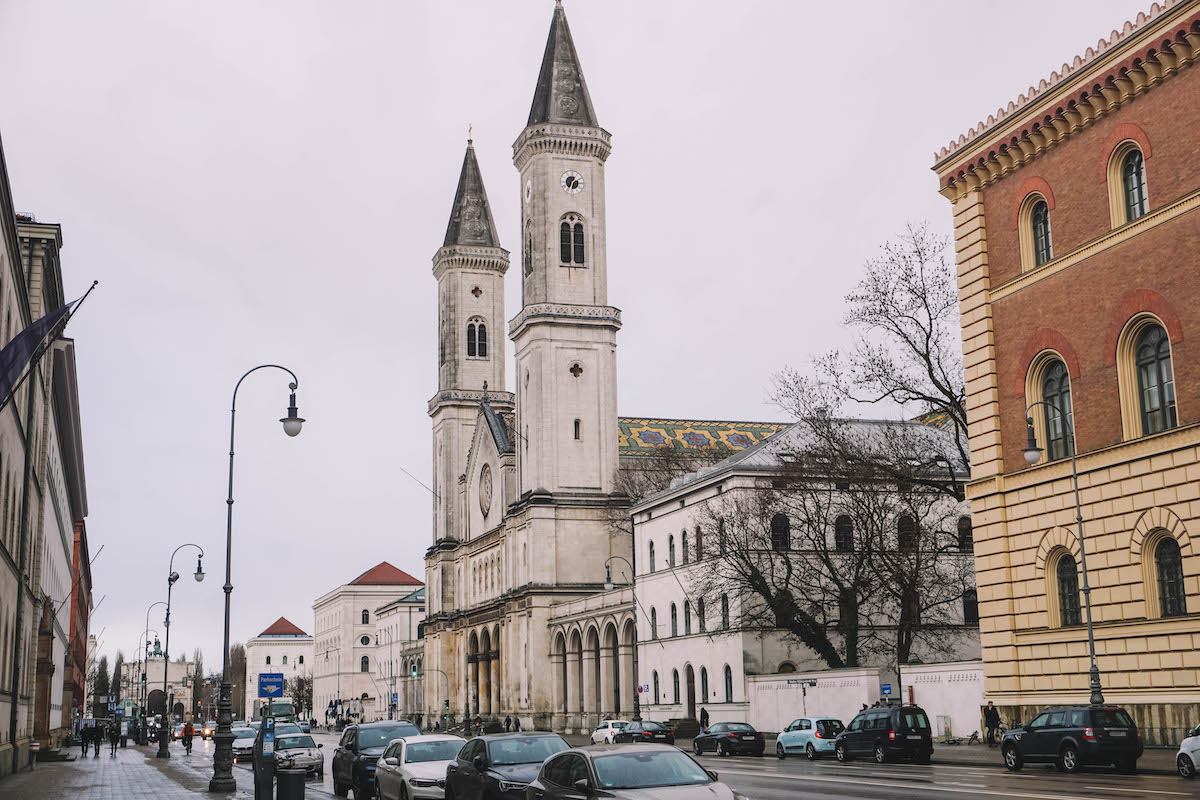
Named after King Ludwig I, Ludwigstraße is one of Munich’s four royal avenues. It was designed by Friedrich von Gärtner and Leo von Klenze in the round arch style. The buildings here are absolutely stunning, and it really feels like you’re walking down a boulevard in Rome.
I like to start my walk down Ludwigstraße at Odeonsplatz and then work my way north to the Siegestor (gate).
Along the way, you’ll pass by the following:
- Bavarian State Library — Which has a rotating free exhibit space that’s worth visiting.
- Ludwigskirche — A beautiful church that boasts the second-largest altar fresco in the world, after Michelangelo’s “Last Judgment” inside the Sistine Chapel.
- Ludwig Maximilian University — Look for the Geschwister-Scholl-Platz, which is dedicated to the siblings Hans and Sophie Scholl. They ran a resistance group called the White Rose, which protested against the Nazi regime)
- Siegestor (Victory Gate) —A 24-meter-high triumphal arch, topped by a statue of Bavaria. Look for the inscription “Dedicated to Victory — Destroyed by War — Urging Peace.”
This is one of my favorite walks in Munich! I love looking at the architecture and taking photos of all the little details. It’s truly one of the most beautiful streets in all of Munich!
Explore the Trendy Gärtnerplatz Area
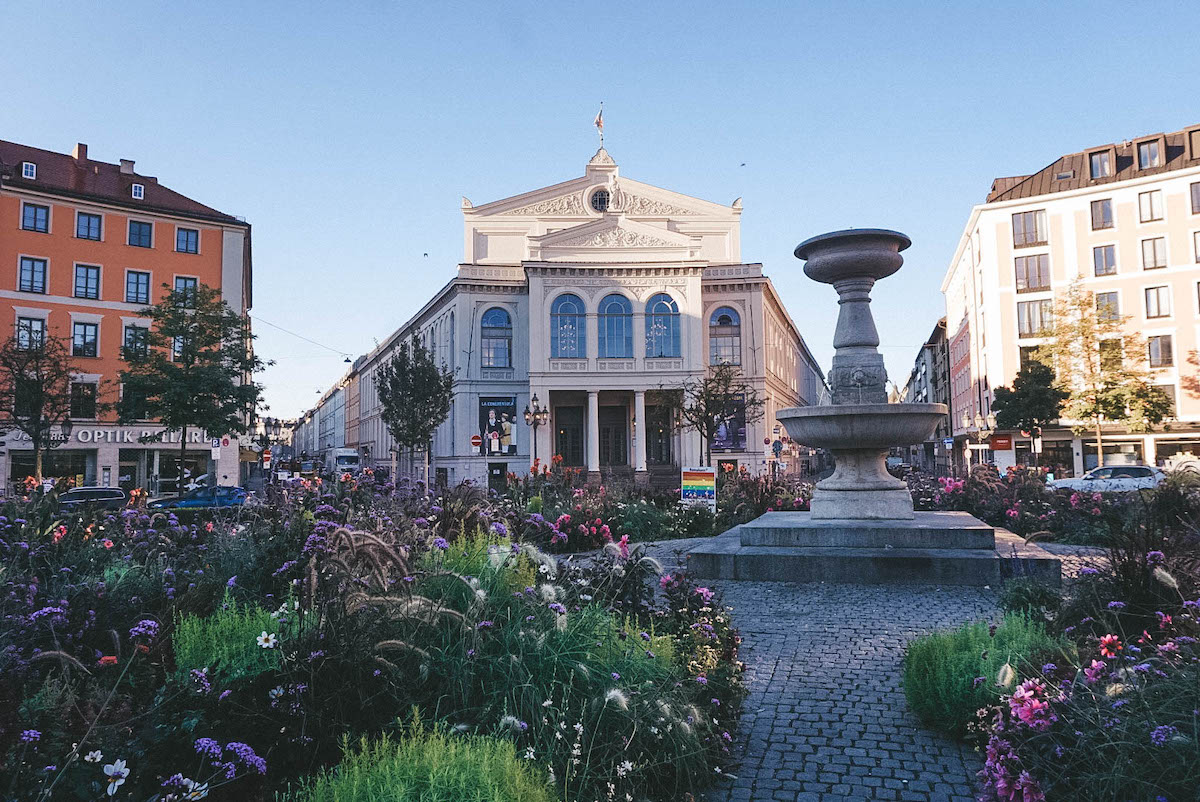
One of my favorite free things to do in Munich is simply explore new neighborhoods without a specific itinerary in mind.
On my last visit to Munich, I discovered the trendy Gärtnerplatz area. It’s within walking distance of the Old Town, but it’s just far enough away that not many tourists come to this part of the city.
Gärtnerplatz is a vibrant area with lots of local cafes and boutiques, all surrounding a pretty 19th-century roundabout with a fountain and garden in the center. This neighborhood is especially known for its nightlife, but it’s fun to wander around during the daytime too!
Attend One of the City’s Many Festivals
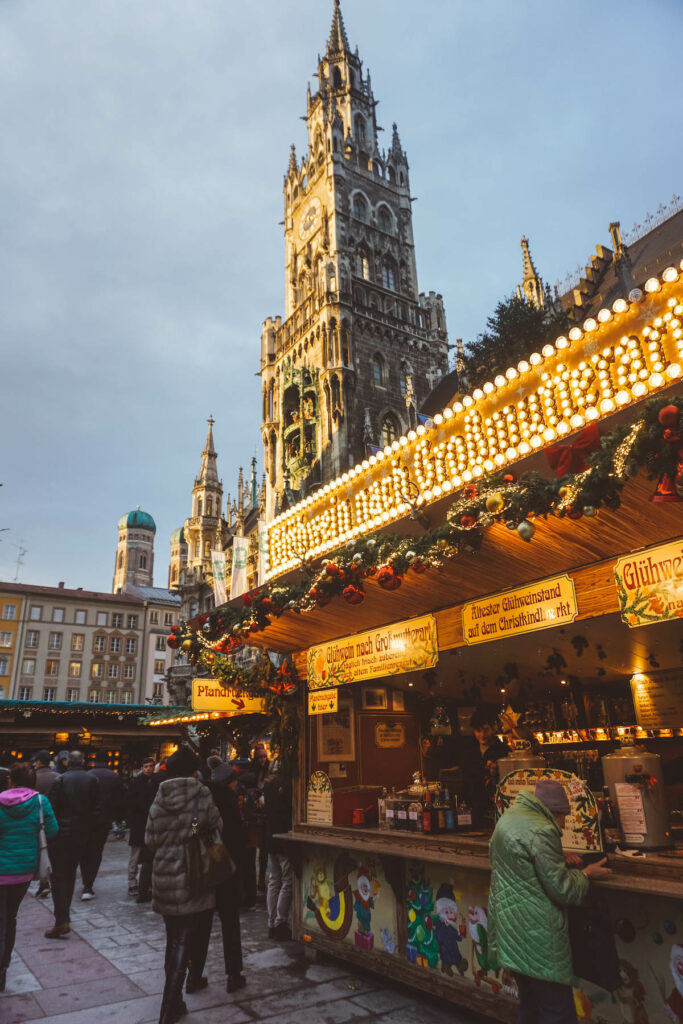
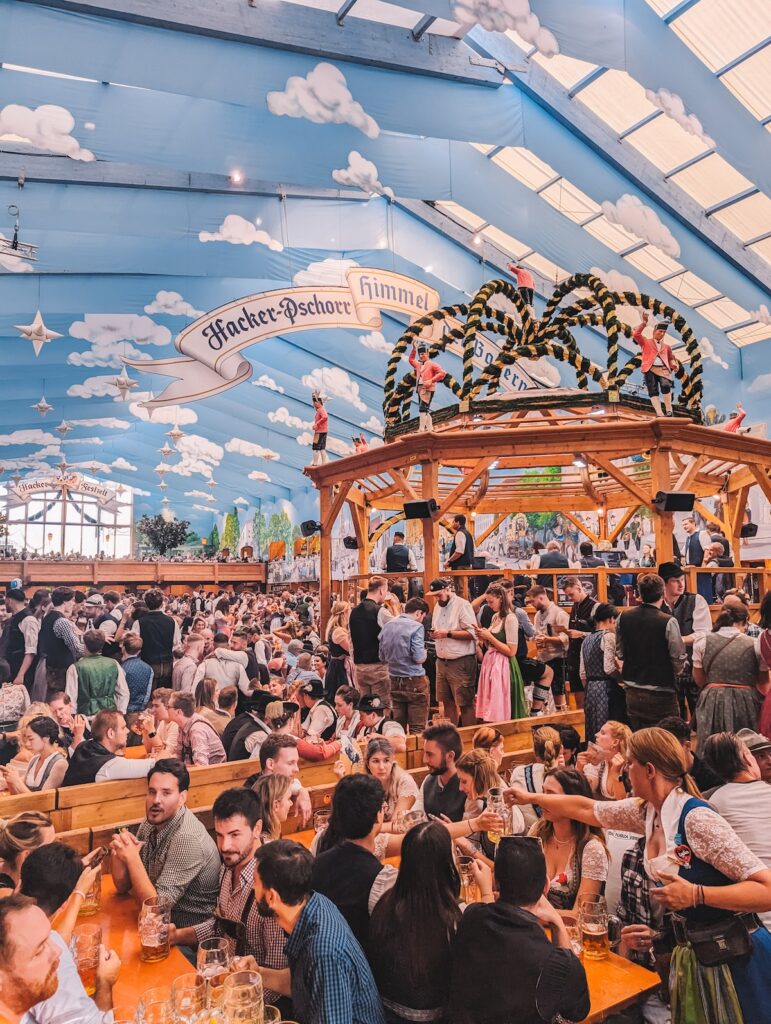
It feels like there’s always some festival or another happening in Munich, and most of them have free entry (especially the folk festivals). A few to keep in mind are:
- Frühlingsfest (Spring Festival) — Occurs every April / May on the Theresienwiese. Throughout the duration of the festival, there’s a giant flea market, a classic automobile meetup, live music, fireworks, and other special events.
- Oktoberfest — The world’s largest folk festival! Entrance to the grounds is free, as is entrance to the beer tents. You obviously have to pay (quite a lot!) for beer and food, but otherwise you can walk around taking in the sights without paying a dime. Here’s my full guide to experiencing Oktoberfest.
- Christmas markets — If you’re lucky enough to be in Munich in December, you definitely need to spend a day visiting the city’s many Christmas markets! You don’t have to pay to enter the Christmas markets, so just wander around to soak up the festive ambience.
Is It Possible to Visit Munich on a Budget? Yes!
I hope this list of things to do and see in Munich for free inspires you to visit Bavaria’s capital city. Because, yes, it’s absolutely possible to plan your trip on a budget!
I’ve no doubt that there are many more wonderful free activities in the city, so if you have anything to add to this list don’t hesitate to leave me a comment below.
Have you signed up for my newsletter? It’s packed with lots more travel tips that make planning a trip to Germany a breeze!


Leave A Reply!