With blustery winds circulating the fresh sea air, red brick Gothic architecture in each town, fresh caught fish on most restaurant menus, and laidback locals, I’m not quite sure how Northern Germany has flown under the radar for so long! This Northern Germany itinerary will show you the best that the region has to offer in one week, and you have the option to travel by regional train or by rental car.
This post contains affiliate links, from which we may receive a commission. You can read our full affiliate disclosure here.
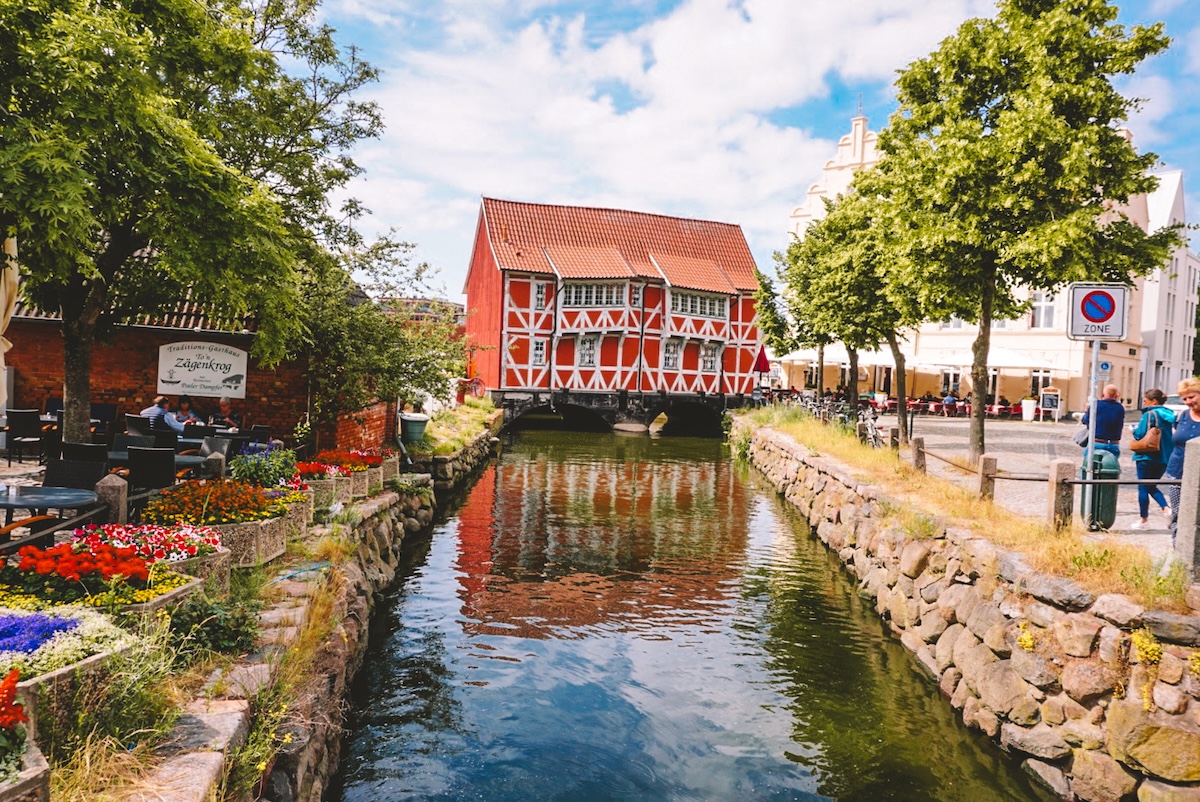
The Baltic states of Bremen, Hamburg, Schleswig-Holstein, Lower Saxony, and Mecklenburg-Western Pomerania have long been popular with Germans looking for a seaside getaway, yet most foreigners have yet to experience the charm of Germany’s coastal region.
Since moving to Germany in 2019, I’ve traveled extensively through the North and cannot recommend it enough. It’s an easy part of the country to navigate using the regional train network, and the rugged coastlines are some of the prettiest I’ve ever seen.
This 7-day itinerary will show you the highlights of Northern Germany at a more relaxed pace. You’ll see a new city each day, but I intentionally crafted this itinerary to minimize travel times as much as possible (because spending 2+ hours each day on the train isn’t my idea of a good time!).
I have a full guide to the top cities in Northern Germany, should you want to research other locations and customize this itinerary to your exact preferences, but trust me when I say that this is the easiest route that will show you the best of the best that this region has to offer.
Happy exploring! -Claire
PS. The estimated travel times should always be double checked on your end! If Deutsche Bahn is doing construction on a certain line, travel times may be longer than stated (these things can change on short notice due to repairs on the tracks, for example).
This 7-Day Itinerary at a Glance
- Day 1: Fly into Hamburg
- Day 2: Hamburg (+ travel to Rostock in the evening)
- Day 3: Rostock
- Day 4: Wismar (+ travel to Schwerin in late afternoon)
- Day 5: Schwerin (+ travel to Lübeck in the evening)
- Day 6: Lübeck
- Day 7: Fly out of Hamburg
Hotel Recommendations
- Hamburg (Night 1): Motel One Hamburg-Alster, Premier Inn Hamburg City Centre, or Hamburg Marriott Hotel
- Rostock (Nights 2 & 3): Motel One Rostock, B&B Hotel Rostock City-West, or Vienna House by Wyndham Sonne Rostock
- Schwerin (Night 4): Hotel Niederländischer Hof, Hotel Nordlicht, or Weinhaus Wöhler
- Lübeck (Nights 5 & 6): Hotel Motel One Lübeck, Hotel Anno 1216, or Hotel zur alten Stadtmauer
Map of This Itinerary
Car vs. Train: What’s the Best Way to Travel Around Northern Germany?
As a rule of thumb, I avoid rental cars whenever possible, mostly because I travel primarily by myself and the thought of navigating in a car solo in unfamiliar territory isn’t my idea of a good time.
With that being said, I’ve used this exact itinerary to travel around Northern Germany and can confirm that it works great using just the regional train network! For the most accurate train times and up to date information on delays, I strongly recommend downloading the Deutsche Bahn app to your phone.
Every journey I’ve mentioned in this guide uses the regional train network — that’s anything labeled as a Regional Express (RE) or Regional (RB) train. This makes planning your road trip through Northern Germany SO affordable because all of the regional trains and public transportation are included in the Germany Ticket, which you must purchase in advance and cancel manually to avoid automatic renewals.
Claire’s Tip: With the Germany Ticket you can hop on any RE or RB train you want, no need to commit to a set time table ahead of time, which offers flexibility!
You of course have the option to rent a car instead, which would give you even more flexibility with timing and lets you avoid the inevitable delays that Deutsche Bahn experiences. But, at the end of the day, I’m a train girl and suggest saving TONS of money by just buying the Germany ticket ahead of time and getting comfortable with the local train network.
Day 1: Arrive in Hamburg
Whenever my family comes to visit me in Germany, jet lag always hits them hard (something about that US to Europe transatlantic flight is just killer!). That’s why I suggest book-ending your trip to Northern Germany in Hamburg.
It’s got a large airport with lots of international connections, you can reach the city center in about 20 minutes with the S-Bahn (which is covered with the Germany Ticket, FYI), and Hamburg is just all around an incredible city that’s worth exploring!
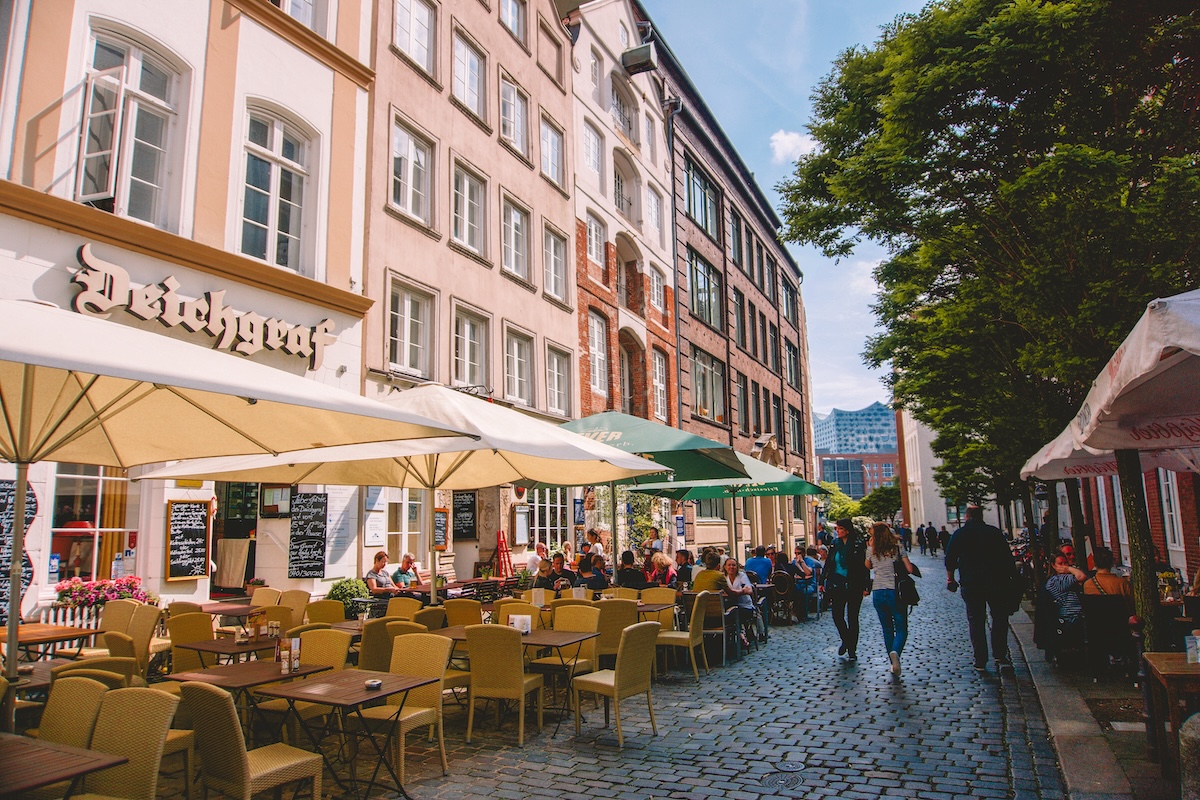
If you arrive in the morning or afternoon: Check into your hotel and enjoy the following attractions in the Old Town to jumpstart your Northern Germany road trip.
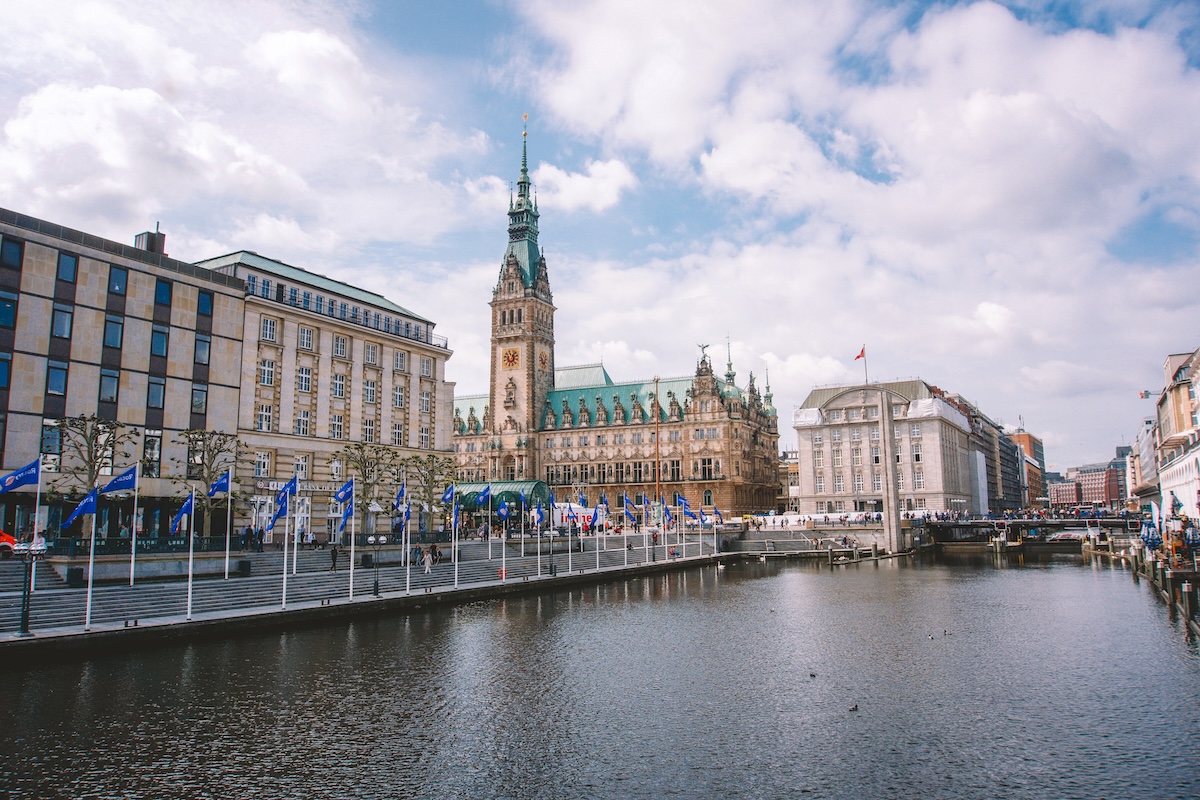
- City Hall — Hamburg’s stunning Neo-Renaissance Rathaus opened to the public in 1897. The exterior is elaborately decorated with symbols of the city’s power, as well as its coat of arms (three white towers topped with a cross and two white Marian stars, on a red background).
- Deichstraße — The Great Fire of 1842 that destroyed much of the city center originated on this storybook street lined with half-timbered buildings and Baroque facades. Be sure to walk over the Hohe Brücke (High Bridge) for an unparalleled view of Deichstaße from the water (it’s one of the prettiest places in Hamburg!).
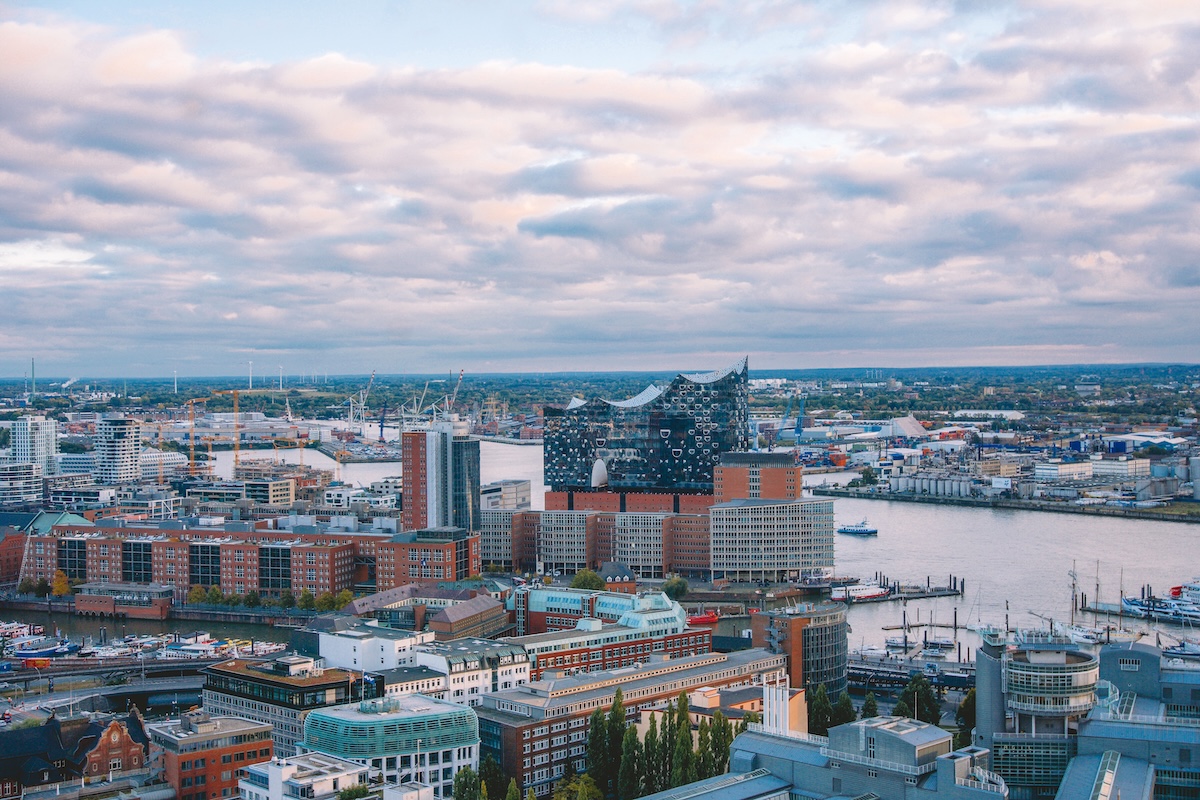
- Elbphilharmonie — Thought to be the best classical concert hall in the world, Hamburg’s famous “Elphi” was built atop the foundations of a warehouse building in the historic Speicherstadt warehouse district. It’s free to ride up the world’s longest escalator for a stunning view of Hamburg from the concert hall’s viewing platform.
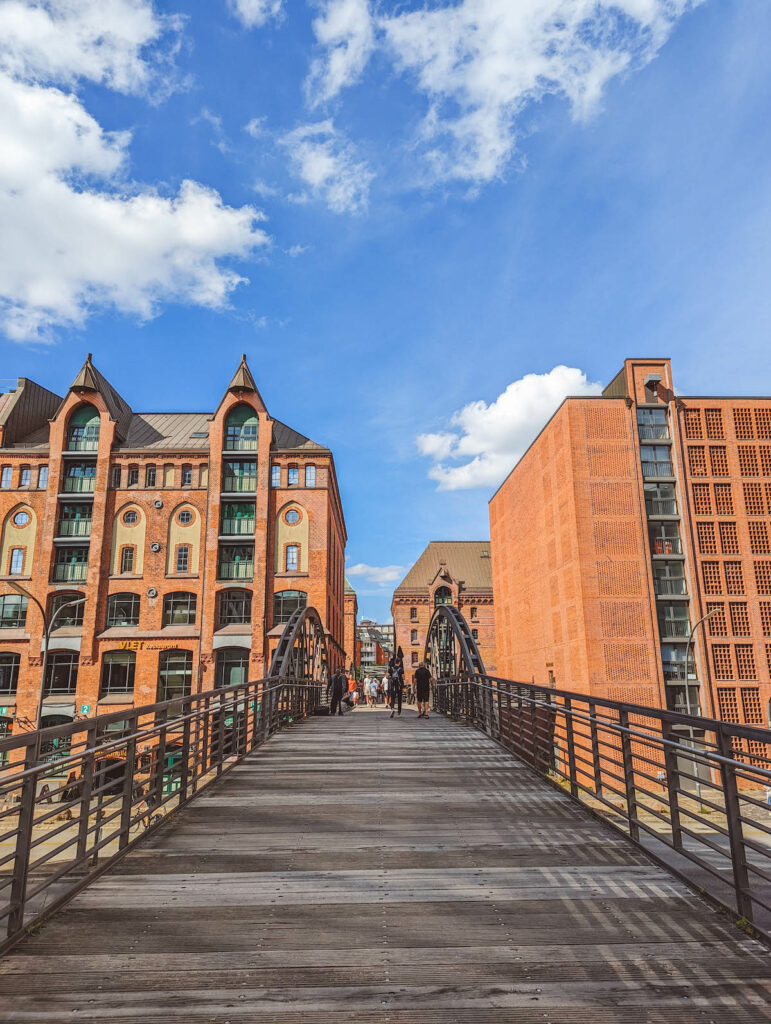
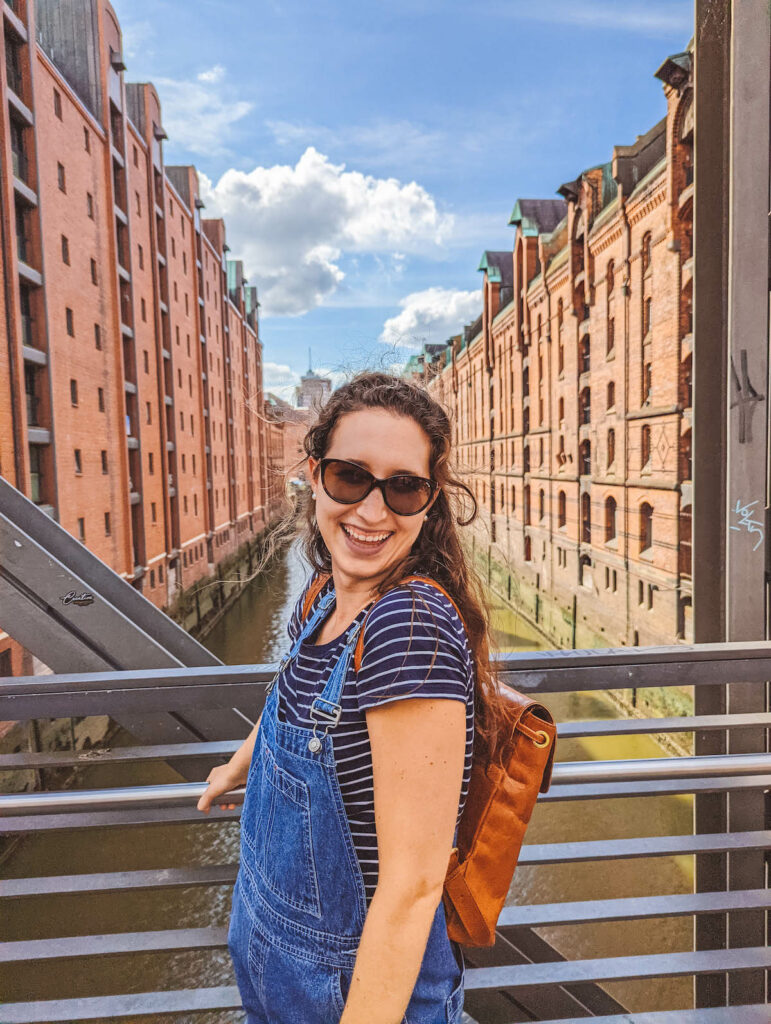
- Speicherstadt (shown below) — The world’s largest warehouse district. Sounds boring, right? Wrong! It’s a maze of beautiful red brick warehouses on the Elbe River that’s so fun to wander around. If by mid-afternoon your energy is flagging, pop into the Speicherstadt Kaffeerösterei (address: Kehrwieder 5) for a cup of their beloved fairtrade coffee.
This will keep you on your feet while still enjoying the best of the city! Since you’ll be tired I don’t recommend going into any of the museums or paid-for attractions.
If you arrive in the evening: Check into your hotel immediately and either grab dinner in the city center right away so you can go to bed early, or start exploring the Old Town on foot just to stay awake. (The city center is safe to walk around in the evening, don’t worry!)
Claire’s Tip: You could change this itinerary around to essentially hop straight off the flight and onto a train to Rostock, but personally I wouldn’t tempt fate! Either your flight or Deutsche Bahn could experience delays, and it could easily turn into a big, long travel day from H-E-Double Hockey Sticks.
Day 2: Hamburg
Today’s travel + duration of journey: Travel to Rostock in the evening (2 hours 30 minutes with the RE1 train or 2 hours by car)
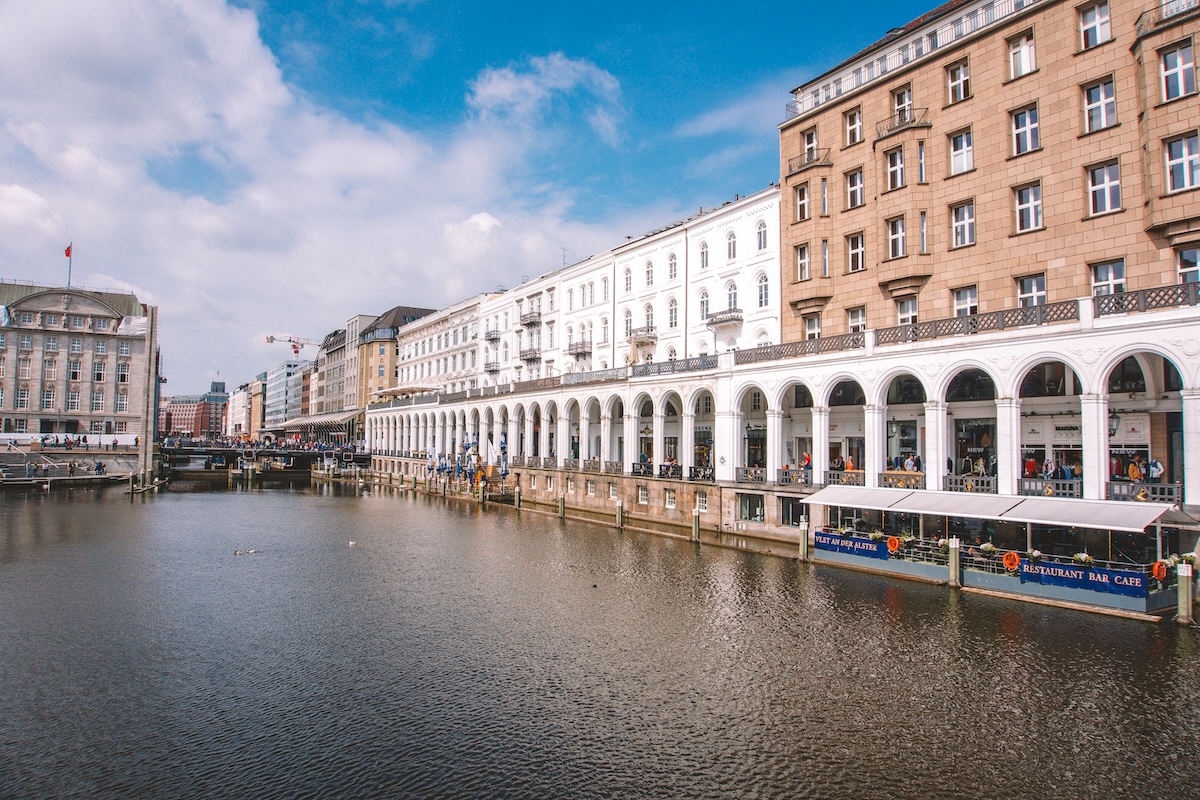
You can’t see all of Hamburg in a single day, but you can certainly squeeze in most of the main attractions. I suggest setting an alarm (gotta beat that jet lag!) and starting your explorations no later than 10 / 10:30am so you can make the most of your whistlestop visit to Germany’s second-largest city.
Claire’s Tip: You can either pay to leave your luggage at the central train station (in a locker or at the luggage drop area) OR leave it at your hotel for free. Check your train’s timetable in advance and give yourself enough time to grab your luggage and get to the correct platform at least 15 minutes in advance.
During your day in Hamburg, I suggest visiting the following top attractions (in this order):
- Jungfernsteig — A famous waterside promenade where the city’s well-to-do families would walk with their unmarried daughters (“Jungfern”) to seen and be seen by potential marriage partners. Today it’s just a pretty spot with a lovely view of the Alster, a tributary that feeds into the Elbe River.
- Alster Arkaden — You’ll feel like you’re walking through Venice as you window shop your way through Hamburg’s luxurious waterfront shopping arcade. Be sure to pop into the Mellin Passage, which is the oldest portion of the arcade.
- St. Michael’s Church — This is the city’s largest church, with a 20-meter-high altar, a crypt, and five (!!) organs. I highly recommend paying the small fee to climb up to the viewing platform for a birdseye view of the city. (Heads up: nearby St. Peter’s has the tallest viewing platform in the city, but it’s a very scary climb to the top, and while I’m glad I did it once I’m never repeating the experience!)
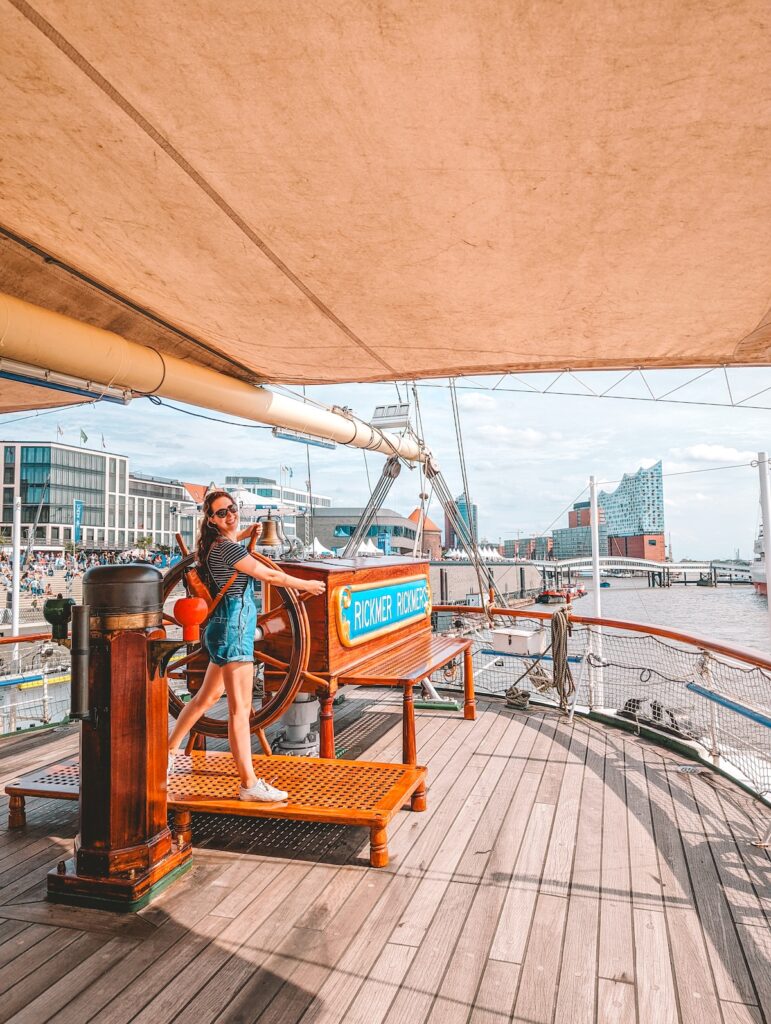
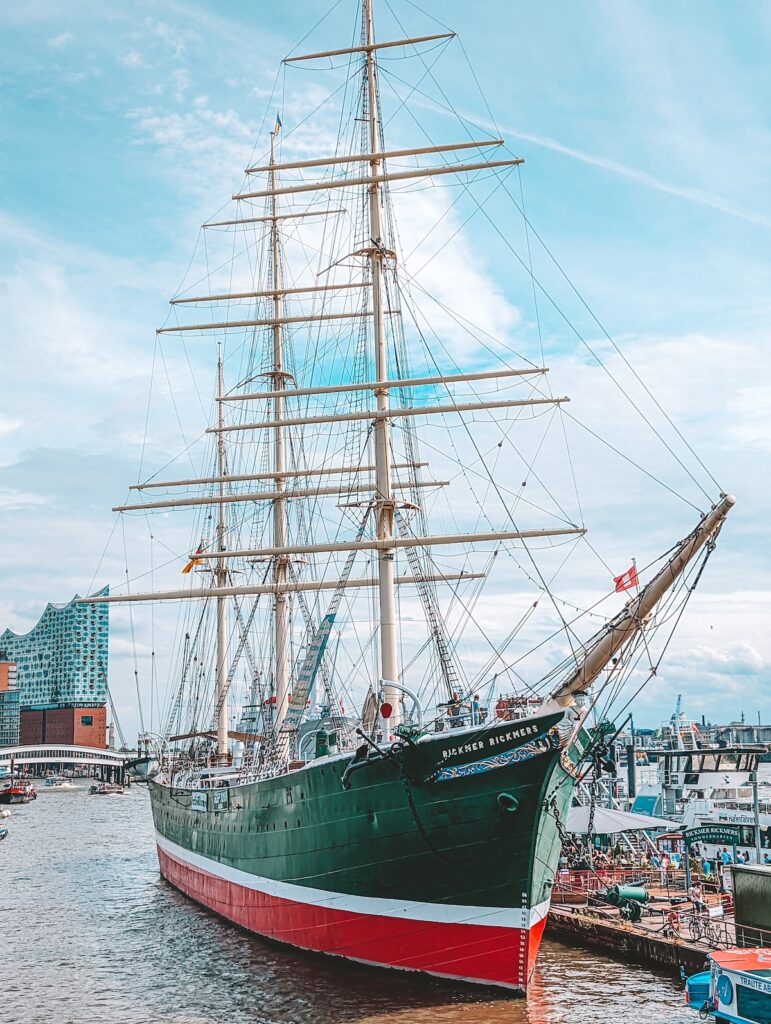
- Landungsbrücken — Steamships once stopped at this series of piers in the St. Pauli district, but today it’s my favorite place to grab lunch in Hamburg. I highly recommend trying a Fischbrötchen from one of the many eateries along the pier (locally caught fish, often breaded and fried, in a soft white bun with a schmear of remoulade. Heavenly!). I can also recommend the Museum Ship Rickmer Rickmers (photo below), which is not a “must” but is great if you love maritime history and want to see what a historical ship from the late 1800s looks like.
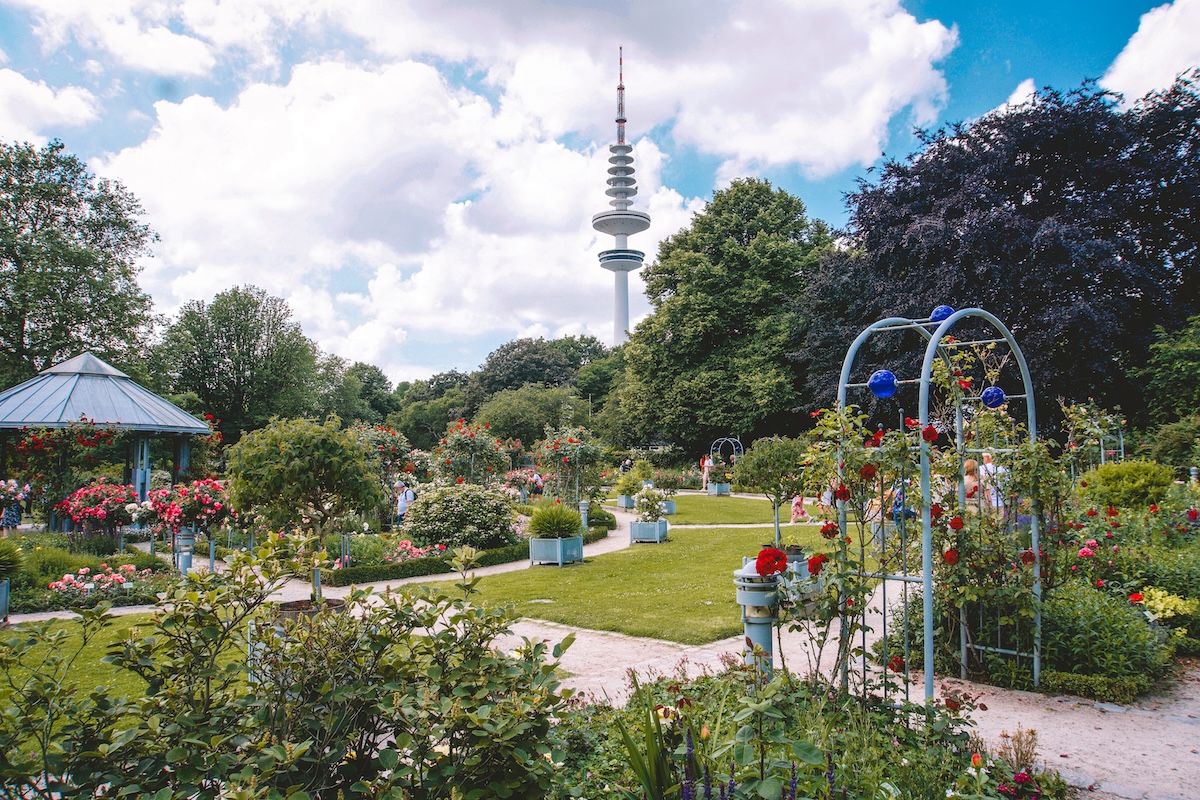
- Planten un Blomen — “Plants and Flowers” is part botanic garden, part public park. It’s free to enter and there are lots of chairs and grassy spots where you can sit down and relax.
- Karolinenviertel — If you’ve got time left to explore a little more of the city before your train departs, the trendy Karolinenviertel is packed with local boutiques and cafes and is generally a fun place to wander around. It’s just across the street from Planten un Blomen, and it connects with the larger Schanze district, another hip neighborhood with a fun local flair.
Claire’s Tip: Keep checking the Deutsche Bahn app during the day to make sure the regional train connection you’re aiming for is still available. You’ll be traveling to Rostock in the early evening after exploring Hamburg all day.
Grab food from the central train station before you depart (there are lots of options), and prepare to head straight to your hotel when you arrive in Rostock. This will be the longest day of your entire journey and it eases up enormously from here, promise!
Day 3: Rostock / Warnemünde
Today’s travel + duration of journey: Travel to Warnemünde in the afternoon (20 minutes via public transportation or 12 minutes by car)
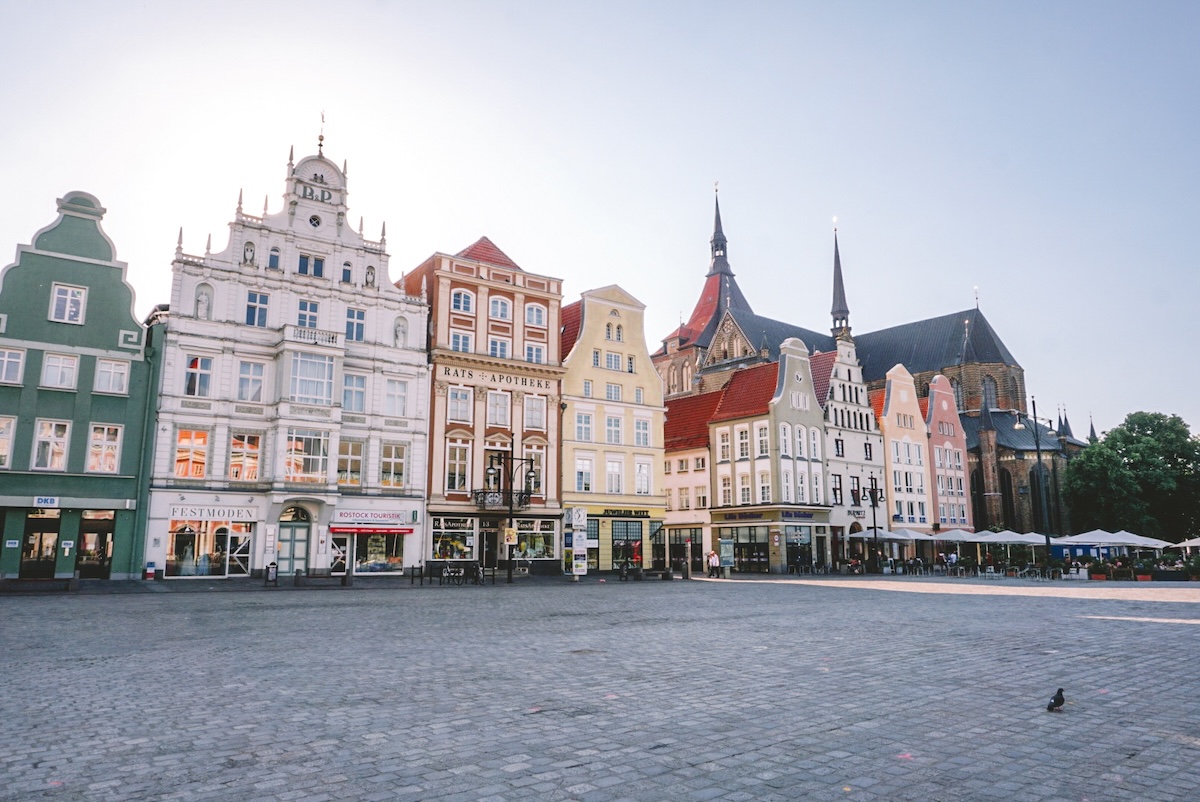
Rostock was East Germany’s largest port, and today it’s still a popular destination for Germans seeking a more affordable beach vacation.
You can see most of Rostock’s main attractions in half a day (you’ll have to skip the museums, FYI) and then use public transportation to see the beach at Warnemünde. Even if you don’t plan on swimming, Warnemünde is still worth visiting!
During your morning in Rostock, I recommend seeing the following:
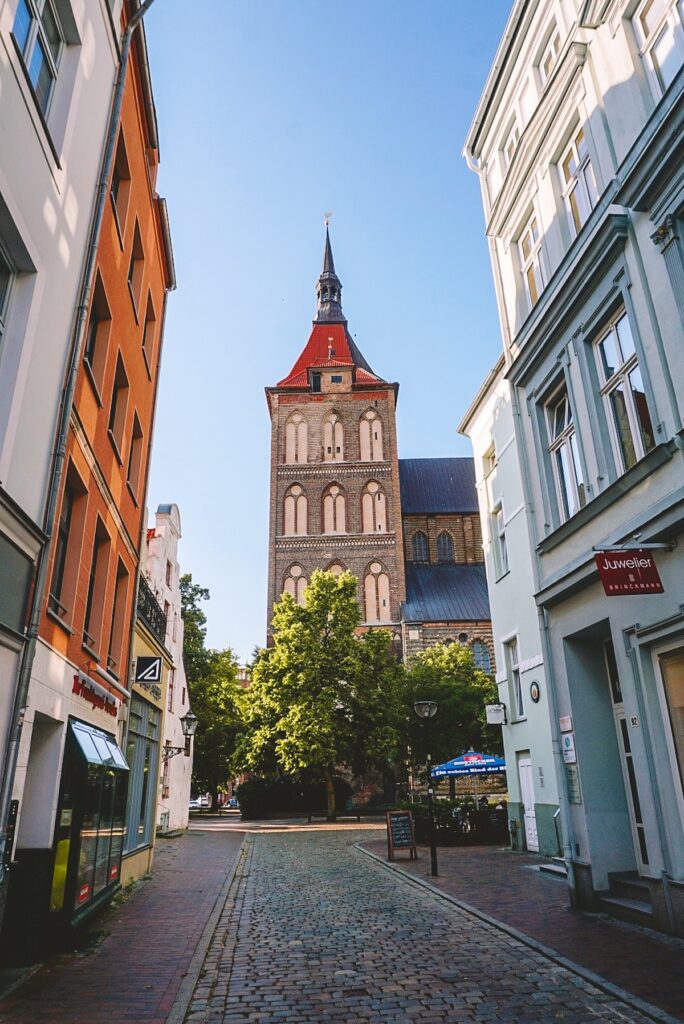
- University Square — A pretty square along the main shopping street. This is where the tourist information center is located, so grab a map while you’re here.
- Neuer Markt — Rostock’s central square. There’s a market on Tuesdays, Fridays, and Saturdays, and you’ll also see the city’s pink town hall.
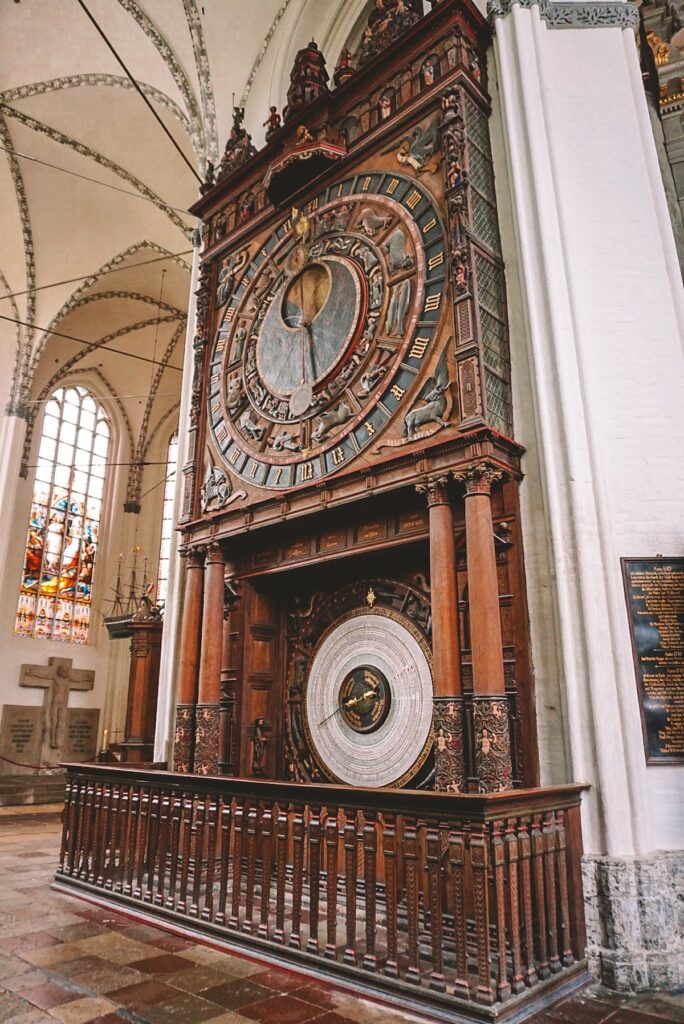
- St. Mary’s Church — A Gothic brick church with a 15th century astronomical clock built by the watchmaker Hans Düringer. The clock still functions and is hand wound at noon and midnight each day. When it’s wound, the figures of Jesus and the Apostles dance at the top of the clock!
- Kröpeliner Straße + Kröpelin Gate — The central shopping street in Rostock and the last city gate that remains of the original 22.
- Old City Wall + Gardens — Rostock’s city wall used to cover roughly 1 square kilometer of land, but now the only remaining portion can be seen between Kröpeliner Tor to Schwaanschen Straße. There’s a beautiful rose garden at the end, which is perfect for relaxing in the summer.
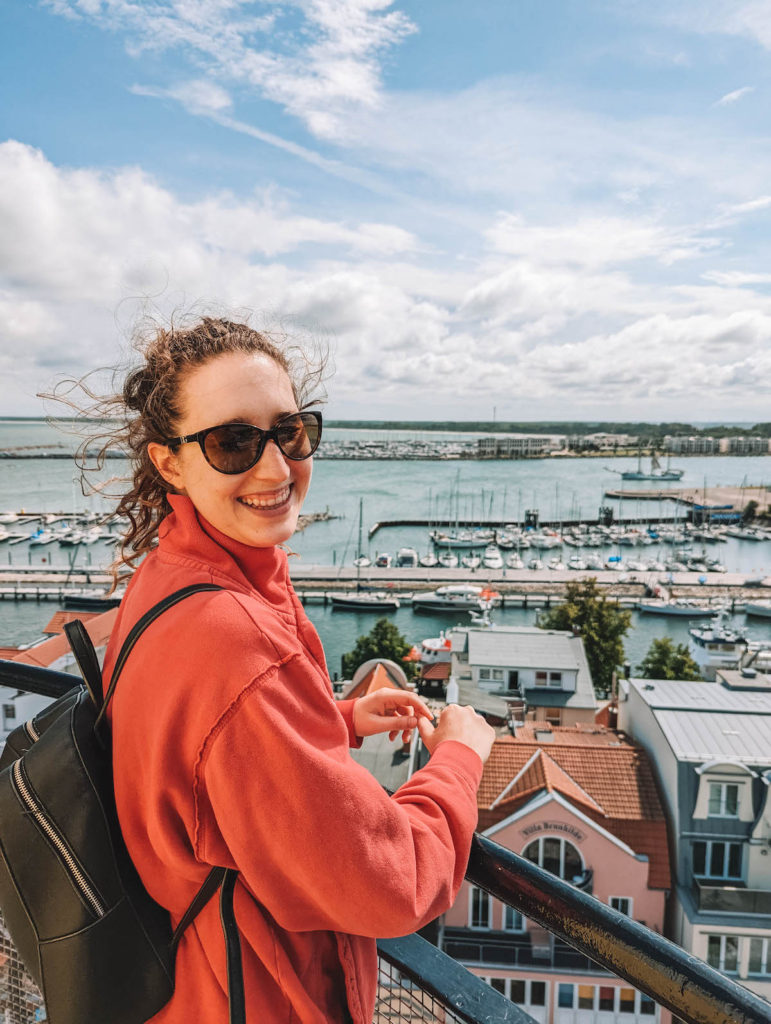
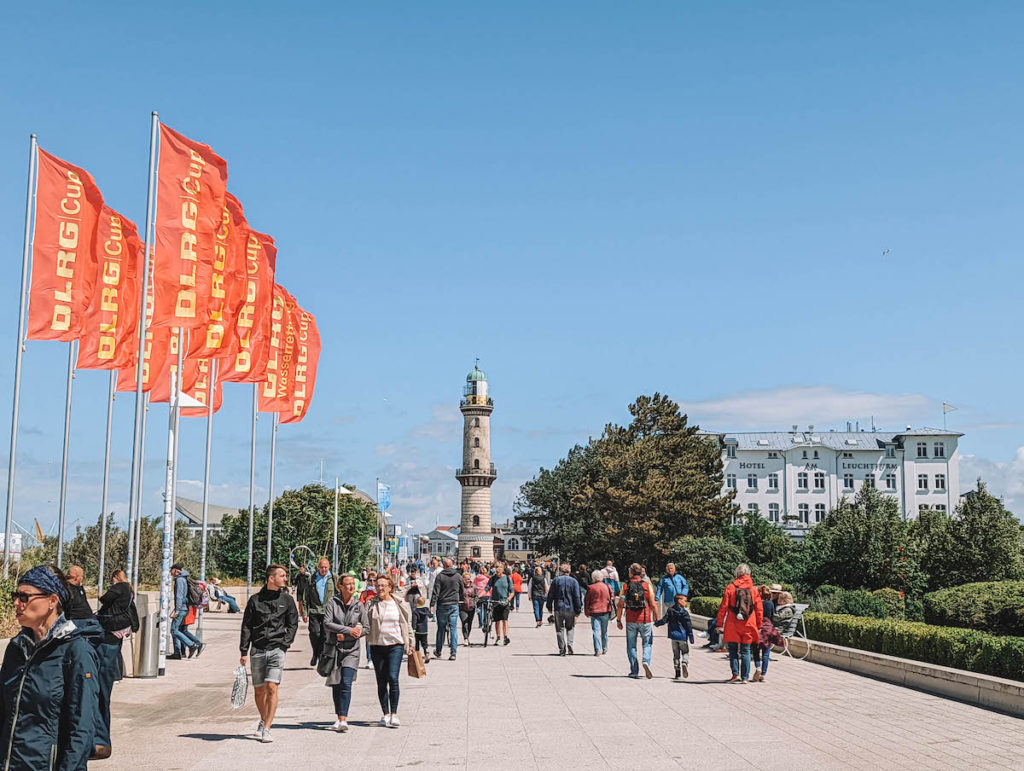
In the afternoon, I suggest heading to Warnemünde. It’s a charming town on the coast of the Baltic Sea that was developed into a seaside resort in the 1800s. Some of my personal favorite things to do in Warnemünde are:
- Alter Strom — Originally the shipping passage between Warnemünde and Rostock. Now it’s a promenade lined with local boutiques and cafes.
- Promenade — The beach promenade is roughly 2 kilometers long and stretches from the Alter Strom to the coastal forest on the edge of the city.
- Former captain’s houses — Many of the houses along Alexandrinenstraße (which runs parallel to the Alter Strom) have been converted to B&Bs, but if you look closely you’ll see which were the old captain’s houses.
- Old Lighthouse — You can ascend the lighthouse for a couple Euros for a view of Warnemünde from above.
Claire’s Tip: If you’re traveling through Northern Germany in the summer, definitely pack a swimsuit and go for a swim while you’re here! Note that the Strandkörbe (the beach baskets you see all along the beach) are rentals, so you must pay for them before using.
Day 4: Wismar
Today’s travel + duration of journey: Travel to Wismar first thing in the morning (1 hour 9 minutes by RB train or 50 minutes by car), then travel on to Schwerin in the late afternoon or early evening (30 minutes by RE train or 40 minutes by car)
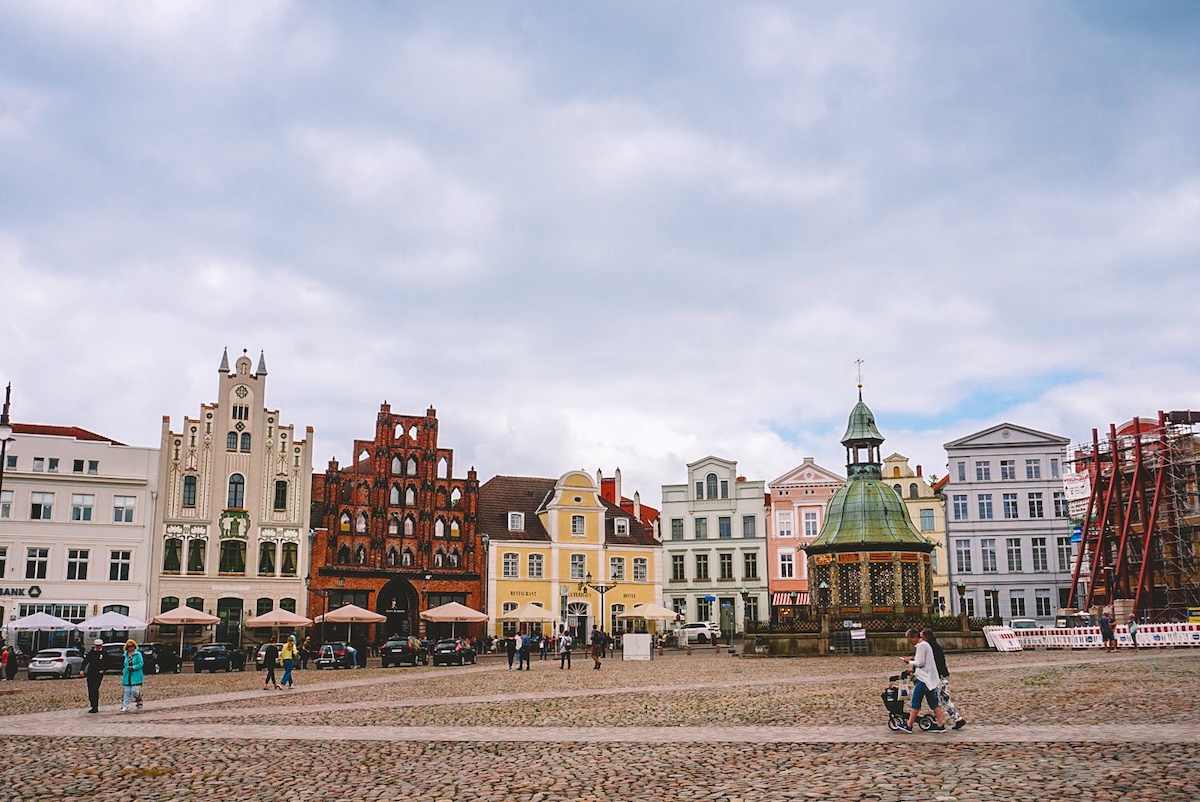
Most visitors to Germany think that all of the quaint half-timbered towns are located in southern Germany, but that couldn’t be further from the truth! The North is peppered with beautiful historic towns too, and my personal favorite is Wismar.
It has one of the largest preserved ancient town centers in the region, and it’s the perfect day trip destination because you can see pretty much all of the sights in a day.
You don’t need to reinvent the wheel when planning your visit to Wismar — grab a map from the tourist information office and follow their suggested walking route. Of Wismar’s top attractions, these are the ones I enjoyed the most:
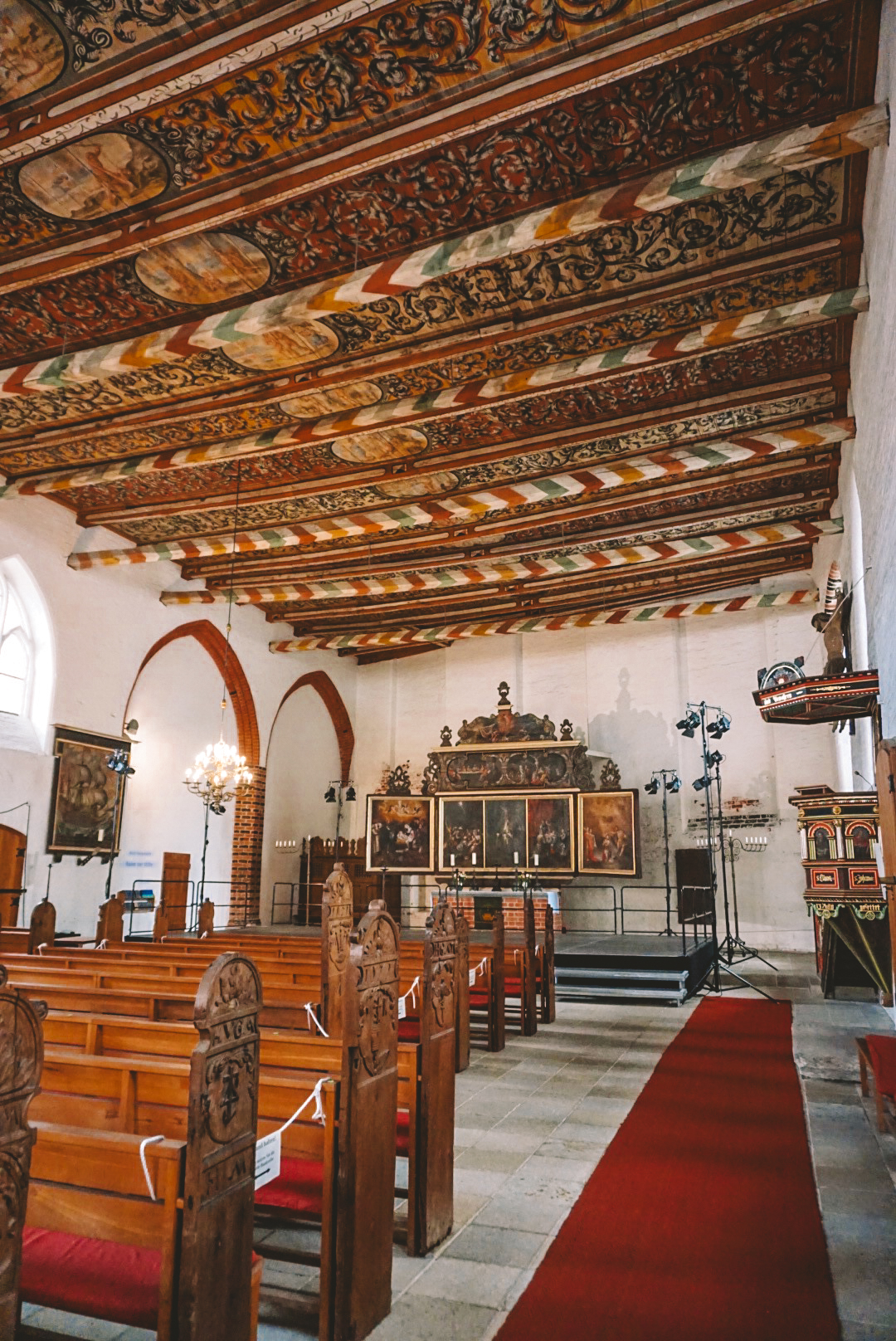
- Church of the Holy Spirit — This unique church lacks a central aisle, and the beamed ceiling is flat rather than vaulted. The entire ceiling is painted with murals that date back to 1687.
- Gewölbe — A sweet little half-timbered building that’s painted a cheerful pink color. It was part of Wismar’s fortifications but nowadays it’s just a great photo op.
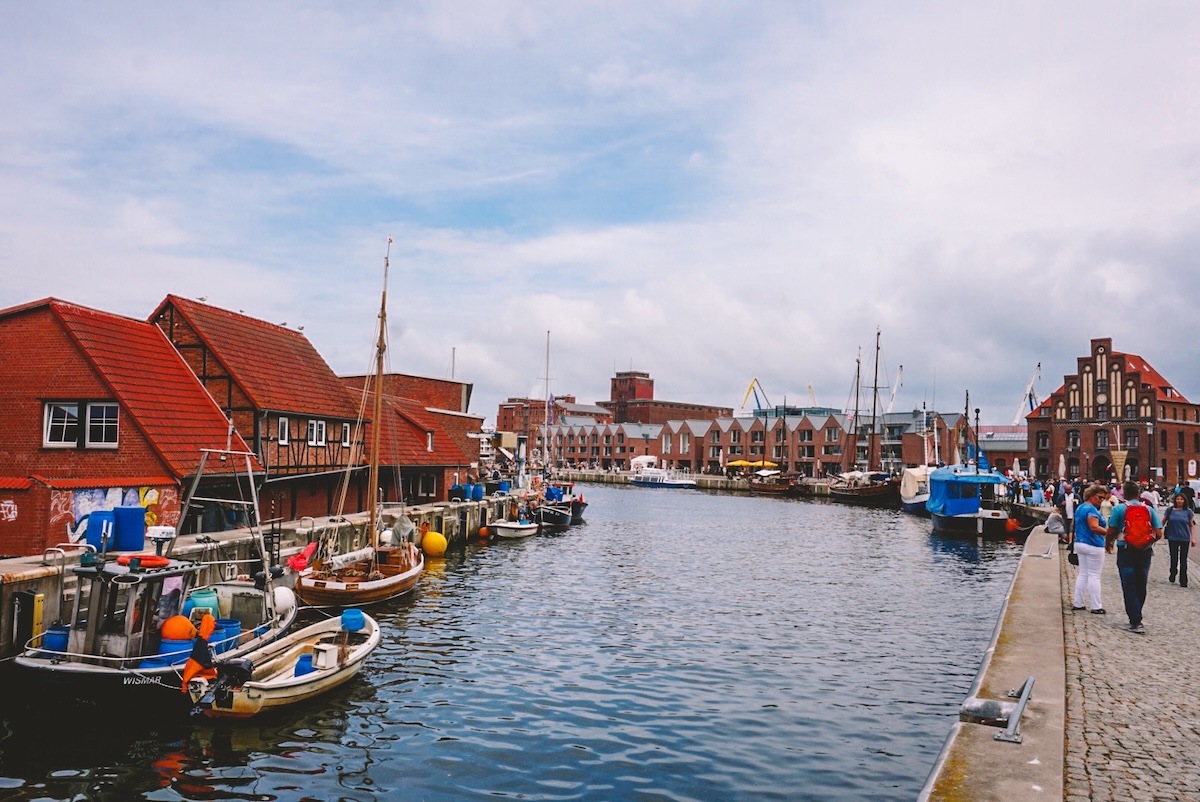
- Old Harbor — Despite its small size, Wismar once had a bustling port that linked the Baltic region with Sweden and Norway. It’s maintained almost the exact same layout since the 1200s! I suggest getting lunch here; this is where you’ll get some of the freshest Fischbrötchen (fish sandwiches) of your entire road trip.
- Church of St. Nicholas — A lovely 14th century church dedicated to the patron saint of fishermen.
- Market Square — One of the largest in Northern Germany! The covered structure on the edge of the square is the old pumping station, which supplied water to the town for nearly 300 years.
Day 5: Schwerin
Today’s travel + duration of journey: Travel to Lübeck in the evening (1 hour 15 minutes by RE train or 1 hour 10 minutes by car)
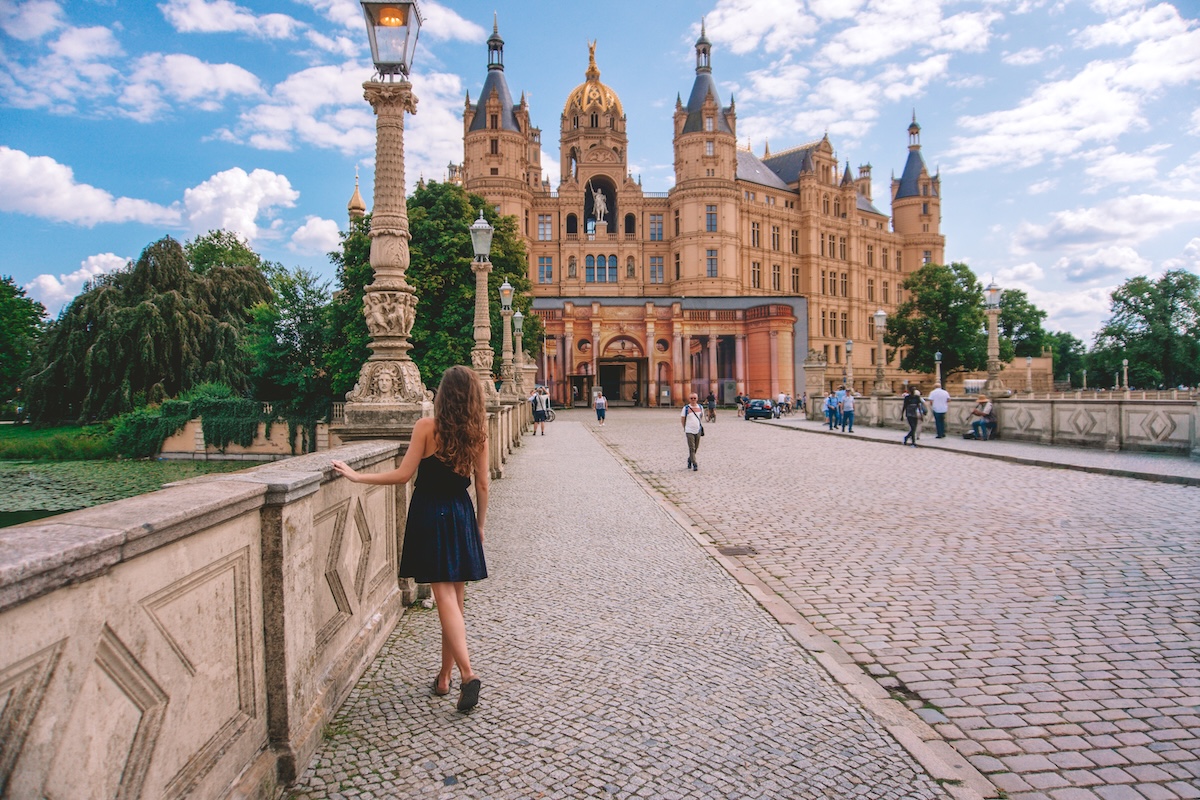
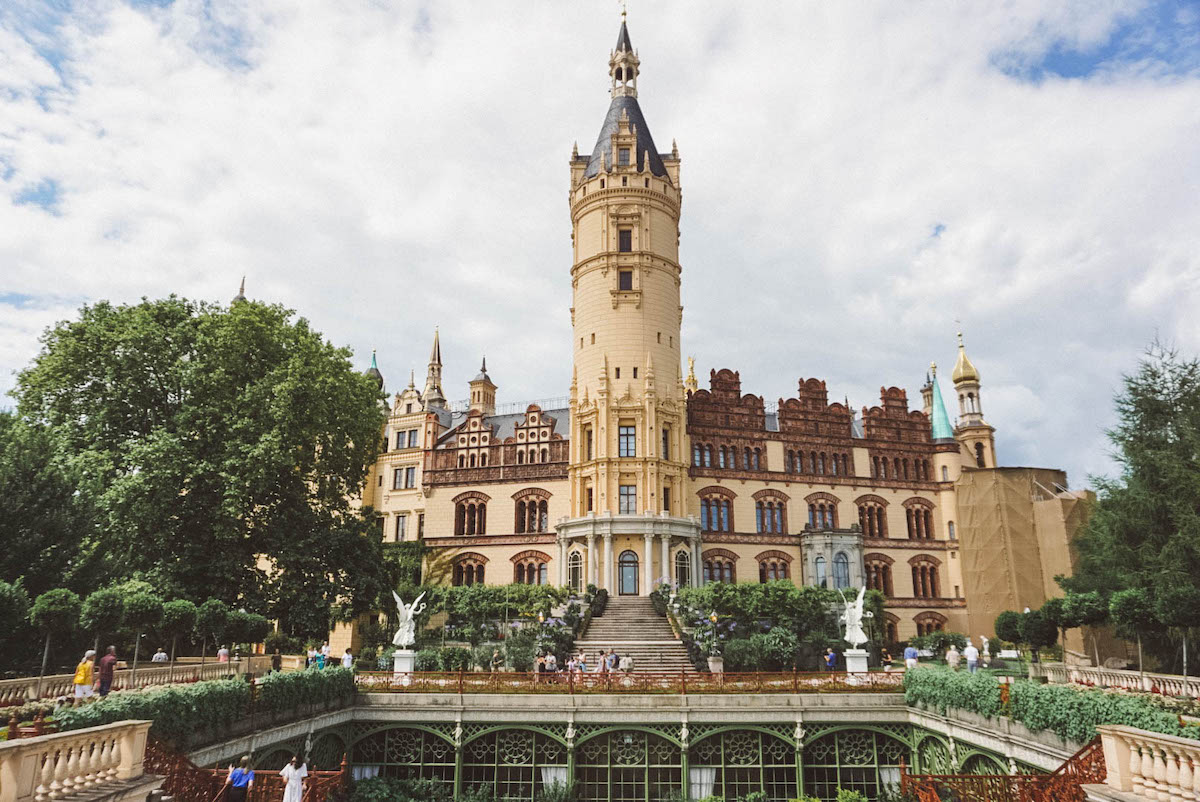
You didn’t seriously think I’d let you spend a week in Northern Germany without touring a castle, did you? Of all the destinations you’ll visit along this road trip, Schwerin might be my favorite. It’s got a charming Old Town, a huge lake, and a castle that looks like it was plucked from one of the Grimms’ fairytales.
Since you’ll be waking up in gorgeous Schwerin, I recommend starting your day with a German-style breakfast at Café Prag (address: Schloßstraße 17) which boasts a view of the castle and has a cozy old world charm to it.
Then, spend the rest of your day seeing the main sights in Schwerin:
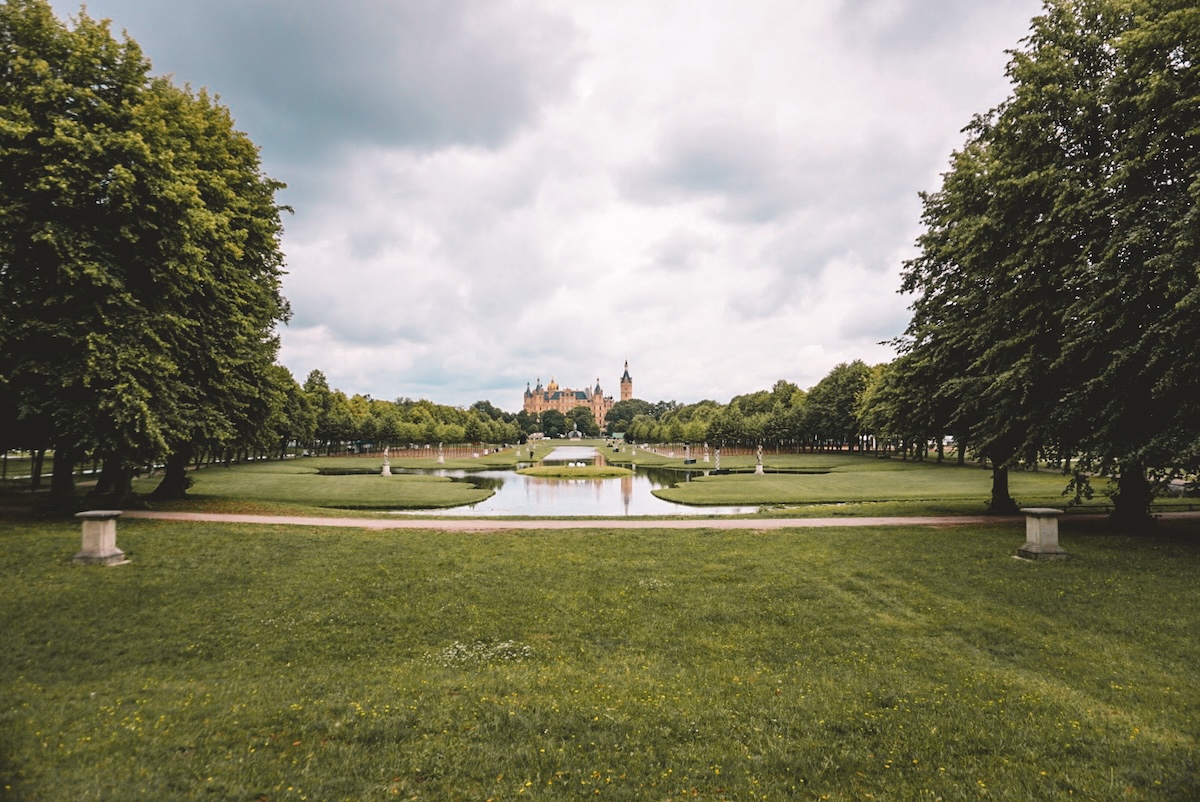
- Schwerin Castle + Gardens — I suggest coming here right after breakfast since this is where you’ll want to spend the bulk of your time. The Neo-Renaissance castle was commissioned by Frederick Franz II, the Grand Duke of Mecklenburg, in the 1840s. Part of the castle has been preserved as an elaborately decorated museum, while the other part has housed the parliament of Mecklenburg-Western Pomerania since 1990.
- Old Town — Besides the market square and the Gothic brick cathedral, there’s nothing “to do” in the Old Town besides window shop at the local boutiques, photograph the gorgeous buildings, and relax. Much of your day will be spent exploring the castle and its extensive grounds, so enjoy wandering around Schwerin at your own pace!
Day 6: Lübeck
Today’s travel + duration of journey: None! You’ve got one full day in Lübeck to relax and explore. Depending on your flight time tomorrow, you might want to take the train back to Hamburg in the evening (which would take 1 hour 20 minutes by train).
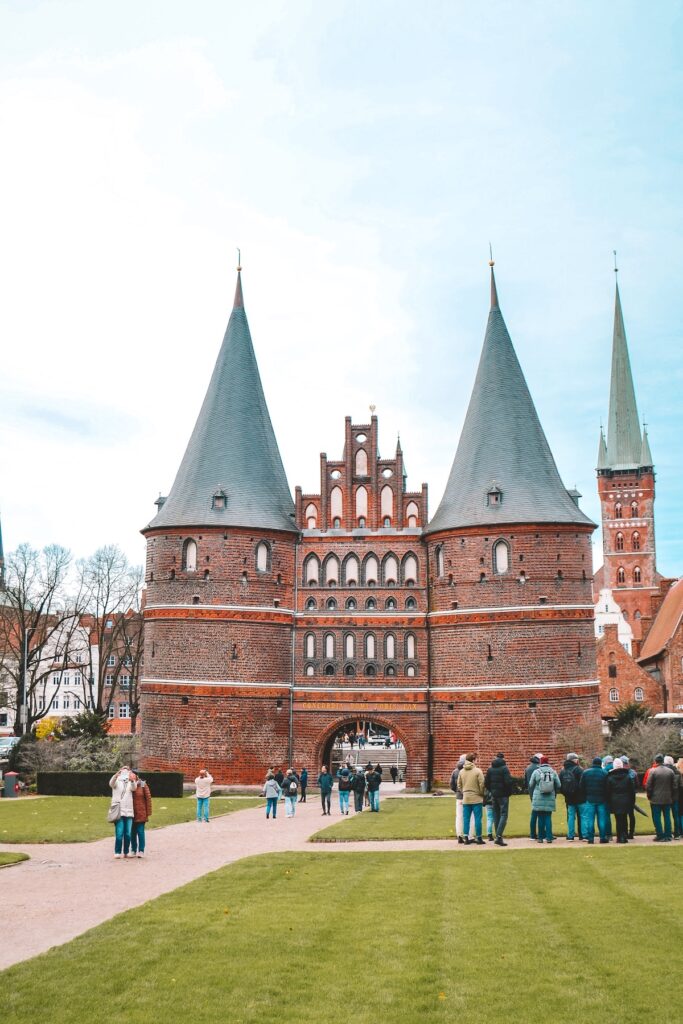
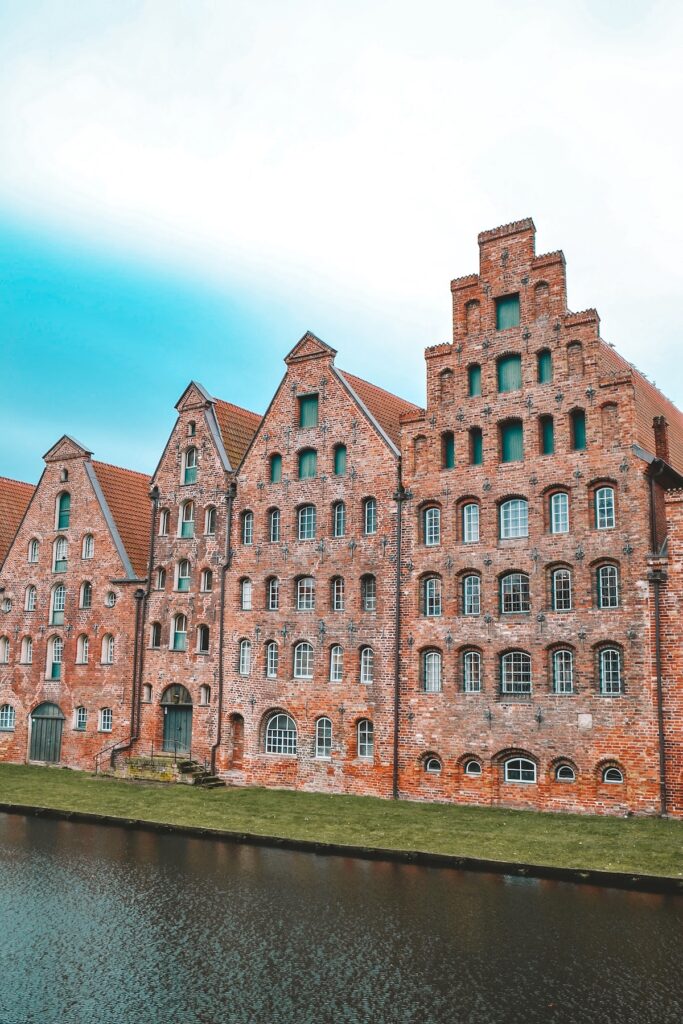
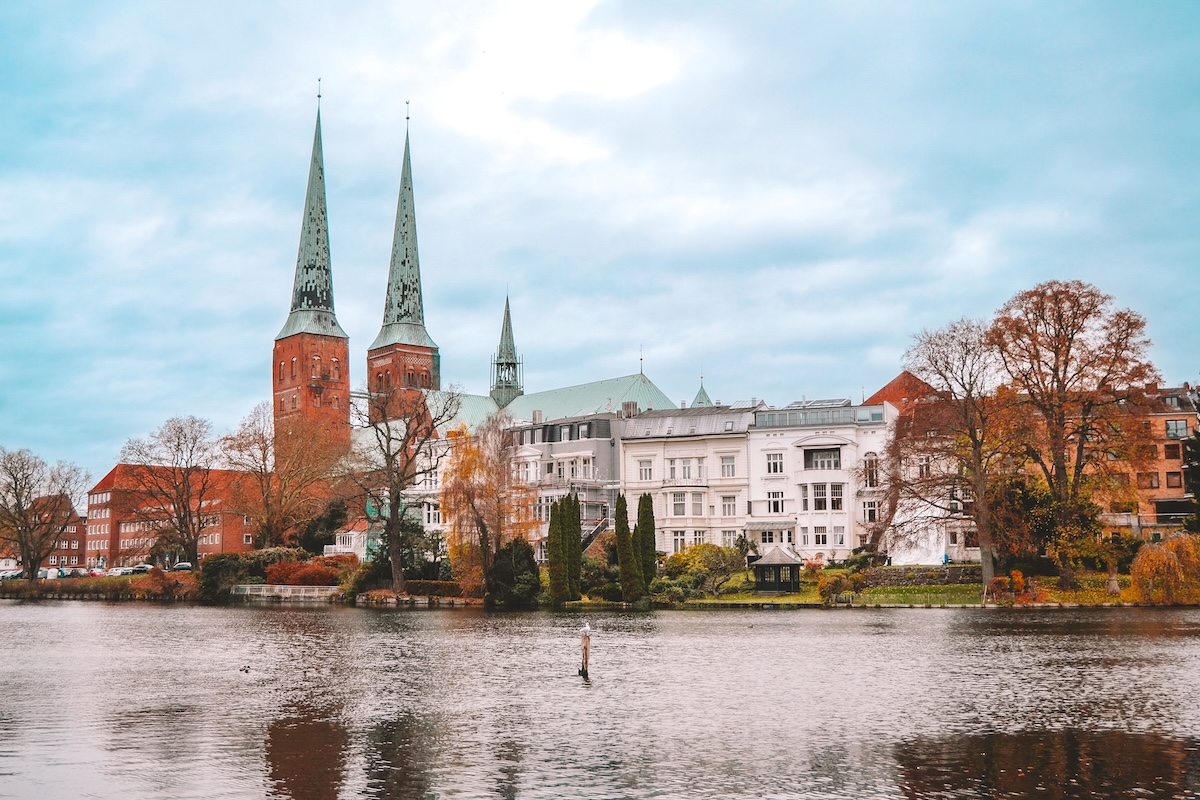
Now one of the marzipan capitals of Europe and one of Germany’s most popular Christmas market destinations, Lübeck was arguably THE key player in the region’s maritime trading network. Known as the “Queen of the Hanseatic League,” it served as the headquarters for the powerful medieval trading and defensive network.
In the 1220s, Lübeck was granted the right to self-governance and subsequently created its own system of laws called the “Laws of Lübeck.” More than 100 cities in the Baltic region followed these laws after Lübeck put them into effect — so know that you’re ending your time in Northern Germany with a city that quite literally defined the region as we know it today!
You can’t see all of Lübeck’s attractions in a single day, but if you plan things well you can see the following:
- Church of St. Mary’s — The Baltic region is famous for its red brick Gothic-style architecture, and the Church of St. Mary’s is one of the best examples of it. Around 70 other churches in the region were built based on the plans for St. Mary’s, so definitely pay the few Euros’ entry fee to see the interior. Most cities are known for their cathedrals but of the 5 (!!) Gothic brick churches in Lübeck, St. Mary’s is actually the one I recommend visiting.
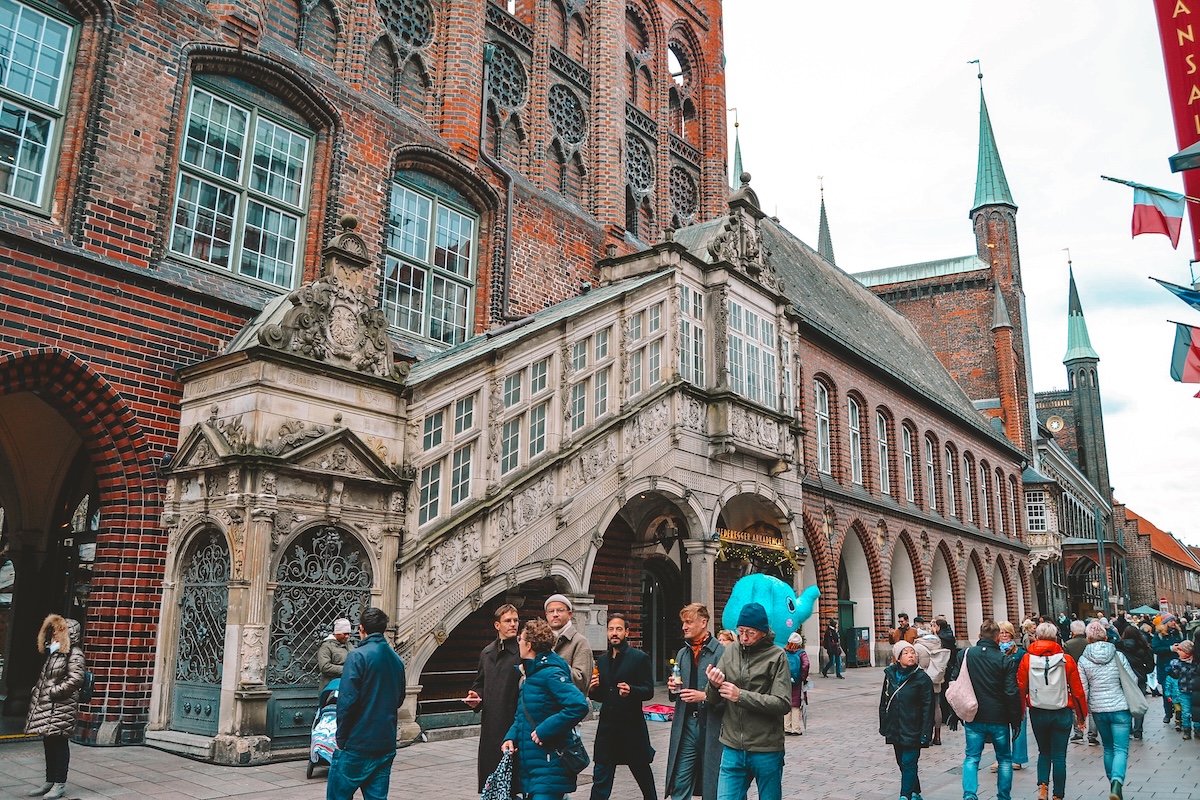
- Town Hall & Market Square — Another fabulous example of red brick Gothic architecture in Lübeck. The Old Town is located on an island in the middle of the Trave and Wakenitz Rivers, so instead of being built up as the centerpiece in the middle of the city the Town Hall is more of a sprawling complex with wings surrounding the market square.
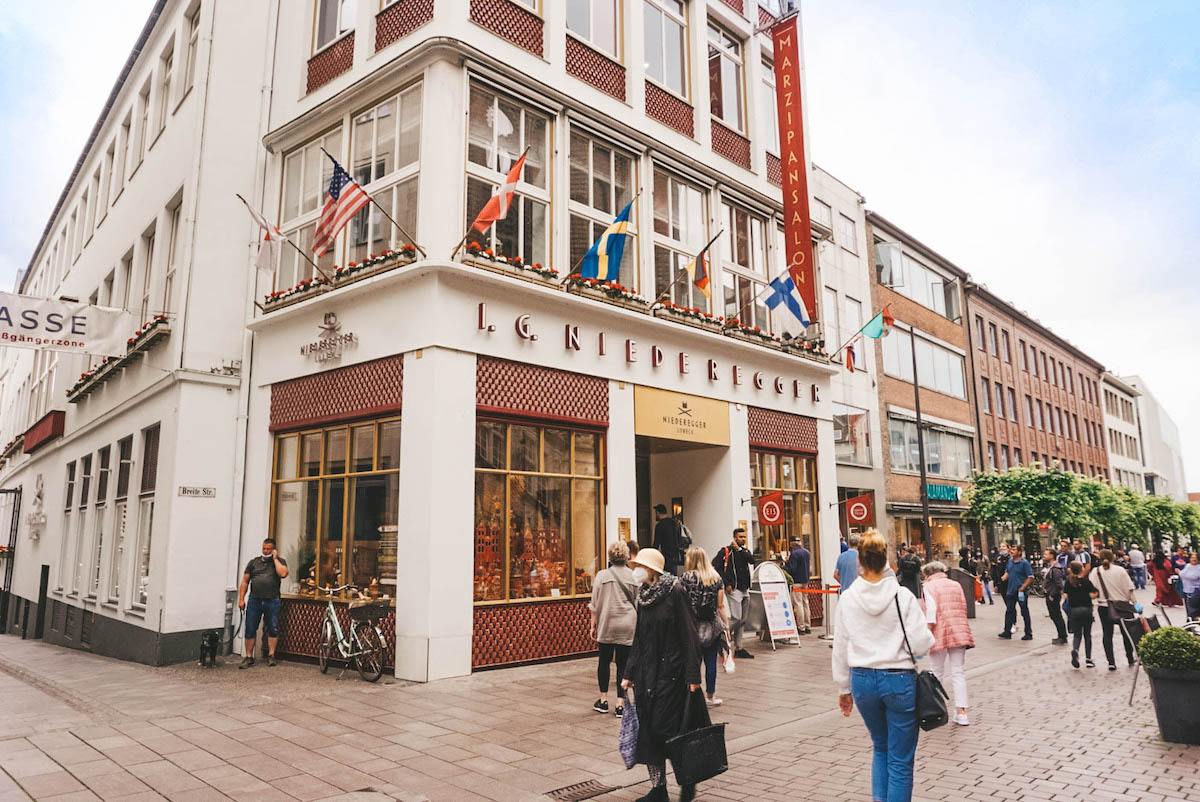
- Cafe Niederegger — The city’s most famous marzipan producer is Niederegger, which sells its almond-based confections in grocery stores worldwide. The cafe by the Town Hall is always spectacularly decorated for the holidays, and I highly recommend popping inside to stock up on the chocolate-covered marzipan (my favorite!) as a tasty souvenir to enjoy once you’re back home.
- Pick a museum! — The museums in Lübeck are all fairly compact but truly amazing. Give yourself 90 minutes to 2 hours to visit either the St. Annen Museum (sacred art from the 13th to 16th century), Benhaus Drägerhaus (two house museums with lots of 19th century art), Buddenbrookshaus (the birthplace of the famous German writer Thomas Mann), or the European Hansemuseum (a must if you don’t yet understand the Hanseatic League, which was the backbone of all of the cities you’ve visited up until this point in Northern Germany!).
Claire’s Tip: Depending on what you decide to see in Lübeck, buying a day pass might be a wise choice. It’s just 18 Euros and includes access to St. Mary’s Church and several of my favorite museums.
Day 7: Fly Out of Hamburg
Today’s travel + duration of journey: Travel back to the Hamburg airport (1 hour 20 minutes by train + public transportation or 1 hour 15 minutes by car)
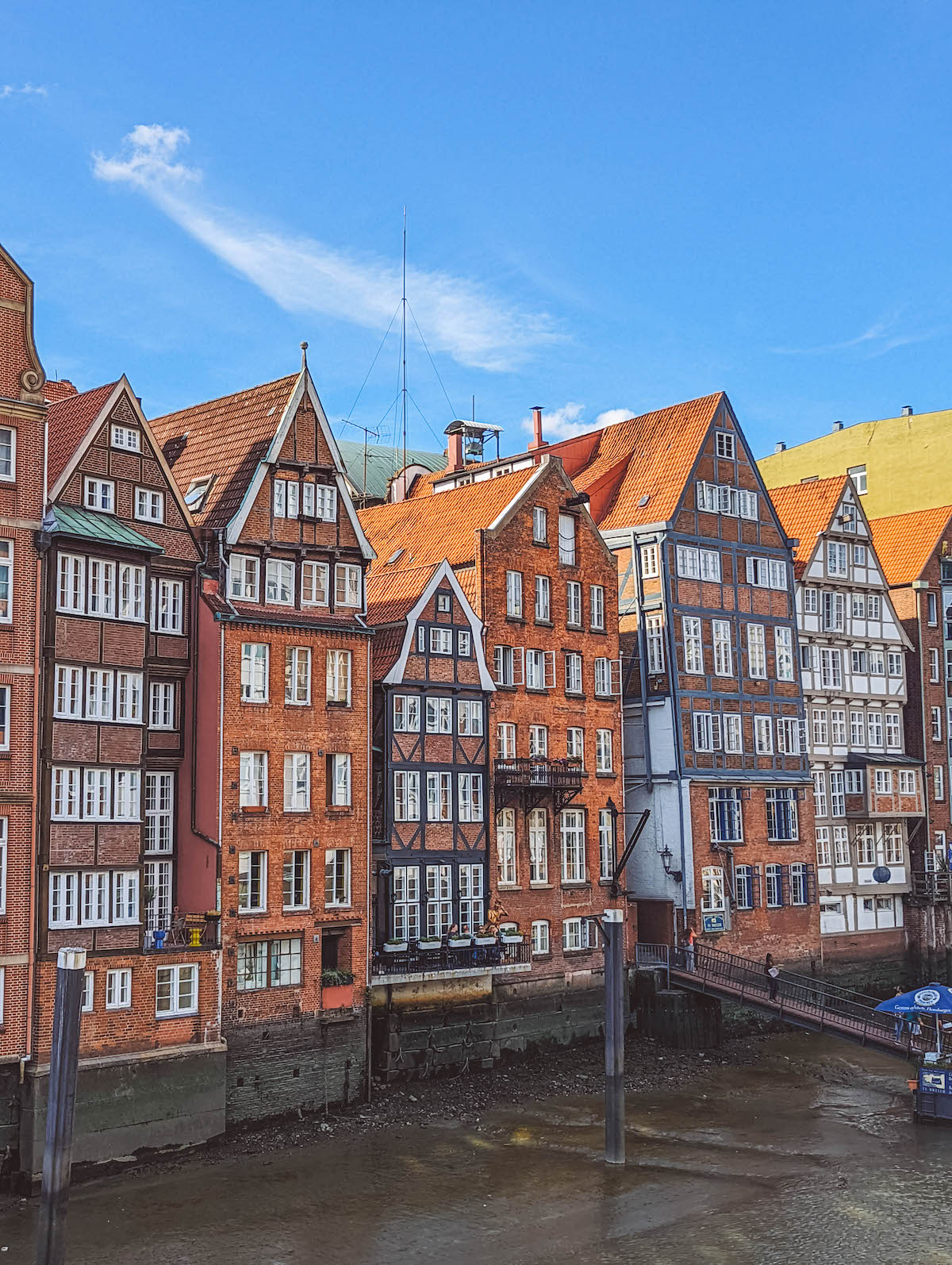
Alas, you’ve reached the end of your road trip and it’s time to head home. If your flight leaves later in the day, either spend the morning exploring parts of Lübeck’s Old Town you didn’t get to see yesterday or head straight back to Hamburg, drop your luggage in a locker at the main train station, and spend more time exploring the “Venice of the North.”
If you need more suggestions on how to spend your last few hours in Hamburg, here are the top sights you HAVE to see and here are some activities to keep you busy if it’s raining (a common occurrence this far north).
To get to Hamburg’s airport from the central train station, ride the S1 to “Hamburg Airport (Flughafen).” The S-Bahn runs every 10 minutes and it takes about 25 minutes to reach the airport station.
Enjoy Your Trip to Northern Germany!
I hope this Northern Germany travel guide has opened your eyes to the many incredible places to see and things to do in the Baltic region. Northern Germany is a popular vacation spot for Germans but seems to be somewhat of a hidden gem for foreigners, and I hope that changes in the future!
Since moving to Berlin in 2019, I’ve had the pleasure of visiting Northern Germany many, many times (a close friend lived in Hamburg up until last month so I’ve been able to explore the region in depth).
I genuinely can’t decide whether I like the North or South better, but if you want to visit a region of Germany that has fewer crowds and is a smidge more affordable, then the North is it!
Don’t forget to follow me on Instagram to keep up with my daily adventures in Berlin and beyond!


Leave A Reply!